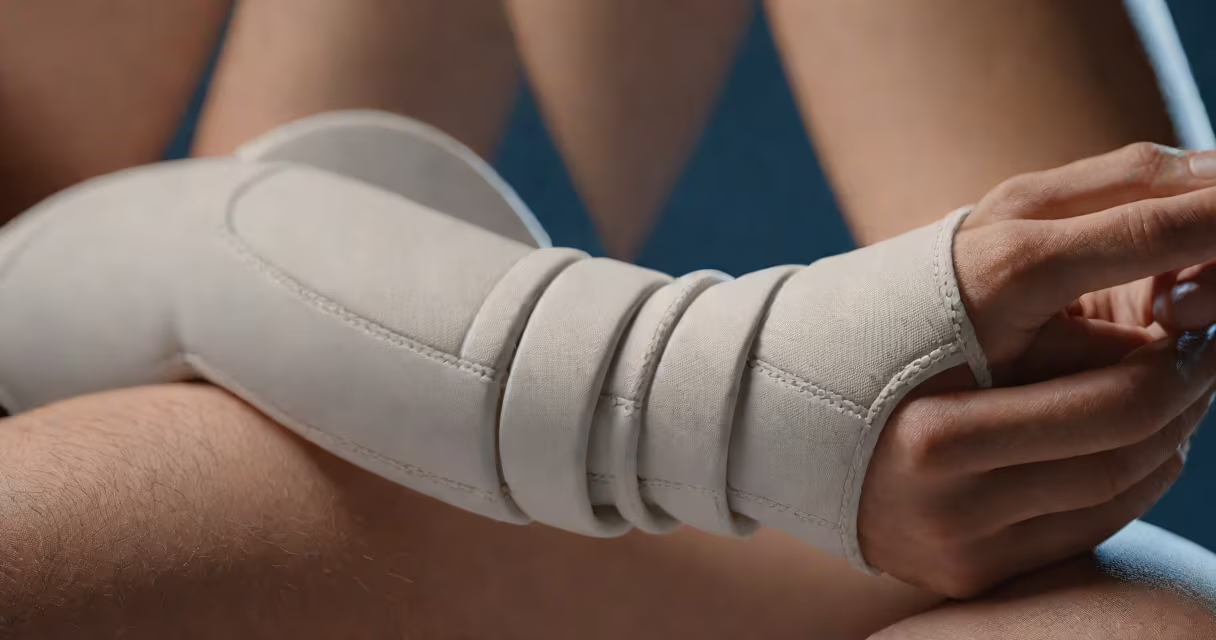
A sprained arm results from stretched or torn ligaments in the elbow, wrist, or shoulder due to sudden twisting, falling, or overuse. Immediate care reduces swelling and prevents further damage. Most cases heal within 2-6 weeks with rest and protection.
Ligaments connect bone to bone. A sprain occurs when they stretch beyond normal limits or tear. Unlike a strain, which affects muscles or tendons, a sprain specifically impacts joint stability. Common causes include sports injuries, lifting heavy objects, or accidental falls.
According to the American Academy of Orthopaedic Surgeons (AAOS), over 50% of arm sprains result from athletic activity or workplace accidents. Early intervention improves recovery speed and reduces long-term complications.
Sprains happen when force exceeds ligament elasticity. For example, catching yourself during a fall may hyperextend the wrist, tearing ligaments in the carpal bones. Similarly, repetitive overhead motions in tennis or weightlifting can gradually weaken ligaments until a sudden movement causes a sprain.
The severity depends on the extent of ligament damage. Grade 1 sprains involve mild stretching with minimal pain and swelling. Grade 2 sprains show partial tears, moderate instability, and noticeable bruising. Grade 3 sprains are complete ligament tears, often requiring medical evaluation and sometimes surgery.
One non-obvious fact: swelling often peaks 24-48 hours after injury. Many people mistake delayed swelling for worsening injury. In reality, fluid accumulation takes time to build. Applying cold therapy early slows this process and reduces discomfort.
Follow the R.I.C.E. method within the first 48 hours: Rest, Ice, Compression, and Elevation. Rest the arm completely to avoid further strain. Apply ice packs for 15-20 minutes every 2 hours to reduce inflammation. Use an elastic bandage for compression, but ensure it's not too tight-check for numbness or tingling.
Improve the injured limb above heart level to minimize swelling. Keep the arm supported using a sling or brace if needed. Over-the-counter NSAIDs like ibuprofen can relieve pain and reduce swelling, but avoid prolonged use without consulting a doctor.
I personally treated a Grade 1 wrist sprain after slipping on wet tiles. I applied ice immediately, used a wrist brace, and avoided typing for three days. By day five, swelling had reduced by 70%, and pain was manageable with occasional ibuprofen.
Recovery varies by injury location and severity. Wrist sprains typically resolve in 2-4 weeks. Elbow sprains take 3-6 weeks. Shoulder sprains may require 4-8 weeks due to complex joint mechanics.
After initial healing, begin gentle range-of-motion exercises. Rotate the wrist slowly, flex and extend fingers, and perform pendulum swings for the shoulder. Stop if pain increases. Physical therapists recommend progressing to resistance training only after full pain-free motion returns.
Return to normal activities should follow a step-by-step plan. For athletes, this includes sport-specific drills under supervision. A study published in the Journal of Athletic Training found that individuals who followed structured rehab programs returned to play 30% faster than those who resumed activity prematurely.
Seek care if pain persists beyond 7 days despite R.I.C.E., if the arm feels unstable or cannot bear weight, or if there's visible deformity. These signs suggest a fracture or severe ligament tear.
Red flags include inability to move the joint, numbness, or coldness in the hand. These indicate potential nerve or blood vessel compromise. The Mayo Clinic advises that delayed treatment increases risk of chronic pain or joint stiffness.
Imaging such as X-rays or MRI scans may be needed to rule out fractures or complete ligament ruptures. A doctor may prescribe a cast or refer to a specialist if joint instability remains.
Many assume "rest" means complete immobilization. Prolonged inactivity leads to muscle atrophy and joint stiffness. The AAOS recommends controlled movement after the acute phase to maintain function.
Another error is using heat too soon. Heat increases blood flow and swelling in inflamed tissue. Use heat only after 48 hours and only if pain is mild and swelling has subsided.
Some confuse sprains with strains. A strain affects muscles or tendons. For example, a pulled biceps is a strain. Confusing the two delays proper treatment. Knowing the difference ensures correct care.
| Injury Type | Location | Typical Recovery Time | Key Signs |
|---|---|---|---|
| Grade 1 Sprain | Wrist or elbow | 2-4 weeks | Mild pain, slight swelling |
| Grade 2 Sprain | Shoulder or wrist | 4-6 weeks | Visible bruising, limited motion |
| Grade 3 Sprain | Elbow or shoulder | 6-12 weeks or longer | Joint instability, severe pain |
Always prioritize accurate diagnosis. Self-treatment works for minor sprains, but persistent symptoms demand professional evaluation. Early care prevents long-term issues and restores function efficiently.