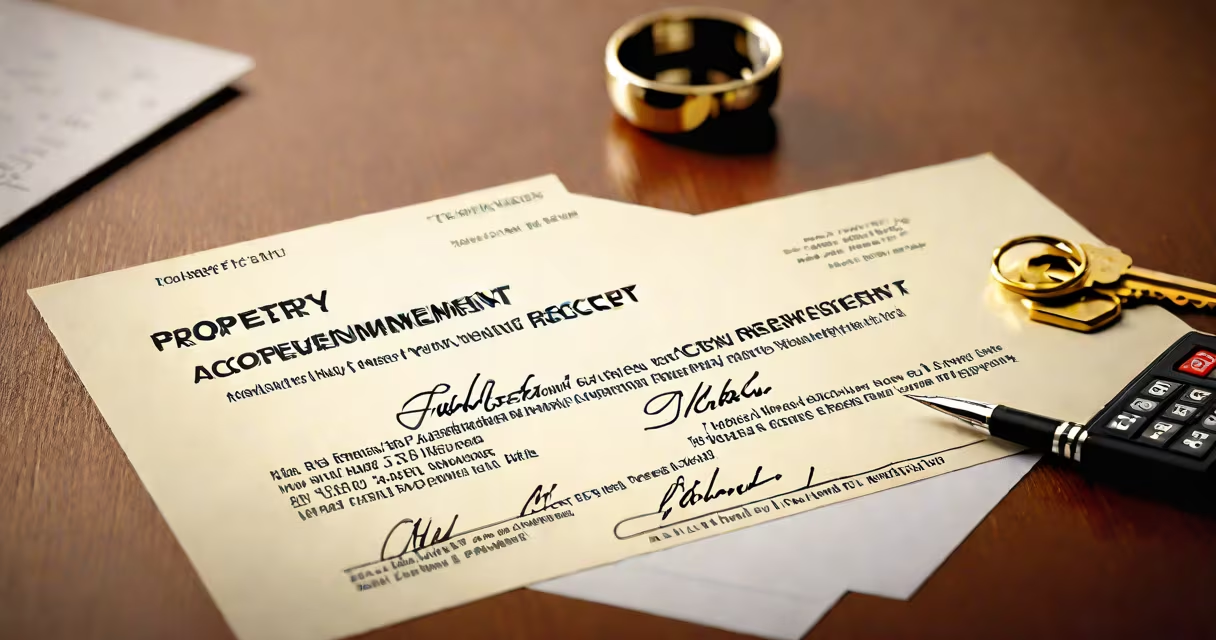
A property acknowledgement receipt is a formal document signed by a tenant confirming they have inspected and accepted a rental unit in its current condition, including any existing damages or defects. It serves as legal proof that the tenant was aware of the property's state before moving in.
This document is not a lease or rental agreement. It is a standalone record that supports both landlord and tenant rights during move-in and move-out processes. It prevents disputes over damage claims and ensures transparency in the handover of property.
According to the U.S. Department of Housing and Urban Development (HUD), written acknowledgment of property condition reduces the likelihood of rent withholding or legal action over security deposit disputes. A properly completed receipt strengthens accountability on both sides.
The process begins when a landlord or property manager conducts a walk-through inspection with the tenant before move-in. During this inspection, both parties document visible issues-scratches, stains, broken fixtures, missing hardware-and note them on the receipt form.
After the tenant reviews and agrees to the listed conditions, they sign and date the document. The landlord signs as well, affirming they've provided access and confirmed the tenant's review. This creates a binding record of mutual consent.
If the tenant moves out later and the landlord seeks to withhold part of the security deposit for repairs, the receipt provides evidence that the damage existed before the tenancy began. Without it, the tenant may successfully challenge deductions.
A valid property acknowledgement receipt contains specific elements. These are not optional-they're required for enforceability under most state laws.
Some states require additional disclosures. For example, California law mandates that the receipt include a statement about the tenant's right to receive a copy within 21 days of signing. Failure to provide a copy can invalidate the document.
While the core purpose remains consistent, property acknowledgement receipts vary slightly based on context and jurisdiction. Here's how they differ:
| Type | Use Case | Key Features |
|---|---|---|
| Standard Move-In Receipt | First-time tenant move-in | Includes room-by-room checklist, damage log, and signature lines |
| Move-Out Condition Report | End of lease, return of security deposit | Often used alongside a move-out inspection; can be modified from the original |
| Commercial Property Acknowledgment | Rental of office space or warehouse | May include HVAC performance, fire safety systems, and compliance with local codes |
| Multi-Unit Complex Form | Apartment buildings with shared amenities | References common areas like laundry rooms, elevators, and hallways |
One non-obvious fact: Many tenants assume that signing the receipt waives their right to dispute damage. That's false. Signing only confirms awareness of the condition-not acceptance of responsibility for future wear. The receipt does not limit a tenant's right to file a claim if new damage occurs during the lease.
People often mistake a property acknowledgement receipt for a lease agreement, a security deposit receipt, or a letter of acknowledgement. These are distinct documents with different functions.
Confusing them leads to gaps in legal protection. For example, a tenant who signs only a lease may later argue they didn't know about a leaky roof because no inspection was documented. The property acknowledgement receipt closes that gap.
In 2022, a court in New York ruled in favor of a tenant who sued her landlord over a $1,200 deduction from her security deposit. The landlord claimed the carpet needed replacement due to stains. However, the court found no written inspection report or acknowledged damage list existed at move-in. The tenant had never seen the carpet condition documented before signing.
Because the property acknowledgement receipt was missing, the judge ordered the full refund. The ruling emphasized that "without a contemporaneous record of the property's condition, the burden of proof shifts unfairly to the tenant."
This case shows why the receipt is not optional-it's a foundational tool in fair housing practices.
Always complete the form on-site during the move-in walk-through. Do not send it via email or ask the tenant to sign it later. Timing matters: the inspection must happen before the tenant takes possession.
Use clear, non-technical language. Avoid phrases like "minor wear" without specifying location. Instead, write: "Stain on living room rug, approximately 6 inches wide, located near the coffee table."
I once reviewed a property acknowledgement receipt where the landlord wrote "wall has marks." The tenant disputed this, claiming no marks were visible. The case went to mediation. The resolution came only after the landlord produced photos taken during the inspection-proof that the marks existed. The lesson: describe, don't assume.
Keep a signed copy in the tenant file and give the tenant a copy. Most states require this. Even if not mandated, it builds trust and avoids misunderstandings.
The property acknowledgement receipt is not a formality. It is a legally binding record that protects both parties. Landlords avoid unjustified repair charges. Tenants prevent false deductions from deposits. Courts recognize it as credible evidence.
When used correctly, it prevents conflicts, clarifies expectations, and strengthens the rental relationship. Always complete it at move-in, with both parties present, and retain copies. A single signed document can save thousands in legal fees and stress.