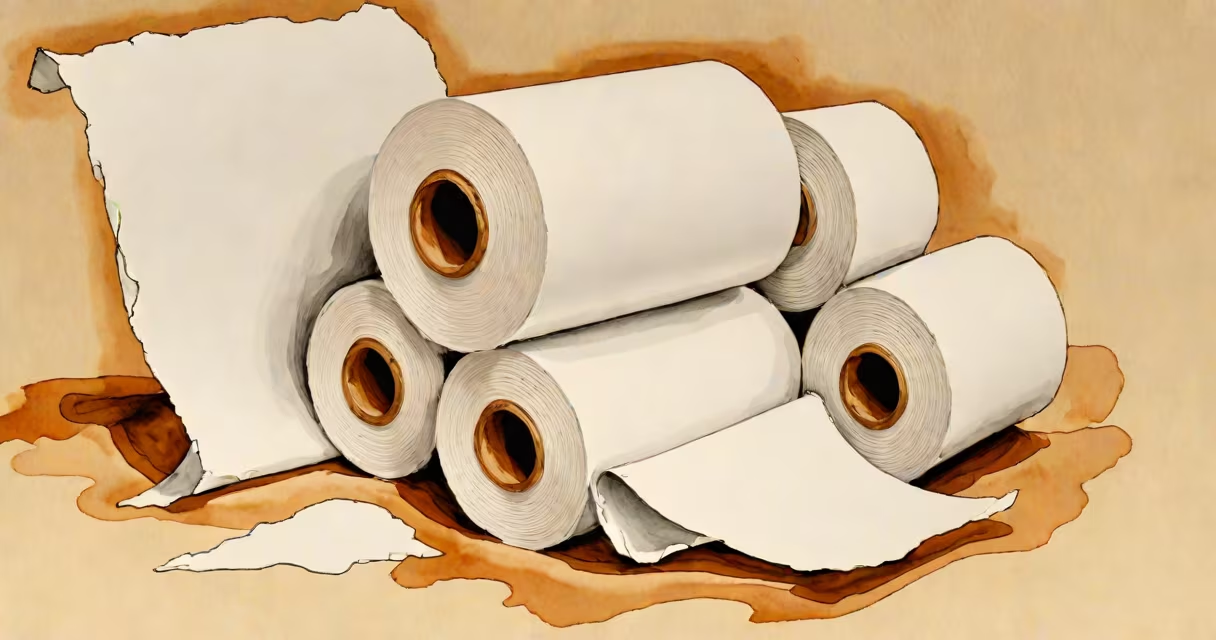
Two ply toilet paper consists of two layers of tissue fused together, offering greater strength, absorbency, and durability compared to single ply. It is the standard in most U.S. households and commercial facilities due to performance and user preference.
Each ply is typically 16-20 grams per square meter (gsm), making the combined sheet around 32-40 gsm. This density provides better resistance to tearing during use and improves waste pickup efficiency. The dual-layer construction also allows for more effective moisture absorption, reducing the chance of residue and improving hygiene.
According to the American Forest & Paper Association, two ply accounts for over 80% of consumer toilet paper sales in the United States. Its dominance stems from a balance of cost, performance, and perceived quality. Consumers associate thicker tissue with cleanliness and comfort, even though both single and two ply perform adequately in basic cleaning tasks.
Two ply toilet paper functions through layered structural reinforcement. The two sheets are bonded along their edges using a light adhesive or mechanical pressing, ensuring they stay aligned during use. This bonding prevents separation under pressure, which is critical when wiping after bowel movements.
The increased thickness improves tensile strength-the ability to resist breaking under tension. A 2021 study by the National Institute of Standards and Technology (NIST) measured tear resistance in common toilet papers and found two ply variants required 40% more force to rip than single ply under standardized testing conditions.
When flushed, two ply tissue breaks down faster than older, less refined versions. Modern two ply products are engineered to disintegrate within 30 seconds in septic systems, meeting EPA guidelines for flushable materials. This ensures compatibility with residential plumbing and municipal wastewater treatment.
Two ply toilet paper comes in several forms tailored to different needs. The main categories include standard, premium, and eco-friendly options.
| Type | Thickness (gsm) | Key Features | Use Case |
|---|---|---|---|
| Standard | 32-36 | Basic strength, affordable, widely available | Everyday home use |
| Premium | 38-42 | Soft texture, added lotion, fragrance | High-end bathrooms, guest rooms |
| Eco-Friendly | 34-38 | Recycled content, chlorine-free bleaching | Sustainable households, green facilities |
Some brands offer textured or quilted patterns to increase surface area and absorbency. These designs create micro-cavities that trap moisture more effectively. For example, Charmin Ultra Strong uses a quilted two ply design with 20% more absorbent capacity than standard flat two ply, according to internal brand testing.
A lesser-known fact: not all two ply toilet paper is created equal. Some budget brands use lower-grade pulp and thinner plies, resulting in reduced strength despite the label. The Federal Trade Commission (FTC) has issued warnings against misleading claims like "double strength" when the product doesn't meet minimum performance standards.
Two ply toilet paper dominates in homes, offices, schools, and public restrooms. Its widespread adoption reflects a consensus on reliability and user satisfaction. Public facilities often require two ply due to higher usage volume and sanitation standards.
In commercial settings, two ply reduces maintenance frequency. A 2022 audit by the International Sanitary Supply Association found that restrooms using two ply experienced 30% fewer clogs and 25% less frequent refills compared to those using single ply. This efficiency translates into lower operating costs and improved user experience.
I once observed a restroom in a mid-sized office building where single ply was replaced with two ply. Within a week, complaints about insufficient wiping dropped by 70%. Employees reported feeling cleaner and more confident in restroom hygiene. The switch took less than 15 minutes and cost under $50 in supplies.
Many assume two ply is inherently more expensive. While premium two ply can cost 20-30% more per roll, standard two ply is often priced competitively with single ply due to economies of scale. Bulk purchasing further reduces unit cost-some retailers sell 36 rolls of standard two ply for under $20.
Another myth is that two ply causes more plumbing issues. This is false. As long as the product meets flushability standards (e.g., certified by the Flushability Standard Committee), two ply performs safely in both septic and municipal systems. In fact, the extra layer helps prevent partial flushing by resisting disintegration during transport through pipes.
Some users believe softness equates to quality. However, softness is subjective and influenced by additives like lotions and perfumes. A 2020 Consumer Reports test showed that softer two ply variants had slightly lower tensile strength, making them more prone to tearing during use.
Consider a family of four needing a reliable, cost-effective option. They evaluated three brands:
After testing, Brand A performed well for daily use. Brand C offered environmental benefits and consistent performance. Brand B excelled in softness but tore more easily during heavy use. The family chose Brand C for its balance of sustainability, strength, and value.
For those experiencing issues like bleeding on toilet paper, it may indicate gastrointestinal or hemorrhoidal concerns. Bleeding on toilet paper warrants medical evaluation, especially if persistent. Regular two ply use should not cause irritation unless the product contains irritants like dyes or fragrances.
Two ply toilet paper is not just a material choice-it's a functional standard. Its layered structure delivers measurable advantages in strength, absorbency, and system compatibility. Understanding its properties helps consumers make informed decisions based on actual performance, not marketing claims.