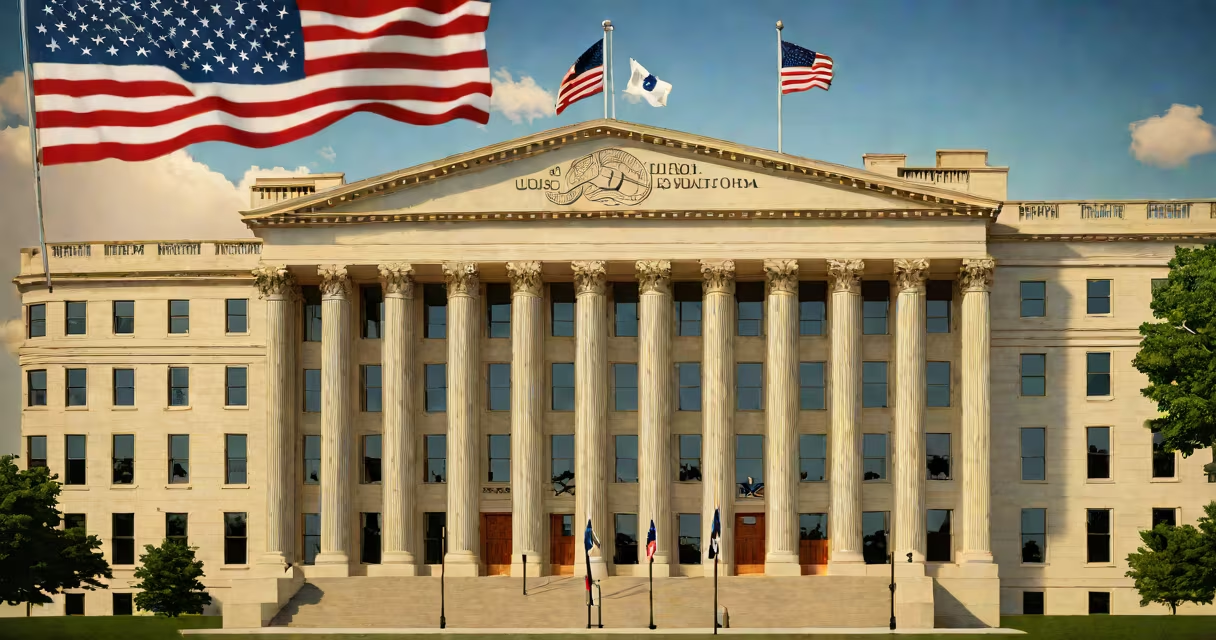
The United States Department of Agriculture (USDA) is a federal executive department that oversees agricultural production, food safety, nutrition programs, and environmental stewardship across the United States. It was established in 1862 under President Abraham Lincoln to support farmers and promote scientific advancement in agriculture.
The USDA operates through multiple agencies and offices, each focused on distinct aspects of national food and farm policy. Its core responsibilities include regulating meat and poultry inspection, administering the Supplemental Nutrition Assistance Program (SNAP), managing forest resources, and conducting agricultural research. The department employs over 100,000 people nationwide and manages a budget exceeding $200 billion annually.
Headquartered in Washington, D.C., the USDA maintains regional offices in every state and coordinates with local extension services to deliver technical assistance to farmers. It also publishes data on crop yields, livestock markets, and food prices through platforms like the National Agricultural Statistics Service (NASS).
The USDA's operations are structured around four primary mission areas: food, agriculture, natural resources, and rural development. These functions are carried out by specialized agencies within the department.
For example, the Food Safety and Inspection Service (FSIS) enforces federal laws governing the processing and labeling of meat, poultry, and egg products. FSIS conducts inspections at slaughterhouses and processing plants, requiring all federally inspected facilities to meet strict hygiene and sanitation standards. In 2023, FSIS inspected over 5,000 establishments and issued 1,200 compliance actions related to violations.
Another key component is the Agricultural Research Service (ARS), which runs 100+ research centers across the country. ARS scientists develop drought-resistant crops, study soil health, and investigate animal disease prevention. One notable project involved creating a wheat variety resistant to stem rust, a fungal pathogen that can destroy entire harvests.
The USDA comprises several independent operating units, each with specific mandates. The table below outlines major components and their primary responsibilities.
| Agency | Primary Function | Example Initiative |
|---|---|---|
| Food Safety and Inspection Service (FSIS) | Inspects meat, poultry, and egg products | Requiring all chicken sold in interstate commerce to be tested for Salmonella |
| National Agricultural Statistics Service (NASS) | Collects and publishes farm data | Annual Census of Agriculture, surveying 3.4 million farms in 2022 |
| Forest Service | Manages national forests and grasslands | Supervising prescribed burns to reduce wildfire risk in California |
| Animal and Plant Health Inspection Service (APHIS) | Prevents introduction of invasive species and diseases | Quarantining imported citrus fruit to prevent spread of citrus greening disease |
Each agency reports to the Secretary of Agriculture, who is appointed by the President and confirmed by the Senate. The current secretary, Tom Vilsack, began his second term in 2021 and has prioritized climate-smart agriculture and equity in program access.
Many people assume the USDA only regulates food safety or provides subsidies to large agribusinesses. This overlooks its role in supporting small and mid-sized farms through grants, loans, and technical assistance. For example, the USDA's Environmental Quality Incentives Program (EQIP) offers financial aid to farmers adopting conservation practices like cover cropping and rotational grazing.
A less known fact is that the USDA does not set national food prices. Instead, it collects market data and publishes reports that influence pricing trends. NASS releases weekly price updates for commodities such as corn, soybeans, and pork, which traders and processors use to forecast supply and demand.
Some confuse the USDA with the FDA. While both regulate food, they have different scopes. The FDA oversees food additives, labeling, and dietary supplements. The USDA handles meat, poultry, and eggs. A product labeled "USDA Certified" means it passed inspection under federal meat and poultry regulations, not that it met FDA standards for ingredients.
In 2022, I visited a family-run dairy farm in Wisconsin that participated in the USDA's Dairy Margin Protection Program (MPP). The farm had experienced declining milk prices due to global market shifts. By enrolling in MPP, they received a payment when the margin between milk price and feed cost dropped below a threshold.
Over three years, the farm averaged $12,000 in annual payments from the program. This stability helped them avoid selling assets during downturns. The farmer noted that the application process took less than 30 minutes online and required only basic records of milk sales and feed purchases.
This example illustrates how the USDA delivers tangible benefits beyond regulation. Programs like MPP provide financial resilience to producers facing volatile markets.
The USDA collaborates with other departments on cross-cutting issues. For instance, it partners with the Department of Health and Human Services (HHS) to administer SNAP, which provides monthly benefits to low-income households for food purchases. In 2023, over 46 million people received SNAP benefits, with the USDA overseeing distribution and eligibility verification.
The USDA is a central institution in U.S. food and agricultural policy. It ensures safe food, supports farmers, protects natural resources, and improves access to nutritious food. Understanding what is the USDA reveals its wide-ranging impact-from the grain in your cereal to the safety of your dinner meat. Its work touches nearly every aspect of daily life, often behind the scenes.