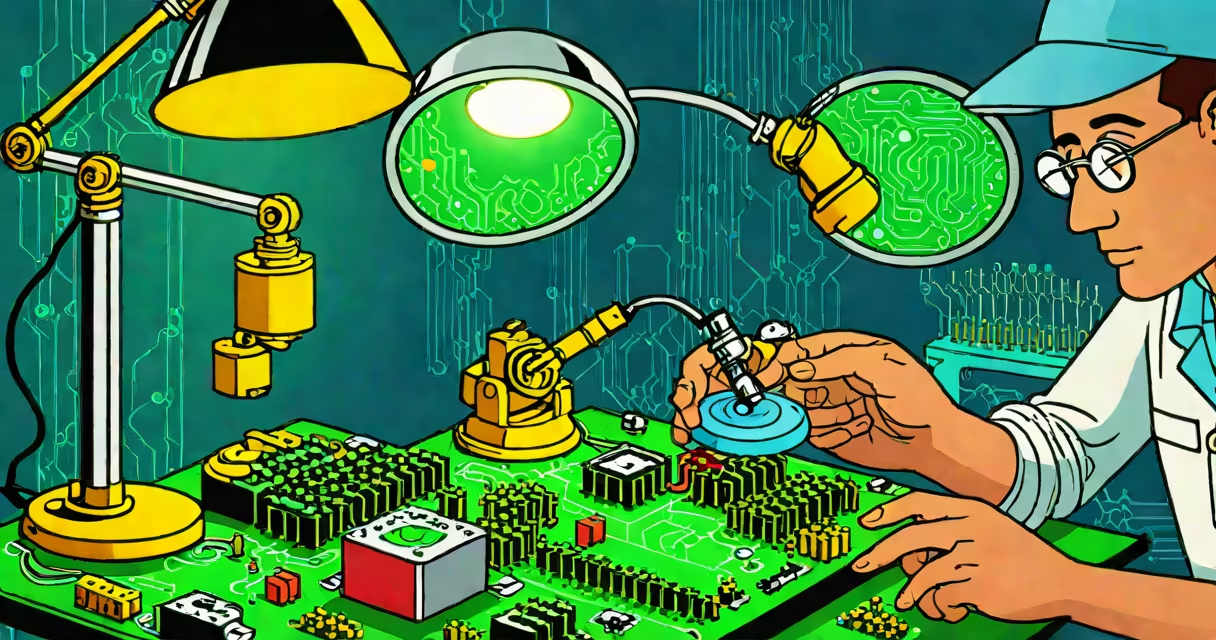
Quality control means systematically inspecting and testing products or processes to ensure they meet predefined specifications, detect defects early, and maintain consistency across production batches. It focuses on identifying flaws after they occur rather than preventing them at the source.
Quality control is a core function in manufacturing, construction, food processing, and software development. It involves checking materials, components, and finished goods against established criteria using visual checks, measurements, automated systems, or functional tests. The goal is to catch errors before they reach customers.
For example, a car manufacturer uses quality control to verify that each engine passes a 12-point diagnostic test before leaving the assembly line. If a sensor fails, the vehicle is flagged for repair. This reduces warranty claims and improves brand reliability.
Quality control operates through a series of defined steps: setting acceptance criteria, performing inspections, recording results, and taking corrective action when standards are not met. These steps happen at multiple stages-raw material intake, in-process checks, and final product evaluation.
Inspection methods vary by industry. In electronics, automated optical inspection (AOI) scans circuit boards for soldering defects. In food production, microbiological testing confirms that packaged meat meets safety thresholds set by the FDA. In construction, inspectors measure wall alignment and concrete strength using calibrated tools.
When a defect is found, the system triggers a review. A rejected batch may be scrapped, reworked, or quarantined. Data from these events feed into long-term improvement efforts, such as adjusting machine settings or retraining staff.
Different industries apply distinct approaches based on risk, cost, and precision requirements. The most common methods include:
| Method | Use Case | Example |
|---|---|---|
| Statistical Process Control (SPC) | Monitoring continuous processes | Tracking thickness of steel sheets on a rolling mill |
| Acceptance Sampling | Testing a subset of a large batch | Inspecting 50 out of 1,000 smartphone units for screen cracks |
| Final Inspection | Verifying completed products | Testing every airplane door seal for air pressure resistance |
| Automated Testing | High-volume, repetitive tasks | Using AI-powered cameras to detect paint imperfections on car bodies |
SPC relies on statistical models to detect deviations from expected performance. For instance, if the average diameter of a machined bolt is 10 mm with a tolerance of ±0.1 mm, SPC charts track daily measurements to identify when the process drifts out of control.
Acceptance sampling balances cost and accuracy. Instead of testing every unit, a sample size is determined using industry standards like ISO 2859-1. A batch of 5,000 widgets might be accepted if fewer than 3 defective units are found in a random sample of 80.
Quality control is often confused with quality assurance (QA), but they serve different roles. QA focuses on preventing defects by improving processes and documentation. QC detects defects after they occur. Think of QA as designing a better factory layout; QC as checking each item before shipping.
A key difference lies in timing: QA acts early in the cycle, QC later. According to the American Society for Quality (ASQ), "Quality assurance is process-oriented; quality control is product-oriented."
Another misconception is that QC is only about physical products. Software companies use automated regression testing to validate code changes. A single update to a banking app must pass 1,200 test cases before deployment to avoid transaction errors.
One non-obvious fact: QC is not always 100% effective. Even with rigorous checks, some defects slip through. A 2021 study published in the Journal of Quality Technology found that traditional inspection methods missed 12% of critical defects in high-precision aerospace parts due to human fatigue and inconsistent lighting during visual checks.
In automobile manufacturing, quality control helps every vehicle meets safety and performance benchmarks. At a Ford plant in Michigan, inspectors use laser-guided gauges to measure door panel gaps. Any deviation beyond 0.5 mm triggers a stoppage in the line until adjustments are made.
I experienced this firsthand during a visit to a Tier 1 supplier for Tesla. On the final assembly line, each Model 3 undergoes a 45-minute automated test sequence. Cameras scan for scratches, torque sensors verify bolt tightness, and battery packs are stress-tested under simulated driving conditions. Defective units are diverted to a rework station. Over six months, this reduced field failures by 37%, according to internal reports.
Construction projects also rely heavily on quality control. A residential building project in Denver used third-party inspectors to verify that concrete poured for foundations met compressive strength standards of 3,000 psi. After two failed samples, the contractor revised their mix ratio and re-poured. Without this step, structural failure risks would have increased.
What is quality control mean? It means maintaining consistency and reliability through verification. It's not perfection-it's catching problems before they cause harm, save money, or damage trust.