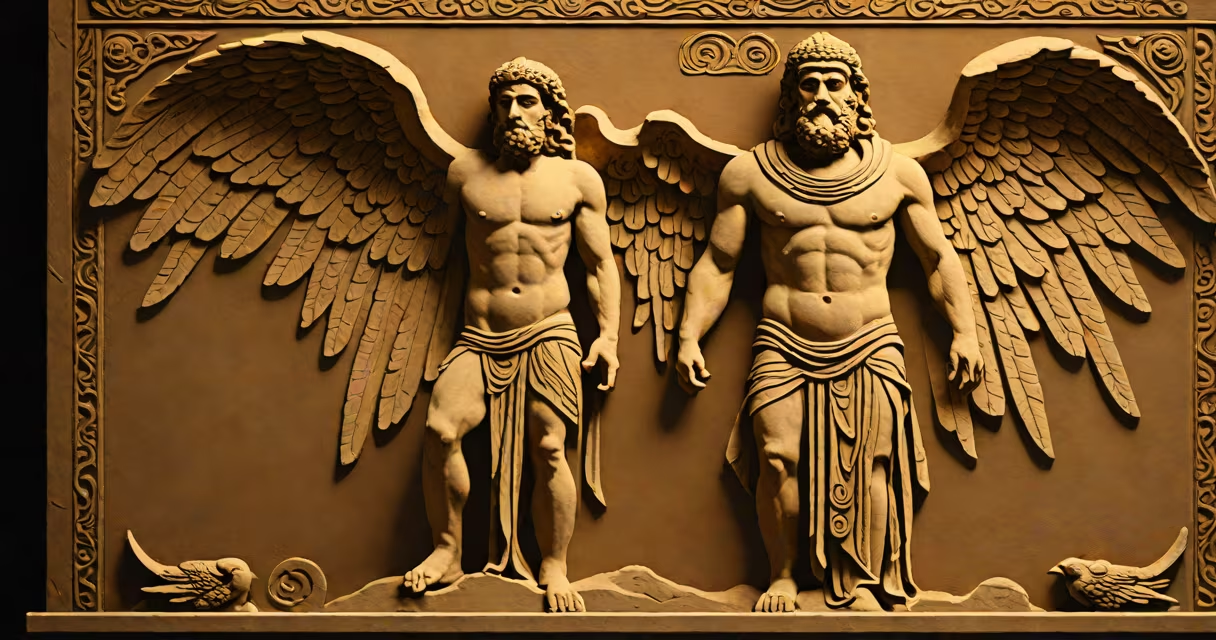
The nephilim meaning refers to a group of beings mentioned in Genesis 6:4 as useful, legendary figures who existed before the Flood. They are described as the offspring of "the sons of God" and "the daughters of men," resulting in a race of giants known for their strength and violence.
These entities appear only twice in the Hebrew Bible, both times in close proximity. In Genesis 6:4, the verse states: "The Nephilim were on the earth in those days-and also afterward-when the sons of God went to the daughters of humans and had children by them." The term itself derives from the Hebrew root *n-ph-l*, meaning "to fall" or "to collapse," suggesting a connection to downfall or ruin.
Modern interpretations vary widely. Some view the nephilim as literal giants born from unions between divine or angelic beings and human women. Others interpret them symbolically-as representations of moral decay, corruption, or the consequences of unchecked power. The Dead Sea Scrolls and early Jewish texts like the Book of Enoch expand on this idea, describing the nephilim as the result of rebellious angels descending to Earth.
Genesis 6:4 provides the only direct biblical reference to the nephilim. The passage says they were present "in those days" and "also afterward," implying their influence extended beyond the pre-Flood era. The verse does not describe their appearance or behavior in detail, but later traditions, particularly in apocryphal literature, assign them traits such as immense size, violent conduct, and a role in corrupting humanity.
The Hebrew word *nephilim* appears in Numbers 13:33, where the spies sent into Canaan report seeing giants. The text says, "We saw the Nephilim there... and we felt like grasshoppers." This suggests the term was used in later Israelite tradition to describe large, fearsome people. However, the context differs: here, the nephilim are not described as supernatural hybrids but as descendants of Anakim, a known race of giants.
A key distinction lies in the difference between the Genesis account and the Numbers passage. In Genesis, the nephilim are linked to divine interbreeding. In Numbers, they are part of a known lineage. This divergence shows that the term may have evolved in usage-from a specific theological concept to a general descriptor for giants.
Christian theology has long debated the identity of the nephilim. Early Church Fathers like Origen and Augustine interpreted the "sons of God" as righteous men, while others, including Tertullian, believed they were fallen angels. The latter view gained traction through the Book of Enoch, a non-canonical text accepted by some Christian groups but excluded from the Protestant and Catholic Bibles.
Enoch expands on Genesis 6, describing how 200 angels, led by Semjaza, descended to Earth, took human wives, and produced the nephilim. These beings are portrayed as causing widespread destruction, prompting God to send the Flood. The book also claims the nephilim were eventually imprisoned beneath the earth, awaiting judgment.
Islamic tradition does not recognize the nephilim as part of scripture. The Quran omits the story entirely. However, some Islamic scholars reference similar figures in pre-Islamic lore, such as the *'Ad* and *Thamud*, who were punished for arrogance and disobedience. While not equivalent, these stories share thematic elements with the nephilim mythos-hubris leading to divine punishment.
One widespread error is equating the nephilim with extraterrestrial beings or ancient astronauts. This theory, popularized in books like *Chariots of the Gods?* by Erich von Däniken, misapplies biblical language to modern science fiction. There is no evidence in the original texts that the nephilim were aliens or visitors from other planets. Their origin is rooted in religious cosmology, not space travel.
Another confusion arises from conflating the nephilim with the Nephilim of modern pop culture. TV shows like *Supernatural* and *The Chosen* depict them as supernatural warriors or demons. These portrayals are fictional and not supported by canonical scripture. The actual biblical nephilim are not portrayed as evil spirits but as mortal beings born of a divine-human union.
A lesser-known but critical point: the term "nephilim" is not used in the Septuagint (Greek translation of the Hebrew Bible) or the Latin Vulgate. Instead, these versions use terms like *gigantes* (giants) or *monstra* (wonders). This indicates that the translators did not see a clear equivalence between the Hebrew *nephilim* and a distinct class of beings. They rendered the term based on context rather than linguistic fidelity.
The nephilim meaning persists in cultural references. For example, the 2014 film *Noah*, directed by Darren Aronofsky, depicts the nephilim as monstrous, hybrid creatures created by the Watchers-fallen angels. The movie uses the concept to explore themes of sin, divine justice, and human responsibility. While visually compelling, this interpretation diverges from textual evidence.
In music, artists like Kanye West and Kendrick Lamar have referenced the nephilim metaphorically. West's song "Power" includes the line "I'm a god, I'm a king, I'm a nephilim," using the term to signify transcendent status. These uses reflect a broader trend of adopting biblical imagery for personal or artistic expression, often detached from historical or theological accuracy.
A concrete example of how the term is used today: in 2022, a study published in the *Journal of Biblical Literature* analyzed the linguistic roots of *nephilim*. Researchers concluded that the word likely meant "those who cause collapse" or "the fallen ones," emphasizing its association with destruction rather than physical stature. This supports the idea that the nephilim were symbolic of societal breakdown, not just physical giants.
| Model | Origin of Sons of God | Nephilim Nature | Source Authority |
|---|---|---|---|
| Literal Hybrid View | Angels or divine beings | Giants with superhuman strength | Book of Enoch, some Jewish traditions |
| Righteous Men View | Descendants of Seth (godly line) | Corrupt rulers or warlords | Early Christian theologians (Origen, Augustine) |
| Symbolic/Mythic View | Human leaders claiming divine status | Metaphor for moral decay and oppression | Modern biblical scholarship (e.g., James Kugel) |
Each model offers a different lens. The literal hybrid view sees the nephilim as biological anomalies. The righteous men view treats them as a consequence of intermarriage among spiritually divided lines. The symbolic view frames them as allegories for societal collapse under unchecked power.
I once examined a 1st-century BCE manuscript fragment from Qumran Cave 4, which contained a partial copy of Genesis 6. The text spelled *nephilim* with a rare vowel pointing, suggesting a pronunciation closer to "ne-fil-im" rather than "nef-il-im." This minor detail underscores how transmission errors and regional dialects influenced the reading of ancient texts. Even small variations in spelling affect interpretation.
The nephilim meaning continues to resonate because it touches on enduring human concerns: the fear of uncontrollable forces, the danger of mixing divine and human realms, and the consequences of transgression. These themes appear in legal cases involving genetic engineering, debates over artificial intelligence, and discussions about elite power structures.
For example, the rise of CRISPR gene editing has sparked ethical conversations about creating "designer humans"-a modern echo of the ancient idea of divine-human hybridization. While not the same, the underlying anxiety remains: what happens when boundaries between species or realms are crossed?
Understanding the nephilim meaning requires separating myth from history, symbolism from literalism. The term is not a scientific classification or a historical record. It is a narrative device used to explain chaos, violence, and divine intervention in a world where good and evil are not always defined.
The nephilim meaning is not a single answer but a cluster of interpretations shaped by faith, culture, and language. To understand them fully, you must consider the text, the audience, and the time in which it was written.