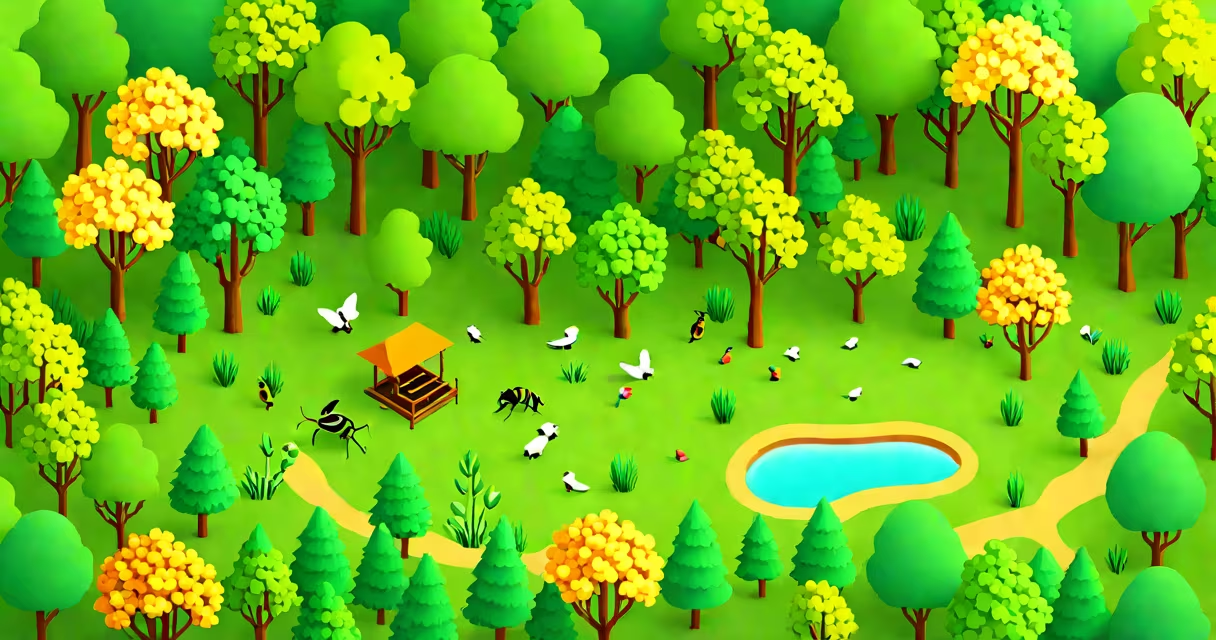
A natural system is a changing network of living organisms-plants, animals, fungi, microbes-and their non-living environment, such as soil, water, air, and climate, functioning together in a specific area. These systems operate without human intervention and maintain internal balance through energy transfer and material recycling.
Natural ecosystems form the foundation of Earth's life-support systems. They regulate climate, purify water, cycle nutrients, and provide habitats for species. The Amazon rainforest, the Great Barrier Reef, and the Serengeti grasslands are examples of large-scale natural ecosystems shaped by millennia of evolutionary processes.
According to the United Nations Environment Programme (UNEP), natural ecosystems contribute over $125 trillion annually in services like pollination, carbon sequestration, and flood control. This value exceeds global GDP, underscoring their critical role in planetary health.
Energy enters most natural ecosystems primarily as sunlight, captured by photosynthetic organisms like plants and algae. This energy flows through food chains: producers → primary consumers → secondary consumers → decomposers. At each level, energy is lost as heat, limiting the number of trophic levels to typically four or fewer.
Nutrient cycles-carbon, nitrogen, phosphorus-are closed loops within ecosystems. For example, in a temperate forest, fallen leaves decompose into organic matter, releasing nitrogen and phosphorus back into the soil. Trees absorb these nutrients, completing the cycle. Disruptions to these cycles, such as deforestation or fertilizer runoff, can collapse system function.
Ecological resilience-the ability to recover from disturbance-is a sign of healthy natural ecosystems. After a wildfire in Yellowstone National Park, native grasses and shrubs regrew within two years due to seed banks in the soil and adaptive traits of surviving species. This recovery demonstrates how natural systems maintain stability through redundancy and feedback mechanisms.
Natural ecosystems consist of biotic (living) and abiotic (non-living) components. Biotic elements include producers, consumers, and decomposers. Abiotic factors encompass temperature, pH, moisture, light, and mineral availability. The interaction between these elements determines system structure and function.
| Type | Location | Key Features | Example |
|---|---|---|---|
| Terrestrial | Land-based | Soil-dependent, seasonal variation | Alpine tundra in the Himalayas |
| Aquatic | Water-based | Flow dynamics, dissolved oxygen levels | Deep-sea hydrothermal vents |
| Wetland | Transition zones | High biodiversity, flood regulation | Everglades in Florida |
| Marine | Oceans and seas | Salinity gradients, ocean currents | Arctic sea ice system |
Each system type supports distinct communities adapted to local conditions. Wetlands, for instance, filter pollutants and buffer storm surges. A study published in *Science* (2021) found that coastal wetlands reduce wave height by up to 70%, protecting inland areas during hurricanes.
Many assume that "natural" means untouched or pristine. But natural ecosystems evolve through disturbances like fires, storms, and disease. The term refers to systems formed by natural processes-not those free from change. A forest recovering from fire is still natural, even if it appears damaged.
Another error is equating natural ecosystems with high biodiversity. While many have rich species diversity, some-like Arctic tundra or desert scrub-support fewer species yet remain stable and functional. Biodiversity is not the sole measure of system health.
Some confuse natural ecosystems with engineered environments like urban parks or agricultural fields. These are managed systems, not natural ones. A cornfield may host insects and birds, but it lacks the complex feedback loops and long-term resilience of a prairie system. The presence of humans alters energy inputs and species composition beyond natural thresholds.
Consider the coral reef surrounding the Great Barrier Reef, Australia. Corals are colonies of tiny animals that live symbiotically with photosynthetic algae (zooxanthellae). The algae provide energy via photosynthesis; corals offer shelter and nutrients. This mutualism drives reef growth and supports over 1,500 fish species.
When water temperatures rise above 30°C for more than two weeks, corals expel their algal partners-a process called bleaching. Without algae, corals lose up to 90% of their energy source and often die. Between 2016 and 2020, 50% of the Great Barrier Reef experienced severe bleaching events linked to climate change.
This example shows how natural ecosystems respond to stress. Recovery depends on larval dispersal, low pollution, and stable temperatures. When these conditions fail, the system shifts toward algal dominance and reduced structural complexity-indicating a loss of natural equilibrium.
During fieldwork in 2019, researchers documented a 30% decline in reef-building coral cover across 12 sites in the northern sector. Recovery was observed only in areas with low sedimentation and minimal fishing pressure-factors that preserve natural processes.
Natural ecosystems deliver essential services that sustain human life. They regulate atmospheric CO₂ levels-forests store an estimated 450 gigatons of carbon globally. Wetlands filter nitrogen and phosphorus, preventing eutrophication in downstream rivers. Pollinators like bees and butterflies enable crop production worth $235 billion annually worldwide, according to the Food and Agriculture Organization (FAO).
Humans do not create natural ecosystems-they depend on them. When ecosystems degrade, societies face water shortages, increased disease risk, and economic instability. The 2019 IPBES Global Assessment Report emphasized that 75% of terrestrial and 66% of marine environments have been altered by human activity, threatening system integrity.
Understanding what is natural system helps prioritize conservation. Protecting intact systems preserves genetic diversity, stabilizes climates, and maintains resource availability. It also informs restoration efforts, such as rewilding projects in Europe that reintroduce wolves and beavers to restore natural predator-prey dynamics.