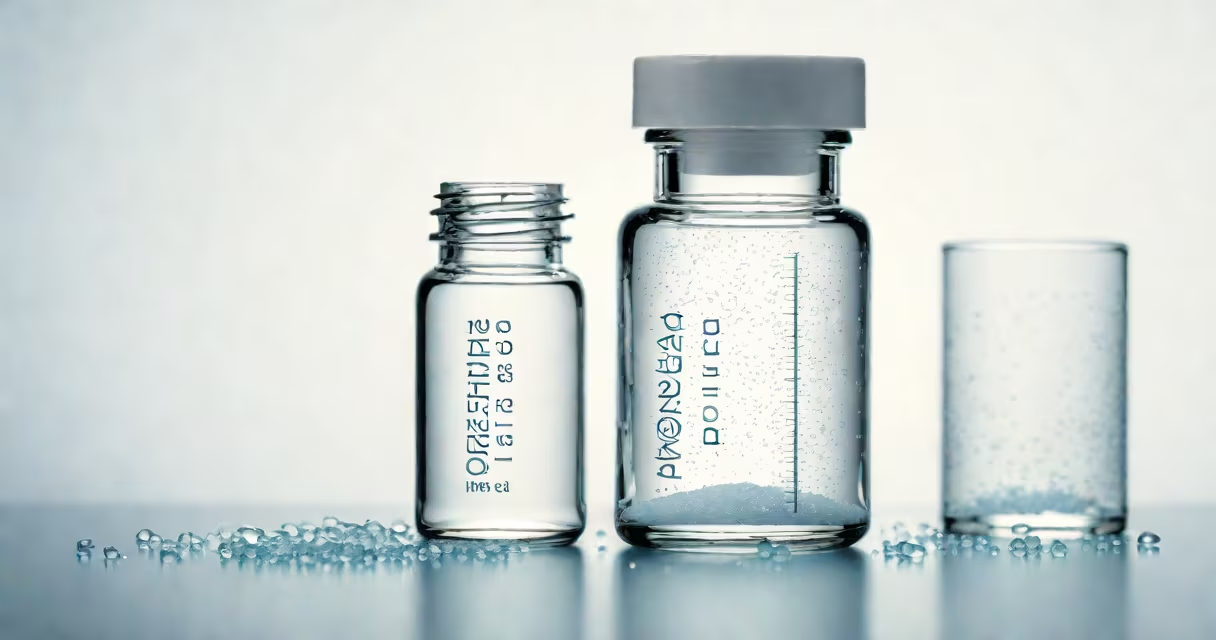
Na2HPO4, or disodium hydrogen phosphate, is a water-soluble salt formed from phosphoric acid and sodium hydroxide. It acts as a buffer, pH stabilizer, and emulsifier in food, pharmaceuticals, and laboratory settings. Its structure includes two sodium ions and one hydrogen phosphate ion.
Disodium hydrogen phosphate appears as a white, odorless powder. It dissolves readily in water, forming a slightly alkaline solution with a pH around 8.5-9.5. The compound is stable under normal storage conditions but degrades slowly when exposed to moisture or acidic environments.
It is not a nutrient in the dietary sense but contributes to phosphate balance in biological systems. Regulatory bodies such as the FDA and EFSA recognize it as safe for use in food at specified levels.
Na2HPO4 functions primarily as a buffer due to its ability to resist changes in pH when acids or bases are added. This property stems from the equilibrium between HPO₄²⁻ and PO₄³⁻ ions in aqueous solution. When a small amount of acid enters the system, HPO₄²⁻ accepts protons to form H₂PO₄⁻, minimizing pH shifts.
In food processing, this buffering capacity prevents spoilage and maintains texture. For example, in processed cheese, Na2HPO4 stabilizes the emulsion between fat and water, preventing separation during heating and cooling cycles.
In clinical chemistry, Na2HPO4 is used in phosphate-buffered saline (PBS) solutions. A standard PBS formulation contains 137 mM NaCl, 2.7 mM KCl, 10 mM Na2HPO4, and 1.8 mM KH2PO4. This mixture maintains physiological pH (7.4) for cell culture and antibody testing.
Na2HPO4 is one of several sodium phosphate salts. The others include monosodium phosphate (NaH2PO4), trisodium phosphate (Na3PO4), and sodium dihydrogen phosphate (NaH2PO4). These differ in the number of replaceable hydrogen atoms and the resulting pH of their aqueous solutions.
| Compound | Formula | pH in 0.1 M Solution | Primary Use |
|---|---|---|---|
| Monosodium phosphate | NaH2PO4 | 4.0-4.5 | Acidic buffer, baking powder |
| Disodium hydrogen phosphate | Na2HPO4 | 8.5-9.5 | Neutral-to-alkaline buffer, food additive |
| Trisodium phosphate | Na3PO4 | 11.5-12.0 | Detergent builder, industrial cleaner |
These salts are often combined to create precise pH control. For instance, a 1:1 molar mix of NaH2PO4 and Na2HPO4 yields a buffer with a pKa near 7.2, ideal for mimicking human blood pH.
Na2HPO4 appears in over 200 food products listed by the FDA. Common applications include baked goods, dairy alternatives, and canned meats. In yogurt, it prevents curdling by maintaining optimal pH during fermentation.
A 2022 study published in the Journal of Food Science found that adding 0.5% Na2HPO4 to plant-based milk improved shelf life by reducing protein aggregation. The compound stabilized the colloidal suspension, keeping the product homogeneous for up to 60 days at room temperature.
In laboratories, Na2HPO4 is essential for preparing buffers used in enzyme assays. For example, in a lactate dehydrogenase (LDH) activity test, researchers mix 50 mM Na2HPO4 with 50 mM NaH2PO4 to maintain pH 7.4 throughout the reaction.
Some consumers confuse Na2HPO4 with sodium hexametaphosphate (SHMP), a different compound used in detergents. SHMP chelates calcium and magnesium ions, while Na2HPO4 does not. Confusing them leads to misuse in cleaning or food prep.
Another misconception is that Na2HPO4 is a source of dietary phosphorus. While it contains phosphorus, the compound is not absorbed efficiently in the gut and is excreted unchanged. The FDA classifies it as a processing aid, not a nutrient.
Na2HPO4 is sometimes mistaken for sodium bicarbonate (baking soda). Though both are white powders used in baking, they react differently. Baking soda (NaHCO3) produces CO2 when heated, leavening dough. Na2HPO4 does not generate gas and serves only as a pH regulator.
To prepare 1 liter of 0.1 M phosphate buffer at pH 7.4:
This buffer remains stable for up to two weeks when stored at 4°C. It is routinely used in ELISA tests and cell lysis protocols.
I once prepared this buffer during a summer internship at a biotech startup. After mixing the salts, the solution appeared clear but registered pH 7.8. I recalibrated the pH meter and realized the electrode was contaminated. After rinsing and recalibrating, the correct pH was achieved. This taught me that even accurate formulas require proper instrument maintenance.
The U.S. Food and Drug Administration (FDA) lists Na2HPO4 as Generally Recognized As Safe (GRAS) for use in food. Acceptable daily intake (ADI) is not established because it is not consumed in significant quantities as a nutrient.
According to the European Food Safety Authority (EFSA), Na2HPO4 is safe at concentrations below 100 mg/kg body weight per day. Chronic exposure above this level may affect kidney function in sensitive individuals, though no adverse effects were reported in controlled trials.
Occupational exposure limits set by OSHA cap airborne concentration at 10 mg/m³ over an 8-hour workday. Workers handling large quantities in industrial settings should wear gloves and eye protection to prevent irritation.
What is Na2HPO4? It is a synthetic salt used widely in food, medicine, and research for its buffering and stabilizing properties. It is not a nutrient, does not produce gas, and is distinct from similar compounds like baking soda or SHMP. Its safety profile supports use in regulated amounts across multiple industries.