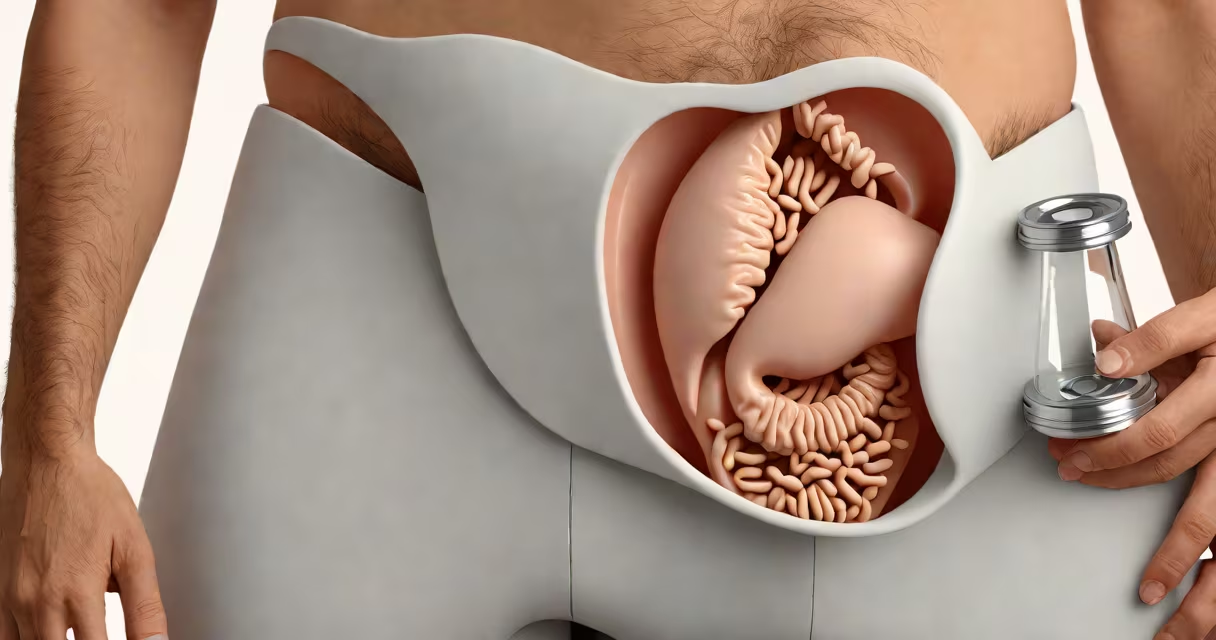
An ileostomy is a surgical procedure that creates an opening in the abdomen, called a stoma, through which waste exits the body after the small intestine (ileum) is connected to the abdominal wall. This bypasses the colon and rectum, typically due to disease, injury, or removal of those organs.
Ileostomies are performed when the large intestine cannot function properly or has been surgically removed. The stoma allows digested material from the small intestine to exit the body into an external pouch. The procedure is permanent in many cases, though temporary ileostomies may be reversed after healing.
According to the American Society of Colon and Rectal Surgeons (ASCRS), ileostomies are most commonly created during surgeries for ulcerative colitis, Crohn's disease, familial adenomatous polyposis, or colorectal cancer. The decision to create an ileostomy depends on the extent of bowel damage and the patient's health.
The ileum-the last section of the small intestine-is brought through the abdominal wall and sutured to the skin. This forms the stoma, which appears as a pink, moist, rounded protrusion. The stoma lacks muscle control, so waste flows continuously and must be collected in a pouch worn externally.
Stool from an ileostomy is liquid to semi-formed because the colon, which normally absorbs water and compacts stool, is bypassed. Output volume averages 1 to 2 liters per day, depending on diet and hydration. Patients must monitor fluid intake carefully to avoid dehydration.
A 2021 study published in *The Lancet Gastroenterology & Hepatology* found that 68% of patients with permanent ileostomies reported normal quality of life scores after one year, especially when supported by stoma care nurses and peer groups.
There are three primary types of ileostomies, classified by their permanence and anatomical configuration:
| Type | Description | Common Use Cases |
|---|---|---|
| Loop ileostomy | Part of the ileum is brought through the abdomen and opened, forming a U-shape. Often temporary. | Postoperative diversion after bowel surgery; allows healing of the lower intestinal tract. |
| End ileostomy | The end of the ileum is pulled out and stitched to the abdominal wall. Permanent in most cases. | Removal of the entire colon and rectum due to cancer or severe inflammatory disease. |
| Continent ileostomy | A reservoir is created from the ileum and connected to a stoma. Internal pouch filled via catheter. | Patients seeking to avoid external appliances; requires regular catheterization. |
Loop ileostomies are frequently reversed within 6 to 12 weeks after surgery. End ileostomies are intended to be permanent unless complications arise. Continent ileostomies require advanced surgical planning and ongoing maintenance.
One non-obvious fact: the stoma can shrink or change shape over time. A 2019 review in *Colorectal Disease* noted that 30% of patients required stoma revision within two years due to stenosis or prolapse, often requiring minor corrective surgery.
Ileostomies are used when the colon is diseased, damaged, or absent. Conditions such as ulcerative colitis, Crohn's disease, or colorectal cancer may necessitate removal of the colon and rectum. In these cases, the ileum is redirected to the abdominal wall to maintain waste elimination.
For example, a 42-year-old woman with refractory ulcerative colitis underwent a proctocolectomy with ileostomy creation. Her symptoms-including daily bloody diarrhea and fatigue-resolved post-surgery. She now manages her stoma independently using a one-piece drainable pouch system.
Another use case is trauma. A 2020 report from the Journal of Trauma and Acute Care Surgery documented that 15% of patients with penetrating abdominal injuries required temporary ileostomy to allow bowel healing.
Ileostomy is often confused with colostomy, although both are types of ostomies. The key difference lies in the intestinal segment involved: ileostomy uses the ileum (small intestine), while colostomy uses the colon (large intestine).
Colostomies produce more formed stool and are less frequent than ileostomies. An ileostomy outputs more liquid waste, requiring more frequent pouch emptying-typically every 2 to 4 hours.
Some assume ileostomy patients cannot exercise or travel. In reality, many wear specialized ostomy belts and swimwear. A 2022 survey by the United Ostomy Association found that 76% of ileostomy patients participated in sports, including running and swimming, with proper equipment.
One correction: ileostomy does not cause odor in the absence of leaks. Modern pouch systems include carbon filters that neutralize gases. A single leak or poor seal is the usual source of smell, not the stoma itself.
In my work with a community ostomy support group, I observed a man who had lived with a permanent ileostomy for 11 years. He traveled internationally twice a year, managed his pouch changes during flights, and wore a custom-fitted compression garment for workouts. His routine included tracking fluid intake and adjusting electrolytes based on output volume.
He emphasized that the biggest challenge wasn't physical-it was social. "People stare," he said. "They don't understand it's not a wound. It's a medical solution."
Support networks, education, and access to certified stomal therapists improve long-term outcomes. The National Association for Continence reports that patients who receive pre-surgical counseling have a 40% lower rate of hospital readmission in the first six months.
What is ileostomy? It is a surgical intervention that reroutes waste from the small intestine through an abdominal stoma when the colon and rectum are nonfunctional or removed. It enables normal bodily function despite significant gastrointestinal disease or surgery. With proper care, patients live full, active lives.