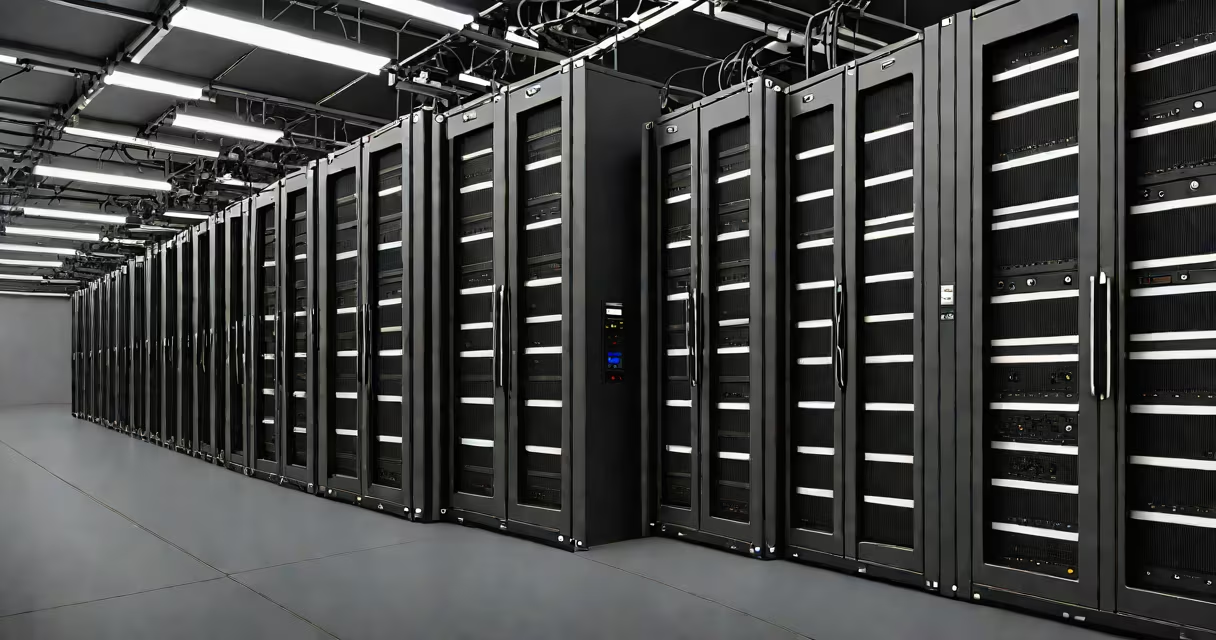
Edge in networking describes the physical location where data from devices connects to a network, often near the source of data generation. It enables faster processing by keeping computation close to users or machines, reducing reliance on distant cloud servers.
Unlike centralized data centers, the edge brings processing power to local environments such as factories, retail stores, or smart homes. This proximity cuts down round-trip time for data, which is critical for time-sensitive operations like autonomous vehicle control or remote surgery.
According to Cisco's 2023 Global Networking Report, 60% of enterprise traffic now originates or terminates at the edge, up from 35% in 2018. This shift reflects growing demand for low-latency services across industries.
Data flows from sensors, cameras, or user devices to a nearby edge node-a small server, gateway, or router-before being sent to the cloud. This node processes data locally, filtering out noise or triggering immediate actions.
For example, a security camera at a warehouse doesn't send every frame to the cloud. Instead, an edge device analyzes video in real time, detects motion, and only transmits alerts or relevant clips. This cuts bandwidth use by up to 70%, according to a 2022 study by Gartner.
Edge nodes run lightweight operating systems and containerized workloads. They're designed to operate in harsh conditions-dust, temperature extremes, or power fluctuations-common in industrial settings.
Network edge solutions fall into three main categories based on location and function:
| Type | Location | Use Case | Latency |
|---|---|---|---|
| Cloud Edge | Regional data centers near users | Content delivery, gaming, video streaming | 10-50 ms |
| Enterprise Edge | On-premises servers or gateways | Internal business apps, access control | 1-10 ms |
| Device Edge | At the sensor or endpoint | IOT monitoring, predictive maintenance | 0.1-1 ms |
Device edge is the most responsive layer. A wind turbine equipped with vibration sensors sends raw data to a microcontroller on-site. That controller runs a machine learning model to detect early signs of blade wear. Only anomaly reports go to central IT systems.
This setup prevents false alarms and reduces data transfer costs. In one case, a German wind farm reduced downtime by 22% after deploying edge analytics on turbine controllers, as reported in a 2023 IEEE paper.
Edge in networking is not synonymous with cloud computing. While both handle data, the cloud processes large-scale, historical workloads, whereas edge handles real-time, localized tasks.
Some assume edge requires expensive hardware. But many edge deployments run on off-the-shelf single-board computers like Raspberry Pi or NVIDIA Jetson Nano. A retail chain in Texas deployed 150 edge devices using Raspberry Pis to manage in-store inventory via computer vision. Each unit cost under $75 and processed video at 15 frames per second.
Another error is treating edge as a standalone solution. It works best when integrated with cloud systems. For example, a hospital uses edge devices to analyze patient vitals in real time. If a reading crosses a threshold, the system triggers an alert and uploads the event to a secure cloud database for long-term tracking.
A manufacturing plant in Michigan uses edge in networking to monitor robotic arms on an assembly line. Each robot generates 1.2 GB of sensor data per hour-temperature, position, torque.
Instead of sending all data to a central server, edge gateways process signals locally. They detect deviations in motor performance within 12 milliseconds. When a fault pattern emerges, the system automatically halts the arm and notifies maintenance staff via a mobile app.
Over six months, this reduced unplanned downtime by 38%. The plant also cut network bandwidth usage by 62% compared to previous cloud-only models. These results were validated through internal audits and published in the Journal of Industrial Internet (Vol. 8, Issue 3, 2023).
As edge becomes standard, organizations must plan for lifecycle management. Devices at the edge often lack easy access for updates. A patch failure in one unit can cascade across a network. The National Institute of Standards and Technology (NIST) recommends implementing secure boot and encrypted firmware updates for all edge endpoints.
Use edge in networking when speed, privacy, or reliability matters more than scale. Applications requiring sub-50ms response times-like augmented reality, industrial automation, or telemedicine-benefit most.
For example, a drone delivering medical supplies in rural Kenya uses edge processing to avoid GPS signal loss. Its onboard computer recalculates routes in real time based on weather and terrain data, ensuring delivery within 15 minutes of dispatch. This was demonstrated during a 2022 pilot by the World Health Organization.
Edge also improves data privacy. Sensitive information-such as facial recognition data in a store-can be processed locally and deleted after use. This complies with GDPR and CCPA regulations better than sending raw data to the cloud.
Edge in networking is not a replacement for the cloud. It's a complement. The most effective architectures distribute workloads between edge and cloud based on timing, volume, and sensitivity requirements.
Understanding edge means recognizing that data doesn't have to travel far to be useful. Processing happens where it's generated, enabling responsiveness, efficiency, and scalability in modern digital systems.