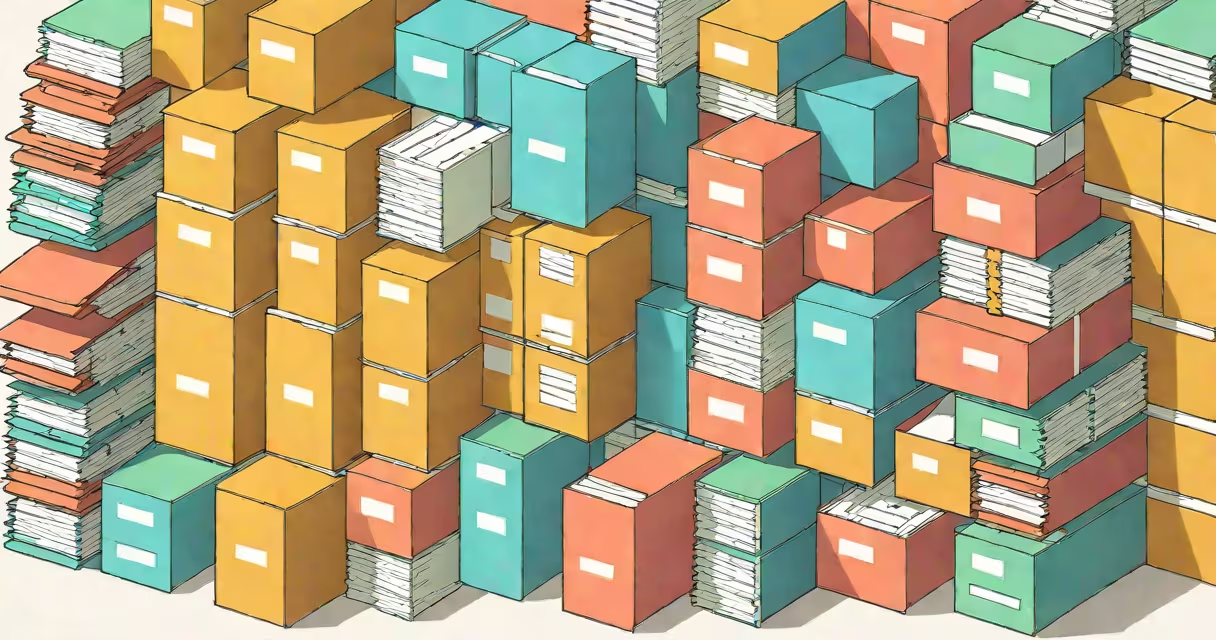
An information silo is a system, department, or individual that stores data in isolation, restricting access to others despite potential value. This isolation creates gaps in visibility, slows decision-making, and reduces organizational efficiency. Data trapped in silos cannot be easily shared, integrated, or analyzed across teams.
Information silos often emerge when departments adopt independent tools, databases, or workflows without coordination. For example, marketing may track customer behavior in a CRM platform, while sales uses a separate spreadsheet. These systems don't communicate, leading to duplicate efforts, conflicting reports, and missed opportunities. According to McKinsey & Company, organizations with fragmented data systems are 2.5 times more likely to make poor strategic decisions due to incomplete insights.
Silos aren't always technical. They can stem from culture-when teams guard data out of fear, competition, or lack of trust. A 2022 Gartner study found that 68% of data silos originate from organizational resistance rather than infrastructure issues. Once established, silos reinforce themselves: teams stop asking for data they don't have access to, and new silos grow from old ones.
Information silos typically begin with a legitimate need for control or specialization. A finance team might store budget data in a secure database because of compliance requirements. That's reasonable-but when no one else can access it, even for cross-functional planning, the system becomes a silo.
Technically, silos arise when data isn't standardized or interoperable. One team uses CSV files, another relies on a cloud-based dashboard, and a third logs everything in paper ledgers. Without common formats or integration protocols, data remains locked in place. Even when systems are digital, APIs may be missing or poorly documented, preventing automated sharing.
A real-world example: a hospital chain in California discovered that patient records were duplicated across emergency rooms, labs, and billing departments. Each unit had its own software. When a patient arrived at ER A, doctors couldn't see test results from ER B. This caused delays in treatment and increased error rates. After implementing a unified electronic health record system, average diagnosis time dropped by 37%, according to a 2021 Health Affairs report.
Information silos fall into four primary categories based on structure and origin:
| Type | Origin | Example | Impact |
|---|---|---|---|
| Departmental | Organizational structure | HR maintains employee data separately from IT's access logs | Onboarding takes longer; security risks increase |
| System-Based | Software choice | Marketing uses HubSpot; Sales uses Salesforce; no sync | Lead handoffs fail; conversion tracking is inconsistent |
| Cultural | Team norms or leadership style | Finance refuses to share quarterly forecasts with product teams | Product launches misaligned with revenue goals |
| Individual | Personal habits or job role | Senior analyst keeps project data on a personal laptop | Knowledge lost during turnover; no audit trail |
One non-obvious fact: silos often grow faster in high-performing teams. When a group achieves results using isolated methods, leadership may reward success without questioning data sharing. This reinforces the silo. A 2020 Harvard Business Review analysis showed that 43% of high-performing teams had higher-than-average data isolation, which later reduced cross-team innovation.
Information silos are not the same as data privacy or security. Protecting sensitive information-like medical records or financial details-is necessary and lawful. But privacy doesn't equal isolation. A properly secured system can still allow authorized access across roles.
They're also not synonymous with legacy systems. Older software can support integration. The issue isn't age-it's whether data flows between systems. A 20-year-old database can be part of a connected architecture if it exposes APIs and follows standards.
Another misconception: silos only affect large organizations. Small businesses face them too. A local retail shop using Excel for inventory, QuickBooks for accounting, and a paper log for customer orders creates a silo. When the owner tries to assess profit margins, they must manually reconcile three separate sources. This leads to errors and slow responses to supply issues.
I once helped a nonprofit organization integrate donor data scattered across five spreadsheets, two email threads, and a single Google Doc. The team believed they were "organized." But when a grant application required a full history of contributions, staff spent 18 hours compiling data. We built a central database using Airtable, mapped fields from each source, and set up automated syncs. Within two weeks, reporting time dropped from days to minutes.
Breaking silos requires both process and mindset changes. Start by identifying data flows: who creates data, who uses it, and where it gets stuck. Then define clear ownership and access rules. Use tools like data catalogs or metadata management platforms to document where information lives and who can access it.
For example, a mid-sized manufacturer used Power BI to connect production logs, quality control reports, and shipping data. All teams could view real-time dashboards. When a defect rate spiked, operations and engineering collaborated within hours-not days-to adjust machine settings. The company reported a 22% reduction in waste and a 15% improvement in on-time delivery within six months.
Information silos persist when teams assume they're protecting data by keeping it private. But isolation weakens performance. The goal isn't to eliminate all boundaries-it's to ensure data flows where it adds value. Organizations that treat data as a shared resource, not a possession, gain speed, accuracy, and resilience.