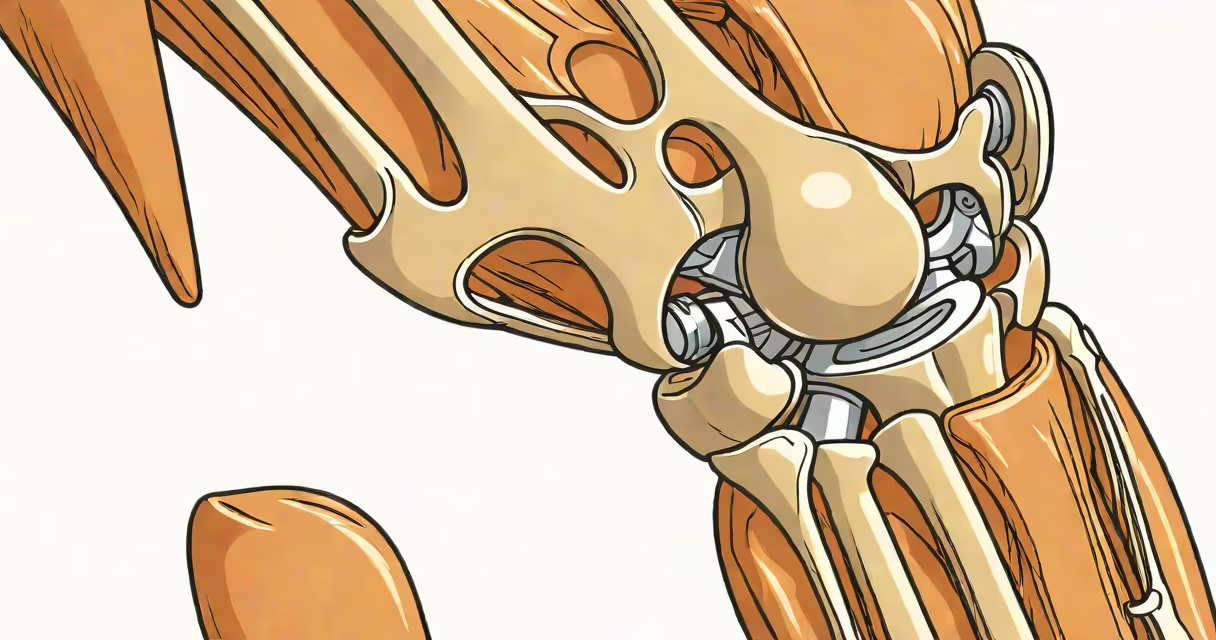
The posterior cruciate ligament (PCL) is a strong band of tissue connecting the femur to the tibia, preventing the lower leg bone from moving too far backward relative to the thigh bone. It is one of four major ligaments in the knee and plays a important role in maintaining joint stability during movement.
Unlike the anterior cruciate ligament (ACL), which is more commonly injured, the PCL is less frequently damaged but still essential for normal knee function. It resists forces that push the tibia rearward, such as those occurring during a fall onto a bent knee or a direct blow to the shin while the knee is flexed.
According to the American Academy of Orthopaedic Surgeons (AAOS), the PCL accounts for approximately 20% of all knee ligament injuries, with most occurring due to high-impact trauma rather than sports-related twisting motions. The ligament's location deep within the knee joint makes it less visible on standard imaging and harder to diagnose without advanced techniques like MRI.
The PCL originates from the posterior aspect of the femur and attaches to the anterior surface of the tibia. This anatomical position allows it to act as a primary restraint against posterior translation of the tibia. When you sit with your legs bent and your feet flat on the floor, the PCL keeps your lower leg from sliding too far back.
During walking, running, or pivoting, the PCL works alongside the ACL, medial collateral ligament (MCL), and lateral collateral ligament (LCL) to maintain alignment and prevent excessive motion. It is especially active during deceleration and landing from jumps, where it absorbs shock and stabilizes the knee under load.
A 2021 study published in the Journal of Orthopaedic Research found that PCL-deficient knees exhibit a 30% increase in posterior tibial displacement during weight-bearing activities compared to intact knees. This mechanical instability often leads to early-onset osteoarthritis if left untreated.
PCL injuries are classified into three grades based on severity:
| Grade | Description | Common Causes | Recovery Time |
|---|---|---|---|
| I | Mild stretch with minimal tearing | Minor impact, hyperextension | 4-6 weeks |
| II | Partial tear with moderate instability | Fall on bent knee, car accident | 6-12 weeks |
| III | Complete rupture with significant instability | High-velocity impact, sports collision | 3-6 months with rehab |
Grade I and II injuries typically heal with conservative treatment, including rest, ice, compression, elevation (RICE), physical therapy, and bracing. Grade III tears may require surgical reconstruction, particularly in athletes or individuals with persistent instability.
One non-obvious fact: PCL injuries are often misdiagnosed because symptoms mimic those of meniscus tears or patellar tendinitis. A 2019 review in the journal Orthopaedic Journal of Sports Medicine reported that nearly 40% of PCL injuries were initially overlooked in emergency settings due to subtle swelling and lack of obvious deformity.
Many people assume that all knee ligament injuries result from sudden twists or pivots. However, PCL damage usually occurs from a direct force to the front of the shin while the knee is bent-such as in a dashboard injury during a car crash or a football tackle to the knee.
Another common confusion is equating PCL injuries with ACL injuries. While both are cruciate ligaments, they serve opposite functions: the ACL prevents forward sliding of the tibia, while the PCL prevents backward sliding. An ACL tear typically results from sudden deceleration or cutting movements, whereas a PCL tear arises from axial loading or posterior shear forces.
For example, a patient who fell while skiing and landed on their bent knee with their boot locked experienced a grade II PCL tear. They reported mild pain and swelling but no immediate instability. The injury was confirmed via MRI six days later, showing partial disruption of the ligament fibers.
If you suspect a PCL injury-especially after a high-impact event like a car crash or fall-seek evaluation within 72 hours. Delayed diagnosis increases the risk of secondary damage to cartilage and surrounding structures.
Initial management includes immobilization with a knee brace, avoiding weight-bearing activities, and using crutches if needed. Physical therapy begins early to restore range of motion and strengthen the quadriceps and hamstrings, which compensate for weakened PCL function.
After four weeks of rehabilitation, patients with grade I-II injuries typically regain functional mobility. Those with grade III tears may undergo arthroscopic PCL reconstruction using a graft from the hamstring tendon or patellar tendon. Success rates exceed 85% when surgery is combined with structured rehab, according to the AAOS.
As someone who treated multiple PCL cases in a sports medicine clinic, I've seen patients return to full activity within 6-9 months post-surgery. One athlete returned to competitive soccer after 8 months of consistent therapy and sport-specific drills.
Understanding what is a PCL in the knee clarifies why this ligament matters-not just for athletes, but for anyone relying on stable lower limbs during daily tasks. Its role in posterior stability ensures safe movement through varied terrain and changing loads.