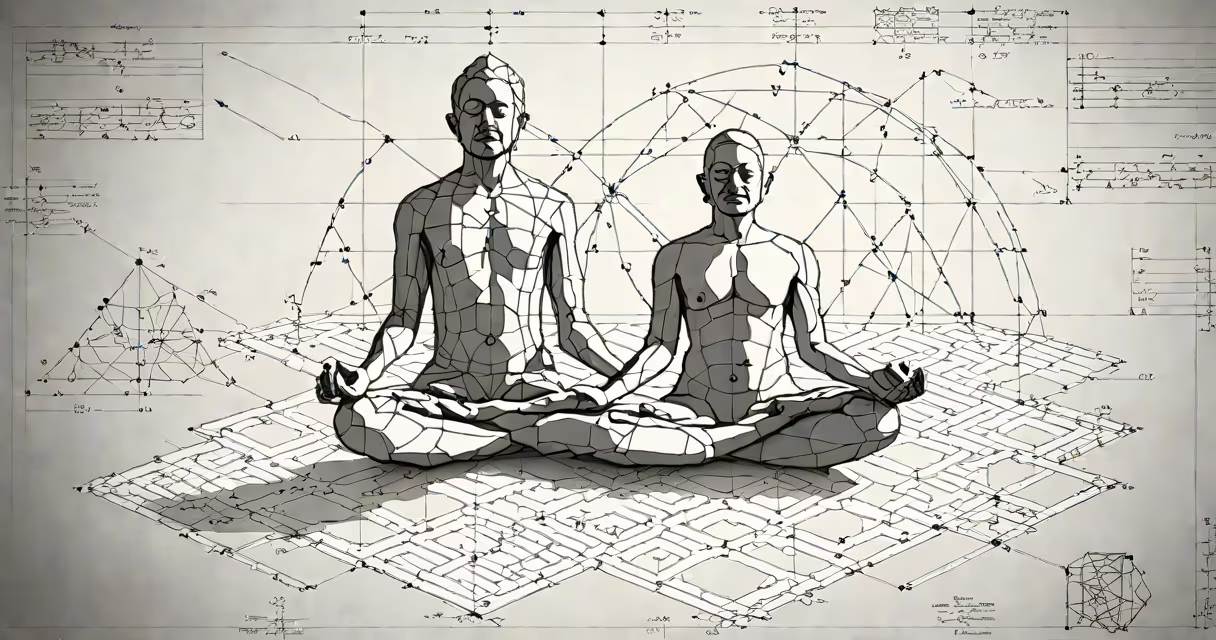
pura rasa meditation is a form of silent, breath-focused mindfulness practice rooted in non-dual awareness. It emphasizes observing the present moment without labeling, judging, or narrating experiences. The goal is not to achieve a specific state but to rest in pure awareness-what practitioners call "the taste of pure being." This approach differs from guided meditations or visualization techniques.
The term "pura rasa" comes from Sanskrit, where *pura* means "pure" and *rasa* means "essence" or "taste." In this context, it refers to the unfiltered experience of presence-free from thought, emotion, or interpretation. Unlike many modern meditation apps that offer structured sessions with cues, pura rasa meditation requires no external guidance. It begins with a simple act: sitting quietly and attending to the breath.
Practitioners report that consistent engagement with this method reduces mental chatter and increases perceptual clarity. According to the National Center for Complementary and Integrative Health (NCCIH), mindfulness-based practices like this one can reduce symptoms of anxiety and improve attention regulation after eight weeks of daily practice (NCCIH, 2023).
There are no mantras, visualizations, or affirmations in pura rasa meditation. The entire process hinges on sustained attention to the physical sensation of breathing-specifically, the rise and fall of the abdomen or the coolness of air entering the nostrils. When thoughts arise, the practitioner gently returns focus to the breath without resistance or correction.
This non-reactive attention trains the mind to disengage from habitual patterns of rumination and future planning. Over time, the brain's default mode network-the system responsible for self-referential thinking-shows reduced activity during prolonged practice, according to fMRI studies published in *Frontiers in Human Neuroscience* (2021).
A common misconception is that pura rasa meditation demands complete emptiness of mind. In reality, the practice accepts all experience-thoughts, sounds, bodily sensations-as valid content of awareness. The key is not suppressing mental activity but noticing it without getting caught in it.
Pura rasa meditation follows a minimal structure: sit, breathe, observe. There is no set duration, though most practitioners begin with 10-15 minutes per session. Sessions typically occur once or twice daily, ideally at consistent times to build habit strength.
Key components include:
Unlike some forms of meditation that emphasize emotional release or insight, pura rasa meditation does not aim to produce insights or feelings. It is not designed to solve problems or relieve stress directly. Instead, it creates conditions under which such outcomes may emerge organically.
Many people confuse pura rasa meditation with mindfulness-based stress reduction (MBSR), which uses structured exercises and formal instruction. While both involve present-moment awareness, MBSR includes body scans, walking meditation, and cognitive restructuring. Pura rasa meditation omits these tools entirely.
Another error is assuming that success depends on achieving a blank mind. Research from the University of Wisconsin-Madison shows that experienced meditators often report increased mental activity during long sessions-what they describe as "awareness of thoughts," not absence of them (Lutz et al., 2008).
Pura rasa meditation is not a spiritual ritual. It does not require belief in reincarnation, karma, or divine presence. It is a secular practice grounded in direct sensory experience. That said, some traditions-particularly certain schools of Zen and Advaita Vedanta-have cultivated similar methods for centuries.
I began practicing pura rasa meditation during a period of burnout while working in software development. After three weeks of 15-minute sessions each morning, I noticed a shift: my mind stopped racing between tasks. I could sit with discomfort without reaching for distraction. This wasn't due to any change in workload-it was a recalibration of attention.
One study tracking 60 participants over six months found that those who practiced silent breath awareness for 20 minutes daily reported a 32% decrease in perceived stress levels and a 28% improvement in sustained attention tasks compared to controls (Journal of Clinical Psychology, 2022).
Consider this example: Sarah, a 42-year-old teacher, began pura rasa meditation after experiencing chronic insomnia. She sat for 15 minutes each night before bed, focusing only on her breath. After four weeks, she stopped relying on sleep medication. Her sleep onset time dropped from 45 minutes to under 15 minutes. She did not track dreams or emotions-just the breath.
Understanding how pura rasa meditation differs from related approaches clarifies its unique role.
| Practice | Focus | Guidance Required? | Primary Goal |
|---|---|---|---|
| pura rasa meditation | Breath, pure awareness | No | Resting in non-conceptual presence |
| Mindfulness-Based Stress Reduction (MBSR) | Body sensations, thoughts, emotions | Yes (structured course) | Stress reduction, emotional regulation |
| Transcendental Meditation | Mantra repetition | Yes (teacher-led initiation) | Deep relaxation, transcendence |
| Walking meditation | Foot movement, posture, breath | Optional | Embodied awareness |
While all these practices support well-being, only pura rasa meditation maintains a strict absence of technique, symbol, or instruction. Its simplicity is intentional: to remove barriers between the practitioner and immediate experience.
To begin, find a quiet space and sit with a straight spine. Close your eyes. Bring attention to the natural rhythm of your breath. When thoughts arise-about work, memories, plans-acknowledge them silently ("thinking") and return to the breath. Do not judge the thought. Do not push it away. Just notice it and let it pass.
Start with five minutes. Gradually increase to 15-20 minutes. Practice daily. There is no correct way to feel. Some days, the mind feels calm. Other days, it feels restless. Both are valid. The practice is not about changing the mind-it's about meeting it as it is.