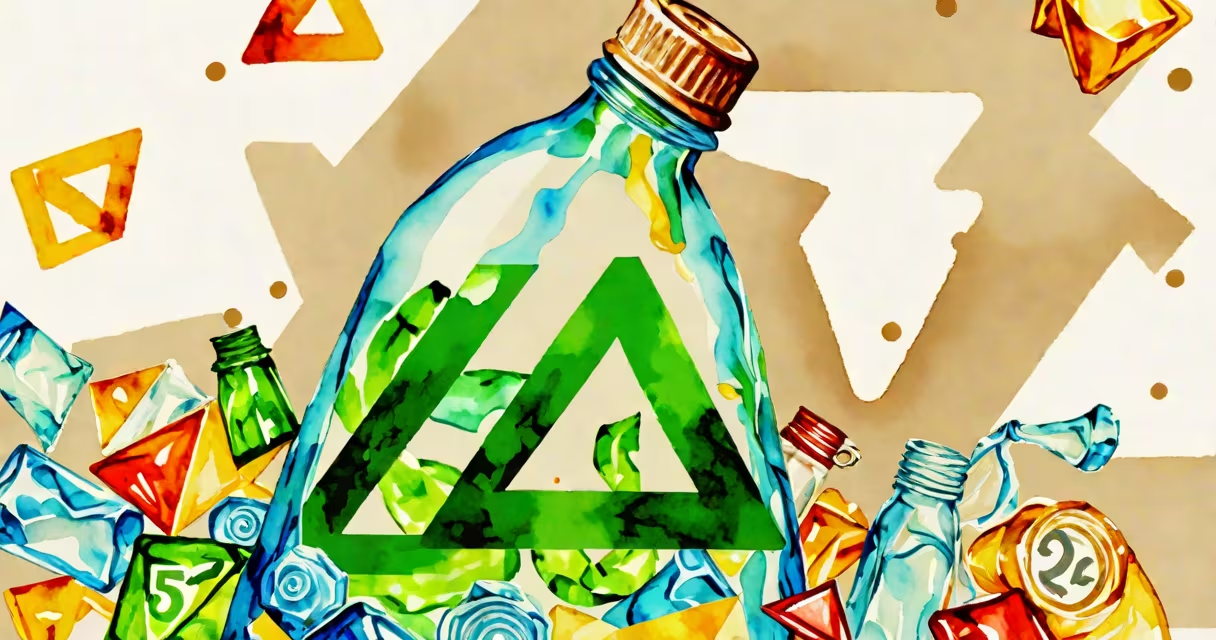
The number on plastic is a resin identification code (RIC) embedded in the recycling symbol triangle. It identifies the type of plastic resin used in manufacturing, guiding sorting during recycling. These numbers range from 1 to 7 and are standardized under ASTM D7611.
Plastic packaging often bears a triangle with a number inside. This is not a batch ID or expiration date-it's a global standard for material classification. The system was developed in 1988 by the Society of the Plastics Industry (SPI) to improve recycling efficiency. Without it, automated sorting lines would struggle to distinguish between polyethylene terephthalate (PET) and high-density polyethylene (HDPE).
Each number corresponds to a specific polymer family. For example, #1 indicates PET, commonly used in water bottles. #2 is HDPE, found in milk jugs and detergent containers. The number does not indicate recyclability in local facilities-only material composition. A #5 plastic container may be made of PP (polypropylene), which is recyclable in some regions but not others.
Plastic resin codes are assigned based on chemical structure and processing behavior. The number appears within a chasing arrows triangle, usually molded into the base of the product. It's not optional-manufacturers must label products using the SPI system if they're intended for reuse or recycling.
When a recycling facility receives mixed waste, optical scanners read the number via infrared light. Machines then route materials into bins based on the code. For instance, #1 and #2 plastics are processed differently due to melting points and contamination risks. #1 PET melts at around 260°C, while #4 LDPE melts at 110-130°C, requiring distinct processing temperatures.
Some manufacturers omit the number due to cost or design constraints. In such cases, visual inspection and density testing are used. A piece of plastic that floats in saltwater is likely HDPE (#2), while one that sinks may be PVC (#3), though this method is less accurate than scanning.
The following table outlines the seven resin identification codes, their common uses, and recycling status:
| Number | Plastic Type | Common Uses | Recyclability |
|---|---|---|---|
| 1 | PET (Polyethylene Terephthalate) | Water bottles, food jars | Widely accepted; recycled into fiberfill, clothing |
| 2 | HDPE (High-Density Polyethylene) | Milk jugs, detergent bottles | Highly recyclable; used in plastic lumber, pipes |
| 3 | PVC (Polyvinyl Chloride) | Plumbing pipes, cling film | Low acceptance; toxic when burned; rarely recycled |
| 4 | LDPE (Low-Density Polyethylene) | Shopping bags, bread wrappers | Accepted in some curbside programs; recycled into trash can liners |
| 5 | PP (Polypropylene) | Yogurt containers, bottle caps | Increasingly recycled; used in automotive parts |
| 6 | PS (Polystyrene) | Styrofoam cups, disposable cutlery | Not widely recyclable; often banned in municipal programs |
| 7 | Other (including ABS, bioplastics) | Electronics casings, 3D printing filament | Varies; many are not recyclable through standard systems |
Manufacturers use the number to comply with international regulations. The European Union's Single-Use Plastics Directive requires labeling of plastic packaging. In the U.S., states like California mandate clear identification for recycling compliance.
Consumers rely on the number to make informed disposal decisions. A study by the National Institute of Standards and Technology (NIST) found that 68% of households incorrectly sorted plastics before receiving education on the RIC system. After training, correct sorting rates rose to 89%.
For example, a yogurt container marked #5 is PP. It can be recycled in cities with advanced sorting infrastructure, such as San Francisco or Tokyo. But in rural areas with limited processing capacity, it may still end up in landfill. The number doesn't guarantee recycling-it only enables it.
Many people assume that a higher number means better quality or safety. This is false. #1 PET is safe for single-use beverages, but #3 PVC contains phthalates linked to hormone disruption. Number size reflects chemistry, not performance.
Another myth is that all plastics with a number are recyclable. In reality, only 9% of all plastic ever produced has been recycled, according to a 2022 report by the United Nations Environment Programme (UNEP). The number helps identify material, but local infrastructure determines whether recycling happens.
A non-obvious fact: Some plastics labeled #1 are not food-safe. While PET is generally safe for water, repeated heating degrades it. A 2019 study in *Environmental Science & Technology* showed that PET bottles reused for hot liquids released microplastics at 3.5 times the rate of single-use ones.
Consider a 500ml water bottle with a #1 inside the triangle. It's made of PET. When placed in a recycling bin, it travels to a Materials Recovery Facility (MRF). Optical sensors detect the number, confirming it's PET. The bottle is shredded into flakes, washed, and melted into pellets.
These pellets are sold to manufacturers who turn them into new products. A 2021 audit by the Association of Plastic Recyclers found that 72% of PET collected in U.S. MRFs were converted into new bottles, with the rest used for fiberfill in winter jackets or carpet backing.
However, if the same bottle had a #7 label and contained ABS plastic, it would be rejected unless the facility specifically accepts ABS. This highlights that the number guides sorting-but not all numbers lead to recycling.
On rare occasions, the number is misprinted. During a 2020 audit of beverage containers in Oregon, 3% of #1 PET bottles bore incorrect codes. Most were #2 HDPE, leading to contamination. This error rate underscores the need for consistent labeling standards.
Understanding what the number means on plastic prevents contamination and improves recycling outcomes. It's not a universal indicator of sustainability-but it's the foundation of responsible disposal.