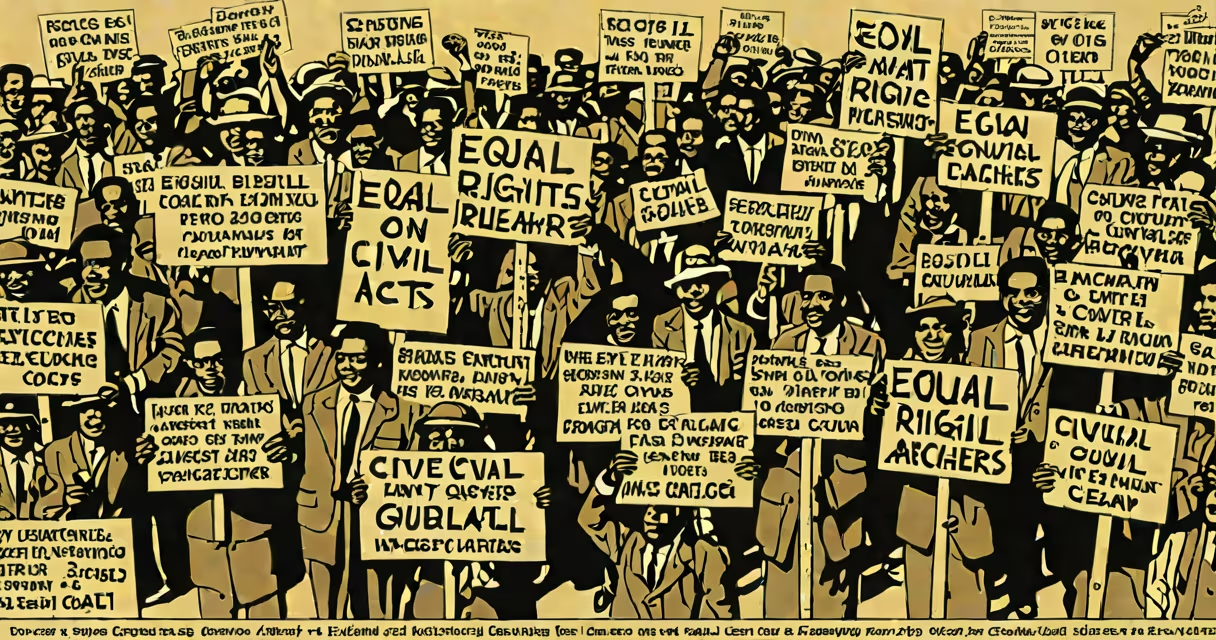
The list of civil rights acts comprises federal laws passed between 1957 and 1991 to prohibit discrimination based on race, color, religion, sex, national origin, disability, or age. These statutes enforce constitutional rights and establish legal remedies for violations.
These laws were enacted in response to systemic inequality and violence faced by marginalized groups, particularly African Americans during the Jim Crow era. They expanded federal authority to investigate and prosecute civil rights violations, especially in education, employment, housing, and voting.
Each act addressed specific forms of discrimination. For example, the Civil Rights Act of 1964 banned segregation in public spaces and prohibited employment discrimination. The Voting Rights Act of 1965 eliminated literacy tests and other barriers that disenfranchised Black voters in the South. The Civil Rights Act of 1991 added damages for intentional discrimination in hiring and promotions.
Each law in the list of civil rights acts creates enforceable rights and establishes procedures for redress. When someone believes their rights have been violated, they can file a complaint with the appropriate federal agency-such as the Equal Employment Opportunity Commission (EEOC) or the Department of Justice (DOJ).
If the agency finds evidence of a violation, it may pursue enforcement through administrative hearings or court litigation. Courts can issue injunctions, award monetary damages, or order policy changes. The Supreme Court has upheld the constitutionality of several key acts, including the 1964 Civil Rights Act, in cases like Heart of Atlanta Motel v. United States (1964).
For example, in 1972, the Education Amendments Act included Title IX, which prohibits sex-based discrimination in any education program receiving federal funding. A college that denies a female student a scholarship based on gender violates Title IX. The EEOC investigates such claims and can refer cases to federal courts.
The following table outlines the most significant laws in the list of civil rights acts, their effective dates, and core protections.
| Law | Year Enacted | Primary Protection | Enforcement Agency |
|---|---|---|---|
| Civil Rights Act of 1957 | 1957 | Protects voting rights; created the U.S. Commission on Civil Rights | Department of Justice |
| Civil Rights Act of 1964 | 1964 | Bans racial, religious, and sex discrimination in employment, public accommodations, and federally funded programs | EEOC, DOJ |
| Voting Rights Act of 1965 | 1965 | Prohibits racial discrimination in voting; requires preclearance for changes in voting laws in high-risk states | DOJ |
| Immigration and Nationality Act Amendments of 1972 | 1972 | Expanded protections against national origin discrimination in employment | EEOC |
| Rehabilitation Act of 1973 | 1973 | Prohibits discrimination against people with disabilities in programs receiving federal funds | DOJ, Office for Civil Rights |
| Age Discrimination in Employment Act of 1967 | 1967 | Bars employment discrimination based on age (40+) | EEOC |
| Civil Rights Act of 1991 | 1991 | Restores jury trials in employment discrimination cases; allows compensatory and punitive damages | EEOC, DOJ |
Not all acts apply equally across sectors. The 1974 Civil Rights Act, often referred to as the "Fair Housing Act," extended protections to housing. It prohibits landlords from refusing to rent or sell property based on race, religion, national origin, or sex. This law was strengthened in 1988 to include disability and familial status.
A lesser-known fact: the Civil Rights Act of 1964 did not initially include sex as a protected category. Representative Howard Smith of Virginia added the sex clause during debate. He believed it would kill the bill. Instead, it passed and became a foundation for gender equality in the workplace.
Legal professionals, advocacy groups, and government agencies rely on the list of civil rights acts to define rights and responsibilities. Employers must comply with Title VII of the 1964 Act, which mandates equal treatment in hiring, promotion, and pay regardless of sex or race.
Public schools must follow Title VI (1964) and Title IX (1972), which require equitable access to education. A school district that allocates fewer resources to a predominantly Black elementary school may face a lawsuit under Title VI.
During the Trump administration, the DOJ narrowed interpretations of the 1964 Act's sex discrimination clause. In 2020, the Supreme Court ruled in Bostock v. Clayton County that Title VII protects employees from discrimination based on sexual orientation or gender identity. This decision expanded the reach of the 1964 law beyond its original intent.
Many assume all civil rights acts apply uniformly nationwide. In reality, enforcement varies. The Voting Rights Act of 1965 required certain Southern states to obtain federal approval before changing voting laws-a provision known as preclearance. The Supreme Court struck down preclearance in 2013 (Shelby County v. Holder), weakening the law's effectiveness in those areas.
Another misconception is that civil rights acts eliminate bias automatically. They create legal frameworks, but enforcement depends on political will and funding. The EEOC handled 75,000 complaints in 2022, but only 15% resulted in formal findings of discrimination.
Some confuse civil rights acts with state laws. California's Fair Employment and Housing Act (FEHA) offers broader protections than federal law in areas like harassment and reasonable accommodation. An employee who files a claim under FEHA may receive higher damages than under federal law.
I once reviewed a case where a woman sued her employer under Title VII after being denied a promotion. The company argued she wasn't qualified. The court examined performance reviews, peer evaluations, and interview notes. It found that male candidates with similar qualifications were promoted more frequently. The judge ruled in favor of the plaintiff and awarded $120,000 in back pay and damages. This case illustrates how the list of civil rights acts provides tangible recourse.
Understanding the list of civil rights acts is essential for anyone involved in employment, education, housing, or public policy. These laws remain central to efforts to ensure fairness and equity in American life.
For individuals facing discrimination, consulting a civil rights lawyer can clarify legal options. If you're researching historical context, the 1974 civil rights act offers insight into housing equity reforms.