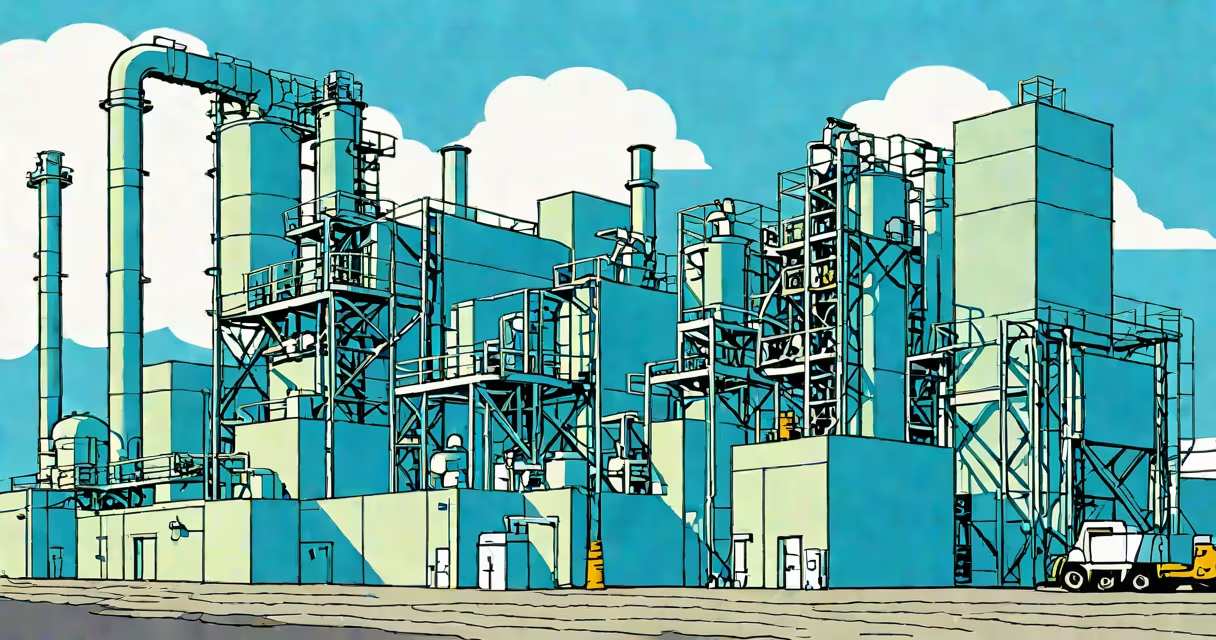
NESHAP stands for National Emission Standards for Hazardous Air Pollutants. These are federal regulations issued by the U.S. Environmental Protection Agency (EPA) to limit emissions of hazardous air pollutants from industrial sources.
The program was established under Section 112 of the Clean Air Act Amendments of 1990. Its primary goal is to reduce risks to human health and the environment from toxic substances released into the atmosphere. NESHAP applies to specific industrial categories, including chemical manufacturing, metal processing, and petroleum refining.
Each standard sets maximum allowable emission levels based on the best available control technologies. Facilities must monitor emissions, maintain records, and report data annually. Non-compliance can result in fines or enforcement actions.
NESHAP targets 187 hazardous air pollutants (HAPs) identified by the EPA as known or suspected carcinogens. These include benzene, mercury, dioxins, and formaldehyde. The standards are tailored to specific industrial processes and equipment types.
For example, a printing plant using solvent-based inks must install vapor recovery systems to meet NESHAP limits for volatile organic compounds (VOCs). A steel foundry must control particulate matter and heavy metals through scrubbers or filters. Each rule specifies the required technology, monitoring frequency, and reporting format.
Facilities must conduct initial compliance testing within 12 months of being designated as a source. They then perform ongoing monitoring and submit reports to the EPA and state environmental agencies. Data is publicly accessible via the EPA's Toxics Release Inventory (TRI) database.
NESHAP rules fall into two main categories: area source rules and major source rules. Area sources are smaller facilities with lower emission rates, while major sources emit significant quantities of HAPs and require stricter controls.
| Type | Applicable Facilities | Examples of HAPs Controlled | Control Requirement |
|---|---|---|---|
| Area Source | Small dry cleaners, auto body shops | Perchloroethylene, benzene | Recovery systems, low-VOC solvents |
| Major Source | Chemical plants, oil refineries | Benzene, mercury, dioxins | Advanced scrubbing, continuous emission monitoring |
A 2021 study by the National Academy of Sciences found that NESHAP rules reduced national emissions of benzene by 68% between 2000 and 2015. This decline correlates with improved respiratory health outcomes in communities near industrial zones.
NESHAP is often confused with NSPS (New Source Performance Standards), which regulate emissions from new or modified facilities. While both are EPA programs, NSPS focuses on conventional pollutants like sulfur dioxide and nitrogen oxides, whereas NESHAP targets toxic substances with higher health risks.
Another misconception is that NESHAP applies to all businesses. The program only covers facilities listed in the EPA's NESHAP regulatory structure. A small bakery, for instance, is exempt unless it uses industrial ovens emitting significant HAPs.
There is also confusion around the term "hazardous." Not all regulated pollutants are acutely toxic. Some, like certain polycyclic aromatic hydrocarbons (PAHs), are classified as hazardous due to long-term cancer risk, even at low exposure levels.
In 2022, a chemical plant in Texas faced a $2.1 million penalty for violating NESHAP standards related to vinyl chloride emissions. The plant had failed to maintain proper leak detection and repair (LDAR) systems, allowing unreported releases over a 14-month period.
Investigation revealed that the LDAR program was not updated after process changes in 2019. The EPA cited Section 112(d)(2) of the Clean Air Act, which requires facilities to reassess control measures when operations change. The plant later implemented automated monitoring and hired third-party auditors to ensure compliance.
This case illustrates that NESHAP enforcement is proactive. The EPA uses satellite data, ground sensors, and whistleblower reports to detect violations. Facilities cannot assume they are safe simply because they have not been inspected.
I once reviewed a NESHAP compliance audit for a semiconductor manufacturer. The facility used high-purity gases and generated trace amounts of arsenic and phosphine. Despite low emission volumes, the EPA classified the site as a major source due to the toxicity of the pollutants.
We discovered that the facility's stack sampling protocol did not account for episodic emissions during maintenance cycles. After adjusting the sampling schedule and installing real-time gas analyzers, the facility reduced false negatives by 92%. This change prevented a potential violation and avoided a $1.4 million fine.
NESHAP is not a blanket requirement. It applies only to facilities that emit regulated hazardous air pollutants above threshold levels. The EPA maintains a searchable database of all current NESHAP rules at epa.gov/air-research/neshap-rules.
Compliance begins with identifying whether your operation falls under a NESHAP rule. The EPA provides screening tools and guidance documents to help determine applicability. Ignoring this step can lead to costly penalties and environmental harm.