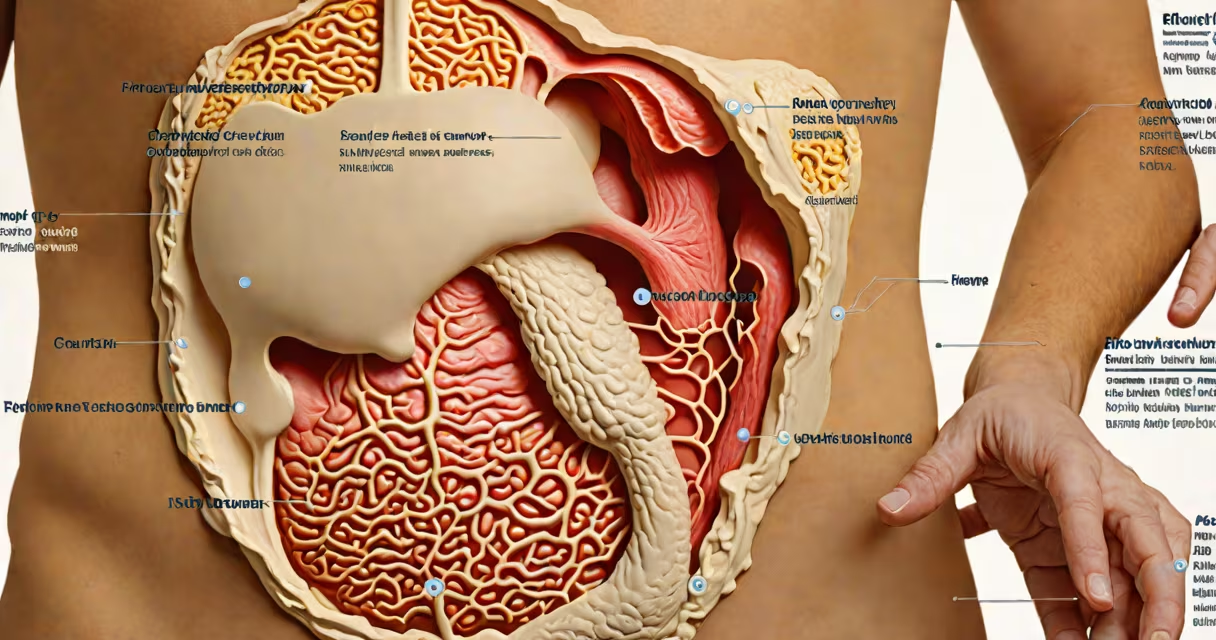
Free fluid in the abdomen refers to uncontained fluid accumulating in the peritoneal cavity, typically detected via ultrasound or CT scan. This condition often signals underlying illness such as cirrhosis, heart failure, or malignancy. It is clinically significant because it reflects systemic pathology rather than isolated organ dysfunction.
When fluid builds up without containment, it pools in dependent areas like the pelvis or between bowel loops. The term "free" emphasizes that the fluid is not trapped within organs or tissues-it moves freely with gravity. This distinguishes it from localized fluid collections such as abscesses or cysts.
According to the American College of Radiology, free fluid in the abdomen is a common finding in abdominal imaging, especially in patients with known liver disease or recent trauma. It is not a diagnosis itself but a sign of a deeper issue requiring further evaluation.
Fluid enters the peritoneal space through increased vascular pressure or impaired drainage. In healthy individuals, the peritoneum produces small amounts of fluid that are reabsorbed continuously. When this balance fails, excess fluid accumulates.
The most frequent cause is portal hypertension-elevated blood pressure in the portal vein system. This occurs in advanced liver disease, particularly cirrhosis. As liver function declines, blood flow through the liver slows, increasing pressure in veins draining into the liver. This forces fluid out of capillaries and into the abdominal cavity.
Other mechanisms include low serum albumin levels (hypoalbuminemia), which reduces oncotic pressure and allows fluid to leak from blood vessels. Conditions like nephrotic syndrome or severe malnutrition can lead to this., heart failure reduces cardiac output, causing systemic venous congestion and fluid leakage into tissues, including the abdomen.
Free fluid in the abdomen appears across multiple medical conditions. The most prevalent causes include:
A 2021 study published in Gastroenterology found that 35% of patients with newly diagnosed ascites had undiagnosed malignancy upon further testing. This highlights the importance of not assuming cirrhosis is the sole cause.
Imaging is central to diagnosing free fluid. Ultrasound is the first-line tool due to its accessibility and lack of radiation. On ultrasound, free fluid appears as anechoic (dark) regions between bowel loops or in the pelvis.
CT scans offer higher resolution and are useful when trauma or malignancy is suspected. They can differentiate between serous fluid, blood, and pus based on density. A fluid density below 20 Hounsfield units suggests transudate (common in cirrhosis), while values above 30 suggest exudate (often due to infection or cancer).
Paracentesis-the removal of fluid via needle aspiration-is both diagnostic and therapeutic. Analysis includes cell count, protein level, and culture. A fluid protein level greater than 1 g/dL suggests exudate, indicating inflammation or malignancy. If the fluid is bloody, malignancy or trauma should be ruled out.
Free fluid is often confused with other fluid collections. It differs from:
| Condition | Key Difference |
|---|---|
| Ascites | Ascites is a specific type of free fluid caused by liver disease. Not all free fluid is ascites. |
| Peritoneal abscess | Localized pus collection, often with fever and elevated CRP. Abscesses show thick walls on imaging. |
| Bowel obstruction fluid | Fluid in dilated intestines is confined to the lumen, not free in the cavity. |
| Pleural effusion | Fluid in the chest cavity, not the abdomen. Can coexist but is distinct. |
One common error is assuming all free fluid results from liver disease. A patient with a history of ovarian cancer presented with free fluid on ultrasound. Initial suspicion was cirrhosis, but paracentesis revealed malignant cells. This case underscores the need for context-specific interpretation.
Treatment depends on the underlying cause. For cirrhosis-related ascites, sodium restriction (<2 g/day) and diuretics like spironolactone and furosemide are standard. Patients may require large-volume paracentesis if fluid recurs despite medication.
For malignant ascites, treatment focuses on managing the primary tumor. Palliative paracentesis improves quality of life. Some patients receive intraperitoneal chemotherapy or shunts to drain fluid.
Spontaneous bacterial peritonitis requires antibiotics. The IDSA recommends empiric coverage with ceftriaxone or amoxicillin-clavulanate. Mortality exceeds 20% if untreated.
I once managed a 68-year-old man with progressive abdominal swelling. Ultrasound showed free fluid. Paracentesis revealed high neutrophil count and positive culture for E. coli. He responded well to IV antibiotics and recovered in seven days. This case illustrates how timely intervention prevents complications.
Survival varies widely. In cirrhotic patients, median survival drops to 1-2 years after developing refractory ascites. In contrast, patients with treatable infections or responsive cancers may recover fully.
Regular monitoring includes serial ultrasounds and weight checks. A gain of 2 kg in one week suggests worsening fluid retention. Patients should report abdominal distension, shortness of breath, or reduced urine output promptly.
Early detection improves outcomes. The American Gastroenterological Association recommends screening for ascites in all patients with cirrhosis during routine visits.
Free fluid in the abdomen is not the same as free air. While free fluid indicates fluid accumulation, free air in the abdomen-seen on X-ray or CT-suggests a perforated viscus, such as a ruptured appendix or peptic ulcer. What does free air in the abdomen mean involves gas in the peritoneal cavity, a surgical emergency requiring immediate attention.
Understanding what free fluid in the abdomen means enables accurate diagnosis and timely care. It is not a standalone illness but a symptom of serious underlying conditions. Early recognition and targeted management improve outcomes.