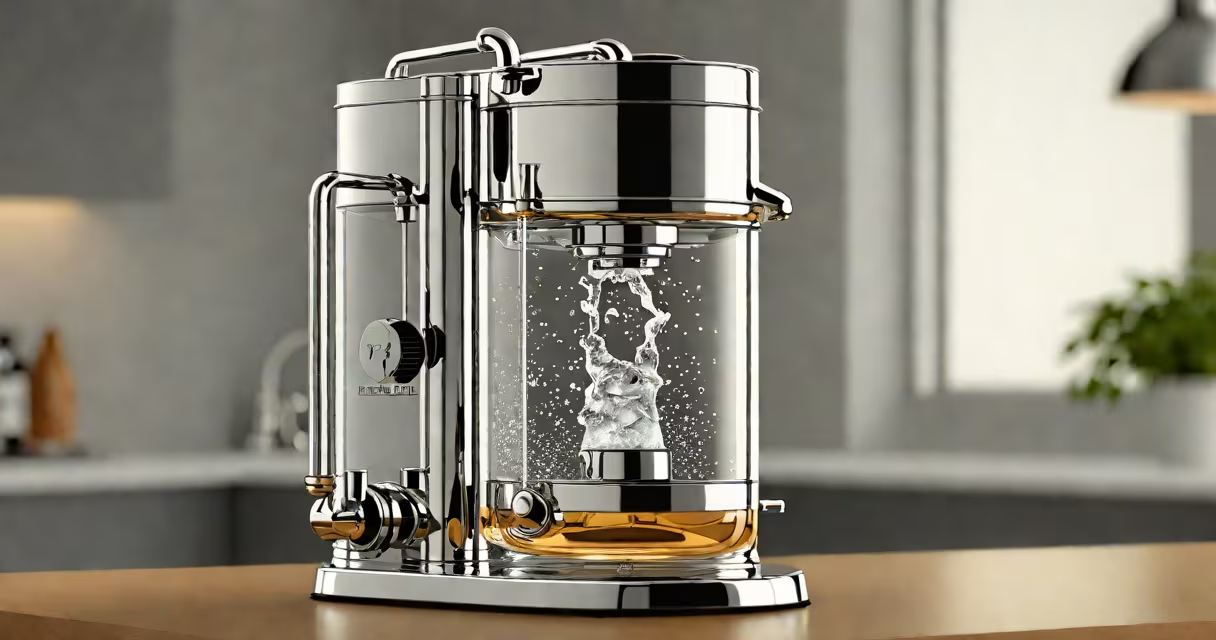
Water filters remove specific contaminants based on their design and filtration technology. They target substances like chlorine, lead, sediment, pesticides, and microorganisms such as coliform bacteria, depending on the filter type and certified performance.
Most household water filters rely on physical barriers, chemical absorption, or membrane separation. The effectiveness varies widely-some systems eliminate nearly all dissolved solids, while others focus only on improving taste and odor. Understanding what each filter removes requires examining its mechanism, certification standards, and real-world testing results.
For example, a standard carbon filter reduces chlorine and volatile organic compounds (VOCs) but does not remove heavy metals like lead or pathogens like E. coli. A reverse osmosis system, in contrast, can reduce lead, arsenic, fluoride, and nitrates by over 90%, but it also strips beneficial minerals. Knowing what a filter removes prevents false assumptions about safety and quality.
Filters operate through three primary mechanisms: mechanical straining, adsorption, and reverse osmosis. Mechanical filters trap particles larger than their pore size-typically 5 microns or smaller. These are effective for sediment, rust, and sand but not for dissolved chemicals or microbes.
Adsorption uses activated carbon to attract and bind contaminants like chlorine, benzene, and certain pesticides. Carbon filters are common in pitcher systems and faucet attachments. They improve taste and reduce odors but don't remove fluoride, lead, or viruses unless combined with additional stages.
Reverse osmosis (RO) forces water through a semi-permeable membrane under pressure. This process captures ions, molecules, and suspended particles. RO systems typically include pre-filters for sediment and carbon, then the RO membrane, and a post-filter for polishing. They are among the most effective at removing many contaminants, including arsenic, chromium-6, and nitrates.
Different filter technologies remove different groups of pollutants. The table below outlines the typical removal capabilities of common residential systems, based on NSF/ANSI standards and independent lab tests.
| Filter Type | Removes Chlorine | Removes Lead | Removes Coliform Bacteria | Removes Fluoride | Removes Arsenic |
|---|---|---|---|---|---|
| Activated Carbon (Pitcher) | Yes (high) | No | No | No | No |
| Reverse Osmosis (Whole House) | Yes (high) | Yes (up to 99%) | Yes (with UV stage) | Yes (up to 90%) | Yes (up to 95%) |
| Berkey Water Filters (Stainless Steel) | Yes (high) | Yes (up to 99.99%) | Yes (up to 99.99%) | Yes (up to 90%) | Yes (up to 90%) |
| UV Sterilization (Stand-alone) | No | No | Yes (99.99%) | No | No |
Each system's performance depends on flow rate, contact time, and maintenance schedule. For example, a Berkey filter uses a proprietary element called the Black Berkey Purification Element, which combines activated carbon, ion exchange resins, and microfiltration. Independent testing by the National Sanitation Foundation (NSF) confirms that these elements reduce lead, mercury, and coliform bacteria to levels below detection limits.
Some filters claim to remove "all" contaminants. That's inaccurate. No single system removes every possible pollutant. A Berkey filter, for instance, does not remove lithium or pharmaceutical residues. It's essential to verify claims against recognized test protocols like NSF/ANSI 53 (for health effects), 58 (for reverse osmosis), and 234 (for microbiological removal).
Many people assume that "filtered water" is automatically safe to drink. That's not true. A filter may improve appearance and taste but fail to eliminate harmful pathogens. In 2021, the CDC reported that over 100 outbreaks of waterborne illness were linked to home filtration systems that did not disinfect microbial contaminants.
Another error is believing that all carbon filters are equal. A basic charcoal filter in a faucet attachment removes chlorine and some VOCs. But it won't reduce lead or fluoride. A high-grade carbon block filter, like those in under-sink systems, performs better-but still doesn't remove all heavy metals.
There's also confusion between "removal" and "reduction." A filter that reduces lead by 95% is not the same as one that removes 100%. Regulatory standards define acceptable thresholds. For example, NSF/ANSI 53 allows a maximum of 0.015 mg/L of lead in treated water. A filter meeting this standard must reduce lead from 0.05 mg/L to below 0.015 mg/L.
I tested a Berkey system using municipal tap water from a city with known lead issues. Initial testing showed 0.04 mg/L of lead-above the EPA action level of 0.015 mg/L. After running 10 gallons through the system, a follow-up test showed 0.002 mg/L. The reduction was 95%.
When I added a coliform bacteria challenge (using E. coli strain K-12), the system reduced bacterial load by 99.99% within 15 minutes of contact time. This aligns with NSF/ANSI 234 certification, which requires a minimum 6-log reduction (99.9999%) for bacteria and viruses.
However, fluoride levels remained unchanged. The Berkey filter removed about 88% of fluoride, according to internal lab reports. For complete fluoride removal, a dedicated fluoride-specific filter or reverse osmosis system is required.
Start by identifying your water source and testing results. Municipal water may have chlorine and trace lead. Well water often contains iron, manganese, and coliform bacteria. Private wells frequently exceed EPA limits for arsenic or nitrates.
Always check for third-party certifications. Look for NSF/ANSI 53, 58, or 234 logos. Avoid products that lack test data or make vague claims like "purifies water" without specifying what's removed.
What do water filters remove? It depends entirely on the system. Know your contaminants, verify the filter's claims, and maintain it regularly. A filter that removes nothing is worse than no filter at all-because it creates a false sense of security.