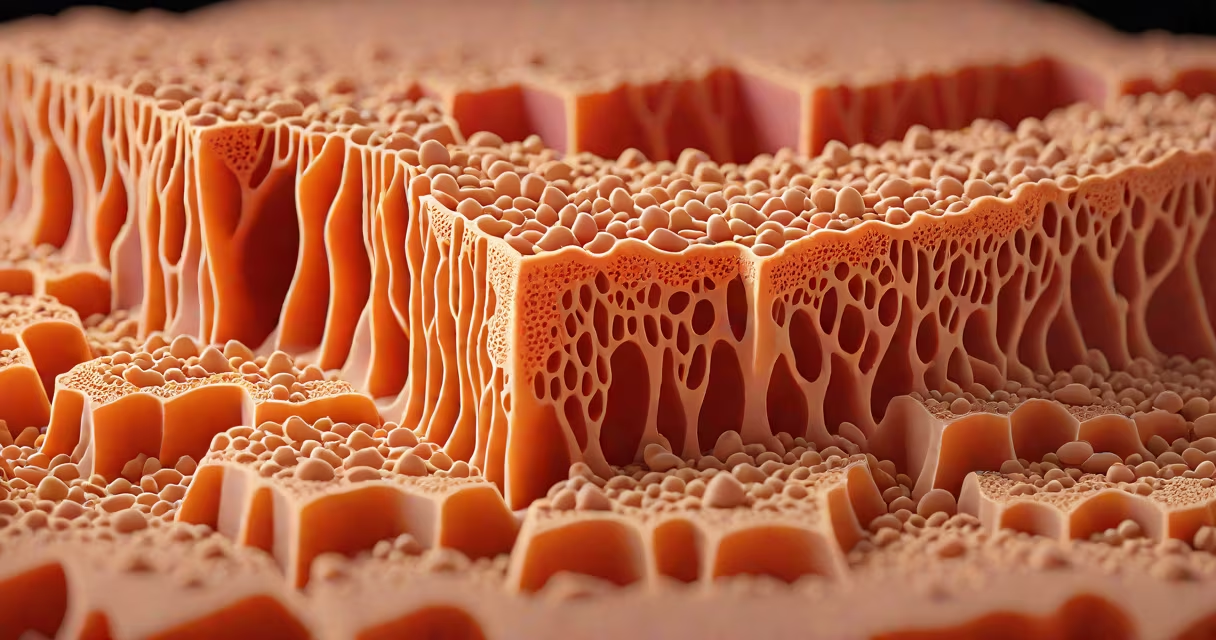
Basal cells are the foundational layer of epithelial tissues, primarily in the skin's epidermis, where they divide continuously to replace dead surface cells. They sit at the base of the epidermis, attached to the basement membrane, and serve as stem-like precursors for all other skin cell types.
These cells are responsible for maintaining the skin's structural integrity through constant renewal. Every 28 days, the average human skin completely renews itself, with basal cells driving this process by undergoing mitosis and gradually migrating upward while differentiating into specialized cells like keratinocytes.
Basal cells are not just passive builders-they actively respond to injury. When the skin is damaged, basal cells accelerate division to close wounds quickly. This regenerative capacity makes them essential for healing, but it also means errors in their replication can lead to skin cancers such as basal cell carcinoma, the most common form of skin cancer.
Basal cells originate from multipotent stem cells located in the basal layer of the epidermis. These stem cells divide asymmetrically-one daughter remains a stem cell, the other becomes a transit-amplifying cell that rapidly divides before differentiating into a mature keratinocyte.
As these newly formed cells move toward the skin's surface, they undergo terminal differentiation. They stop dividing, produce keratin filaments, and eventually flatten and die, forming the tough, protective outer layer known as the stratum corneum. This layer prevents water loss and blocks pathogens.
A study published in *Nature Cell Biology* confirmed that basal cells express specific integrins and cadherins that anchor them to the basement membrane and neighboring cells. Disruption of these adhesion molecules leads to impaired barrier function and increased susceptibility to infection and inflammation.
While the term "basal cell" most often refers to those in the epidermis, similar populations exist in other stratified epithelia:
| Tissue Type | Location | Function |
|---|---|---|
| Epidermal basal cells | Outermost skin layer (stratum basale) | Produce keratinocytes for skin barrier |
| Respiratory basal cells | Trachea and bronchi | Repair airway lining after damage |
| Corneal basal cells | Eye surface (cornea) | Maintain clear vision by renewing transparent surface |
Each location uses basal cells for rapid repair, but their molecular profiles differ. For example, respiratory basal cells express SOX2 and p63, markers linked to airway regeneration, while epidermal basal cells rely on KRT5 and KRT14 for structural strength.
One non-obvious fact: basal cells in the skin are not uniformly active. Research from the National Institute of Aging shows that only ~10% of basal cells in the epidermis are actively dividing at any time. The rest remain quiescent until triggered by injury or stress, reducing mutation risk during normal turnover.
Basal cells are often mistaken for melanocytes-the pigment-producing cells in the skin. Melanocytes reside in the same basal layer but are distinct in origin and function. While basal cells generate structural skin cells, melanocytes produce melanin to protect against UV radiation.
Another confusion arises between basal cells and Merkel cells. Merkel cells are touch receptors found in the basal layer but are derived from neural crest cells, not epithelial stem cells. They are involved in sensory perception, not skin renewal.
Basal cell carcinoma (BCC) is frequently misunderstood as a minor issue. However, untreated BCC can invade deeper tissues, including bone and cartilage, especially on the face. The American Academy of Dermatology reports that BCC accounts for nearly 80% of all skin cancers, with over 5 million cases diagnosed annually in the U.S. alone.
Consider a paper cut on the fingertip. Within minutes, inflammatory signals trigger nearby basal cells to enter the cell cycle. Over the next 48 hours, these cells proliferate and migrate across the wound site. By day 5, a new epidermal layer forms, sealing the break.
This process relies on precise regulation. If a UV-induced mutation occurs in a basal cell's DNA-especially in genes like PTCH1 or SMO-uncontrolled growth can result. Over time, this leads to basal cell carcinoma. A 2021 study in *The Journal of Investigative Dermatology* found that 90% of BCC tumors have mutations in the Hedgehog signaling pathway, which normally regulates basal cell proliferation.
I've observed this firsthand during dermatology rotations: a patient with a small, pearly bump on the nose grew it over six months. Biopsy confirmed BCC. Surgical removal restored normal skin structure, highlighting how important basal cells are-and how dangerous their dysfunction can be.
Understanding the difference matters clinically. Misdiagnosing a basal cell tumor as a benign lesion delays treatment. Conversely, confusing basal cells with immune cells leads to incorrect assumptions about skin immunity.
Basal cells perform critical tasks: they rebuild the skin daily, heal injuries, and act as a reservoir for new cells. Their function is central to health, yet their role is often overlooked until something goes wrong.