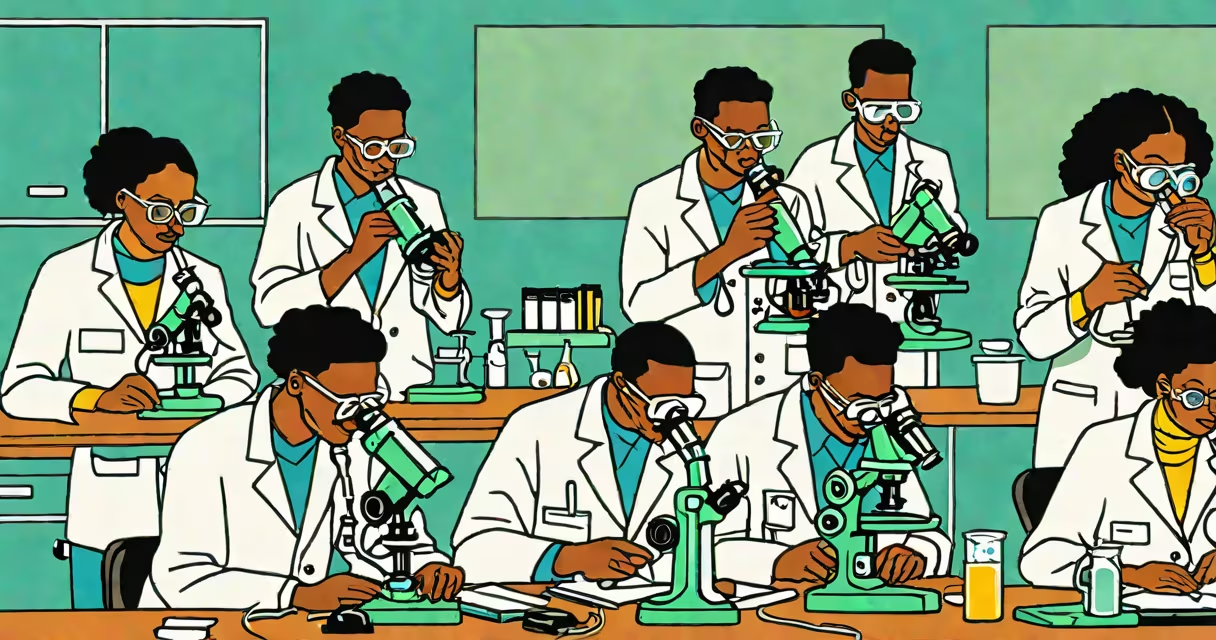
Historically Black Colleges and Universities (HBCUs) with forensic science majors provide undergraduate training in crime scene investigation, evidence analysis, and laboratory procedures, preparing students for careers in law enforcement, medical examiner offices, and criminal justice labs.
These programs blend biology, chemistry, and criminal justice coursework to develop analytical skills required for real-world forensic work. Students learn to process fingerprints, analyze DNA samples, interpret ballistic reports, and testify in court using scientific evidence. The curriculum often includes hands-on lab sessions, internships with local police departments, and research projects focused on casework validation.
According to the National Science Foundation, HBCUs awarded 12% of all bachelor's degrees in the physical sciences to Black students between 2016 and 2020-despite representing only 3% of U.S. higher education institutions. This demonstrates their outsized role in producing underrepresented talent in STEM fields, including forensic science.
Forensic science majors at HBCUs typically follow a four-year Bachelor of Science (BS) track. Core courses include organic chemistry, genetics, toxicology, and criminalistics. Many programs require a capstone project involving mock crime scene reconstruction or simulated courtroom testimony.
Students gain practical experience through partnerships with regional law enforcement agencies. For example, students at Howard University complete a 12-week internship with the D.C. Police Department's Crime Lab, where they assist in processing evidence from burglary and homicide cases. Similarly, students at Florida A&M University participate in annual mock trials hosted by the state's Office of the Chief Medical Examiner.
A key distinction is that many HBCU forensic science programs emphasize community-based learning. Rather than focusing solely on federal or private-sector employment, they prepare graduates for roles in public safety systems serving urban and underserved populations. This focus increases representation in forensic disciplines where Black professionals remain underrepresented.
The following table outlines select HBCUs offering forensic science majors, along with program structure and unique features.
| Institution | Program Type | Key Features |
|---|---|---|
| Howard University (Washington, D.C.) | BS in Forensic Science | Capstone in crime scene reconstruction; partnership with FBI Academy for summer research |
| Florida A&M University (Tallahassee) | BS in Forensic Science | Lab certification prep; state-funded internship with Florida Department of Law Enforcement |
| Hampton University (Virginia) | BS in Forensic Chemistry | Research focus on environmental toxins; funded by NIH grant for minority health disparities |
| Prairie View A&M University (Texas) | BS in Criminal Justice with Forensic Concentration | Emphasis on digital forensics; collaboration with Texas Rangers' cybercrime unit |
Not all HBCUs offer standalone forensic science degrees. Some integrate forensic training into broader criminal justice or biology programs. For instance, Spelman College offers a forensic science minor within its biology major, with course options in molecular biology and evidence-based policy.
One non-obvious fact: HBCUs with forensic science programs often have lower attrition rates in STEM fields compared to non-HBCU peers. A 2021 study published in *Journal of Higher Education* found that Black students in HBCU forensic science programs were 27% less likely to leave their major before graduation than those in predominantly White institutions (PWIs).
Many assume forensic science is synonymous with television portrayals like *CSI* or *NCIS*. In reality, most forensic work involves meticulous documentation, chain-of-custody protocols, and peer-reviewed analysis-not dramatic reveals. HBCU programs correct this misconception by emphasizing procedural rigor and ethical standards.
Another common error is equating forensic science with being a detective. While some graduates enter law enforcement, most work behind the scenes in laboratories. They analyze bloodstains, determine time of death, or identify trace materials such as gunshot residue. Their findings support investigations but do not lead them.
There's also confusion about whether a forensic science degree leads directly to a job. The truth is, most entry-level positions require additional certifications. For example, a forensic technician must pass the American Board of Criminalistics (ABC) certification exam to qualify for federal employment. HBCU programs often include test prep modules and credentialing workshops as part of their curriculum.
Graduates from HBCUs with forensic science majors pursue roles such as crime scene technicians, DNA analysts, and forensic document examiners. According to the U.S. Bureau of Labor Statistics, employment for forensic science technicians is projected to grow 14% from 2022 to 2032-faster than average across all occupations.
Consider the case of Jasmine Reed, a 2020 graduate of Howard University's forensic science program. She secured a position as a forensic evidence technician with the U.S. Marshals Service. Her responsibilities include collecting biological samples from fugitive apprehension sites and preparing reports for federal prosecutors. She credits her success to the intensive lab rotations and mentorship she received during her junior year.
Another example: Marcus Bell, a 2019 graduate of Florida A&M University, now works as a forensic chemist with the Florida Department of Law Enforcement. He specializes in analyzing controlled substances seized during drug raids. His team processed over 1,200 samples in 2023, contributing to 42 convictions based on chemical evidence.
For those interested in further study, many HBCU graduates go on to earn advanced degrees in forensic toxicology, legal medicine, or public health. A few attend medical school with a focus on forensic pathology.
If you're considering an HBCU with a forensic science major, start by reviewing accreditation status. The Forensic Science Education Programs Accreditation Commission (FSEPC) accredits programs meeting national standards. As of 2023, 14 HBCU programs hold FSEPC recognition, including those at Howard and Florida A&M.
Admission requirements vary but generally include high school transcripts with strong performance in math and science. Some schools offer bridge programs for students who need remedial coursework in algebra or chemistry.
These programs deliver rigorous, culturally responsive training that meets national workforce demands. They are not just pathways to jobs-they are engines for equity in science and justice.