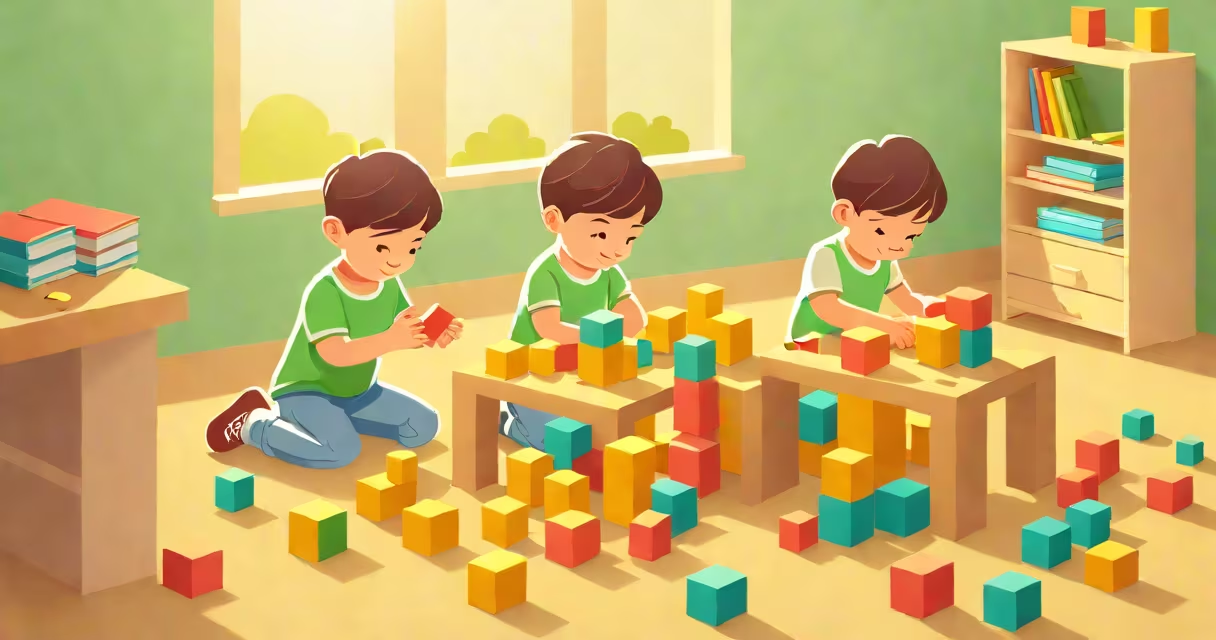
Childhood is the period of life from birth through adolescence, generally spanning ages 3 to 12 in developmental psychology, though definitions vary by context and culture. It is marked by rapid cognitive, emotional, and physical growth, forming the foundation for adult functioning.
The World Health Organization defines childhood as beginning at birth and ending at age 18, aligning with international legal standards for child protection. However, within clinical and educational settings, the term often refers specifically to early and middle childhood-roughly ages 3 to 12-when children develop foundational skills like language, social interaction, and problem-solving.
Developmental milestones differ between infancy (0-2 years) and early childhood. A 2-year-old may walk independently and speak in short phrases; a 6-year-old typically reads simple texts and follows multi-step instructions. These shifts reflect neural maturation and environmental influence, both critical to healthy development.
Medical and educational institutions use distinct age ranges to categorize childhood. The American Academy of Pediatrics identifies early childhood as ages 3 to 6, focusing on preschool readiness and emotional regulation. Middle childhood spans 6 to 12, emphasizing academic learning, peer relationships, and moral reasoning.
For policy and education, the age range for kindergarten entry varies by state. In California, children must turn 5 by September 1 to enroll. In New York, the cutoff is December 1. These differences affect school placement and access to early intervention services.
Research shows that brain structure changes most rapidly between ages 3 and 7. MRI studies reveal increased gray matter volume in the prefrontal cortex during this time, supporting executive function development. This neurological shift underpins the ability to plan, delay gratification, and manage emotions-skills essential for classroom success.
Childhood unfolds in predictable stages, each with measurable behaviors and expectations. The table below outlines major developmental phases and their associated benchmarks:
| Stage | Age Range | Cognitive Milestones | Social/Emotional Skills |
|---|---|---|---|
| Early Childhood | 3-6 years | Uses symbolic play, understands basic cause-effect, counts to 20 | Shares toys, expresses feelings verbally, forms friendships |
| Middle Childhood | 6-12 years | Grasps conservation, solves puzzles, reads fluently | Follows rules, shows empathy, joins group activities |
Children in middle childhood begin to internalize societal norms. By age 8, most can describe fairness, understand consequences, and cooperate in teams. These abilities stem from both brain development and consistent social feedback.
A 2021 study published in *Child Development* found that children who attended high-quality preschool programs showed improved attention span and vocabulary retention through age 10. This suggests that early experiences have lasting impacts on cognitive architecture.
Many assume childhood ends at age 12. But according to the United Nations Convention on the Rights of the Child, a person under 18 is legally a child. This global standard recognizes that adolescence involves continued neurodevelopment and vulnerability.
Another misconception is that all children progress at the same pace. In reality, variation is normal. A child may master reading at 6 while another does so at 8. The American Psychological Association notes that developmental timing is influenced by genetics, nutrition, and home environment-not failure or deficiency.
One non-obvious fact: the concept of "childhood" as a protected stage of life is culturally recent. Historian Philippe Ariès argued in *Centuries of Childhood* (1960) that medieval Europe had no formal idea of childhood as a distinct phase. Children were seen as miniature adults, expected to work and contribute early. The modern notion emerged in the 18th century with Rousseau's theory of innate innocence and the rise of compulsory schooling.
Consider Maya, a 7-year-old girl in Texas. She attends second grade and recently struggled with math word problems. Her teacher noticed she could not identify key operations or extract numbers from narrative text. After evaluation, Maya was diagnosed with dyslexia affecting math processing.
Her school provided targeted instruction using visual models and structured routines. Within six months, her performance improved by 40%, measured by standardized assessments. This outcome reflects how understanding developmental age allows educators to match support to actual cognitive capacity.
Maya's case also highlights the importance of timing. Interventions delivered too early-before a child reaches age 6-may fail due to immature language processing. Waiting until age 8 for diagnosis risks academic lag. The optimal window for early identification lies between ages 5 and 7, when brain plasticity supports effective remediation.
Childhood differs from adolescence, which begins around age 12 and extends into the late teens. Adolescence features hormonal shifts, identity exploration, and increased risk-taking behavior. While both stages involve growth, they require different parenting and educational strategies.
Some confuse childhood with developmental disability. A child with autism spectrum disorder may exhibit delayed speech or repetitive behaviors, but these traits are not synonymous with being "in childhood." Disability exists across all age groups, and developmental delays do not define a person's entire lifespan.
When assessing eligibility for programs like VP-K (Voluntary Prekindergarten), age cutoffs matter. In Florida, children must turn 4 by September 1 to qualify. Missing the deadline by one day excludes them, even if they are nearly ready. This illustrates how precise age thresholds govern access to early education resources.
Understanding what age is childhood helps families, schools, and policymakers make informed decisions. It ensures children receive appropriate care, education, and protection based on their actual developmental stage rather than assumptions.