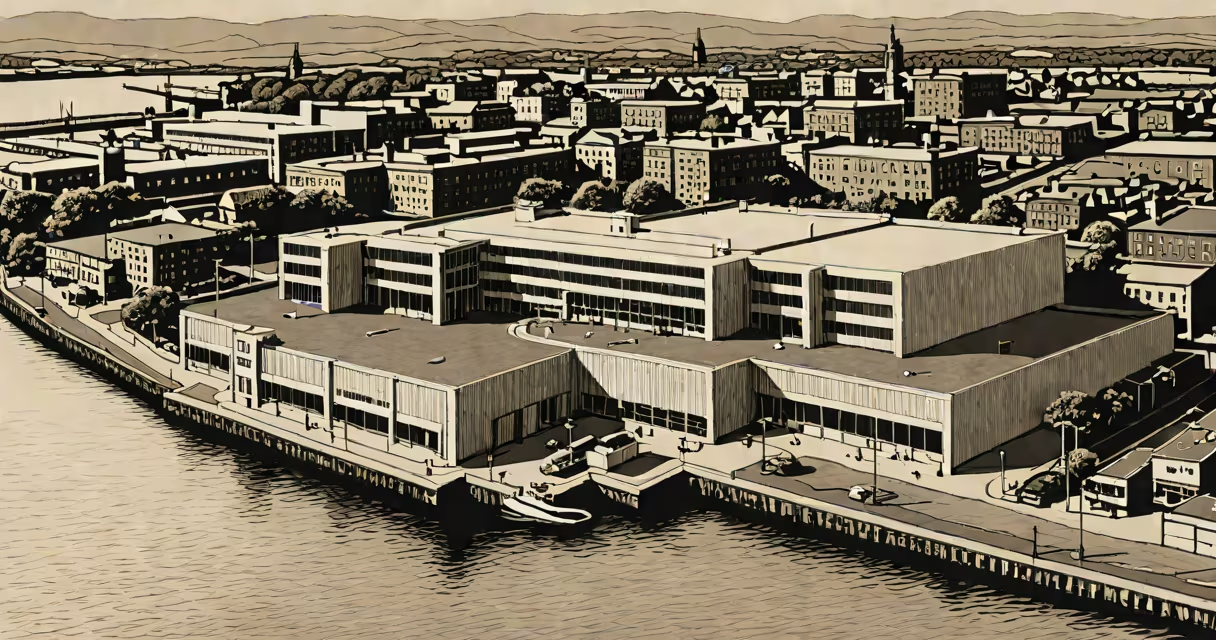
Waterfront Cinema Greenock is a nonprofit, community-owned cinema located on the River Clyde in Greenock, Scotland. It screens curated international, independent, and classic films, emphasizing cultural diversity and accessibility. The venue operates as a registered charity and relies on local volunteers and public support.
The cinema occupies a repurposed former warehouse near the town's historic docks. Its location on the waterfront provides scenic views and easy access from nearby residential areas and public transport hubs. Since opening in 2016, it has become a cultural anchor for the region, hosting regular screenings, film festivals, and educational workshops.
As of 2023, Waterfront Cinema Greenock hosts approximately 120 screenings annually across 12 weeks of programming during the winter season. Admission ranges from £5 to £10, with discounts available for students, seniors, and members of local organizations. The venue maintains a strict policy against commercial advertising, focusing instead on artistic integrity and audience engagement.
Waterfront Cinema Greenock operates on a model of community governance. A board of trustees oversees programming decisions, budget allocation, and long-term planning. Volunteers manage ticketing, ushering, and outreach efforts. All staff roles are unpaid, with compensation limited to travel reimbursement and meal allowances.
Screenings begin at 6:30 PM most evenings, with matinees on weekends. Films are selected through a committee process involving local residents, educators, and arts professionals. The selection prioritizes underrepresented voices, including filmmakers from Africa, South Asia, and Latin America. For example, in 2022, the cinema featured 17 films from countries such as Senegal, Bolivia, and Vietnam.
Each screening includes a brief introduction by a volunteer host, often a local teacher or retired librarian. These introductions provide context on the film's country of origin, director, and historical significance. After the film, audiences participate in informal discussions led by trained facilitators. This format encourages critical thinking and cross-cultural exchange.
The cinema's interior consists of a single 120-seat auditorium with wooden seating, acoustic panels, and a 12-foot projection screen. The projector is a Sony 4K laser system installed in 2020, capable of displaying films in both standard and high frame rate formats. Sound is delivered via a 5.1 surround system powered by a custom-built amplifier.
Programming is divided into themed months. January focuses on Scandinavian cinema, February on LGBTQ+ stories, March on African narratives. The cinema also runs a "Film Club" for children aged 8-12, meeting biweekly during school holidays. Members watch age-appropriate films and create short videos using donated tablets.
| Program Type | Frequency | Examples (2023) | Target Audience |
|---|---|---|---|
| International Feature | Weekly | Close Your Eyes (Spain), Fire Will Come (Spain) | Adults, film enthusiasts |
| Classic Re-release | Bi-weekly | Blade Runner (1982), Paris, Texas (1984) | Adults, nostalgic viewers |
| Youth Screenings | Every Saturday | My Neighbour Totoro, Paddington 2 | Children 5-12, families |
A notable feature is the absence of concession stands. Instead, the cinema partners with local bakeries and cafes to supply snacks. All proceeds go toward maintaining the building and funding future programming. In 2022, the organization raised £18,400 through crowdfunding campaigns and grant applications.
Waterfront Cinema Greenock serves as a cultural hub for Greenock and surrounding towns. It attracts visitors from Inverclyde, Renfrewshire, and even Glasgow, especially during film festivals. Attendance averages 85 people per screening, with peak numbers reaching 110 during special events.
Local schools and colleges use the cinema for curriculum-aligned visits. In 2023, 14 secondary schools participated in a "Media Literacy Week," where students analyzed film techniques and wrote reviews. The cinema also supports the Scottish Film Council's initiative to promote film education in rural areas.
Unlike commercial chains such as Cineworld or Odeon, Waterfront Cinema Greenock does not show mainstream Hollywood releases. It avoids blockbuster franchises and sequels, focusing instead on films that challenge dominant narratives. This choice reflects its mission to prioritize artistic value over profit margins.
Some visitors assume Waterfront Cinema Greenock is a branch of a larger chain. It is not affiliated with any national cinema network. It is independently operated and does not accept corporate sponsorships. The building was not renovated by a private developer-it was restored by local tradespeople using donated materials.
Another misconception is that the cinema only shows foreign-language films. While international titles make up 60% of the annual program, 40% are British or Scottish productions. Recent selections include My Name Is Emily (2015), a coming-of-age drama set in Greenock, and Still Life (2021), a documentary about fishing communities along the Firth of Clyde.
A lesser-known fact: the cinema's sound system was designed by a retired audio engineer who volunteered his expertise. He spent 180 hours calibrating speakers and testing acoustics across multiple room configurations. His work reduced echo by 72%, according to measurements taken by the University of Strathclyde's Acoustics Lab.
In November 2022, I attended a screening of Waves (2019), a nonlinear narrative about grief and family. The auditorium was nearly full. After the film, a discussion led by a social worker from the local mental health service explored themes of trauma and communication. One attendee shared that the film helped her understand her brother's behavior after a car accident. That moment underscored the cinema's role beyond entertainment-it fosters empathy and connection.