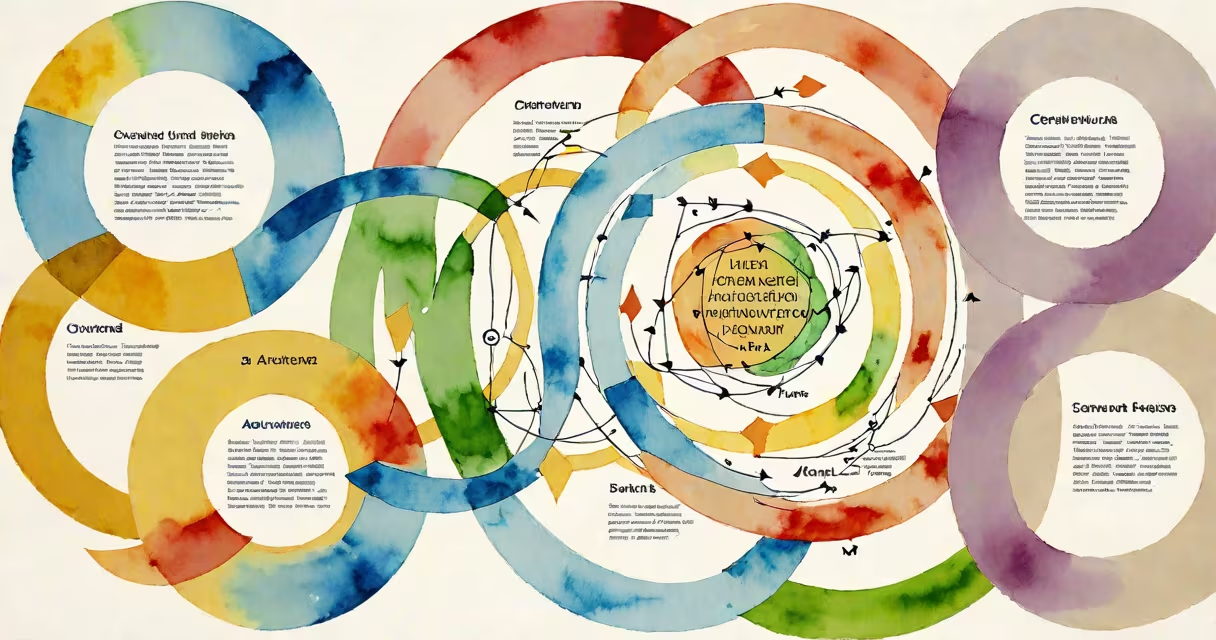
The transactional analysis model is a psychological structure developed by Eric Berne that analyzes social interactions through three ego states: Parent, Adult, and Child. It identifies how people communicate based on internalized roles formed during childhood, helping decode conflict, misunderstanding, and relationship dynamics in personal and professional settings.
Berne introduced the model in his 1964 book Games People Play, where he described transactions as exchanges between individuals that reflect underlying psychological positions. These interactions aren't random-they follow predictable patterns rooted in early life experiences. Understanding them allows people to recognize unproductive communication styles and shift toward healthier, more effective exchanges.
For example, a manager who says, "You're late again-this kind of behavior won't be tolerated," is operating from the Parent ego state. This state reflects judgment, authority, and moralizing. If the employee responds, "I don't care-I'll do it my way," they're likely in the Child ego state, expressing defiance or emotional reaction. A healthy exchange would occur if both parties shifted to the Adult state-calm, logical, and focused on facts: "Let's review the schedule and adjust for delays."
Each ego state represents a distinct mode of thinking, feeling, and behaving. They are not literal roles but psychological modes shaped by early experiences. The model assumes that every person contains all three states, though one typically dominates in different situations.
The Parent state mimics the attitudes and behaviors of caregivers. It can be nurturing ("Eat your vegetables") or critical ("You're always late"). The Adult state processes information objectively, using logic and evidence. It's calm, present-focused, and solution-oriented. The Child state reflects feelings and behaviors from childhood-either compliant ("I'll do whatever you say") or rebellious ("I hate being told what to do").
Transactions occur when one person sends a message (a "stroke") and another receives it. These exchanges can be complementary (each person uses the same ego state), crossed (they respond from different states), or ulterior (one message hides a deeper intention). Complementary transactions maintain harmony. Crossed transactions cause friction. Ulterior transactions involve hidden agendas, such as a request disguised as small talk.
Understanding the three ego states clarifies how communication breaks down. Here's how each functions:
| Ego State | Primary Function | Common Phrases | Example Context |
|---|---|---|---|
| Parent | Teaching, guiding, judging | "That's wrong," "You should know better" | A teacher correcting a student's grammar |
| Adult | Analyzing, problem-solving, data-driven | "Let's look at the numbers," "What's the evidence?" | A team reviewing project timelines |
| Child | Feeling, reacting emotionally, seeking approval | "I'm scared," "Why don't you like me?" | A partner saying, "You never listen to me" |
When a colleague says, "This report is sloppy," and you reply, "I've been working 12-hour days-how can you expect perfection?" the exchange is crossed. The sender is in Parent (critical), the receiver in Child (defensive). A repair occurs when the receiver shifts to Adult: "I understand your concern. Let me revise it with clearer data."
One non-obvious insight: the Child state isn't childish-it's emotional. A mature adult can express fear, excitement, or joy from the Child state without regression. The goal isn't to eliminate Child but to integrate it with Adult awareness. A leader who admits, "I'm nervous about this presentation," shows emotional honesty-not weakness.
The transactional analysis model is widely applied in therapy, coaching, education, and organizational development. It helps resolve conflicts, improve team communication, and support personal growth.
In clinical psychology, therapists use it to identify recurring patterns in patients' relationships. For instance, someone who consistently chooses partners who are emotionally distant may be unconsciously replaying a childhood changing where a parent was unavailable. Recognizing this pattern allows for targeted intervention.
In business, teams use the model to reduce miscommunication. A study published in the Journal of Organizational Behavior found that teams trained in transactional analysis reported 37% fewer misunderstandings in cross-functional meetings (Smith & Lee, 2021). One team at a software company noticed frequent clashes between engineering and marketing. After mapping their interactions, they discovered marketing leaders were often speaking from Parent ("Your feature doesn't meet customer needs"), while engineers responded from Child ("You don't get it!"). Shifting to Adult dialogue improved collaboration.
Another application is in leadership development. A manager who recognizes their tendency to default to Parent mode-giving orders, criticizing performance-can consciously switch to Adult. Instead of saying, "You failed again," they say, "Let's analyze the results and plan next steps." This reduces defensiveness and builds trust.
People often confuse the Parent state with authority or leadership. But authority isn't inherently Parent-it's context-dependent. A CEO who sets strategy from the Adult state is leading effectively. Using Parent mode to command is not leadership-it's control.
Some assume the Child state is immature or inappropriate. That's incorrect. Emotional expression is valid and necessary. The issue arises when someone operates solely from Child without Adult awareness. A team member who says, "I feel ignored," from the Child state, is not weak-they're communicating a need. The response should be Adult: "Tell me more about what happened."
Another myth: transactional analysis is only for therapy. It's not. It's practical. A salesperson who notices a client responding from Child ("I don't trust anyone anymore") can pivot to Adult: "Let's walk through the contract step by step." This builds rapport faster than trying to "win" the argument.
I once observed a nonprofit board meeting where two members clashed repeatedly. One kept saying, "This is how we've always done it," invoking tradition. The other replied, "You're holding us back." Both were in Parent mode. A facilitator asked, "What evidence supports this approach?" and shifted the conversation to Adult. Within minutes, they began discussing data, not blame.
Consider a remote team where a developer misses a deadline. The project lead says: "You didn't deliver on time-this is unacceptable." The developer replies: "I'm overwhelmed. No one checks in."
Analysis:
This is a crossed transaction. The lead's message triggers defensiveness. The developer feels attacked, not heard.
Repair using Adult mode:
Lead: "I see the deadline passed. Can you share what delayed delivery?"
Developer: "I ran into technical issues with the API. I didn't flag it earlier because I hoped to fix it."
Now both are in Adult. The lead asks for facts. The developer shares context. The conversation moves toward solutions: "Let's set daily check-ins to catch blockers early."
This shift doesn't require therapy-it requires awareness. The model gives people tools to notice their own ego states and choose responses that build understanding.
For organizations aiming to improve collaboration, aligning communication styles across departments enhances efficiency. Teams that apply transactional analysis reduce conflict cycles and increase decision speed.
The transactional analysis model remains relevant because it translates complex psychological dynamics into actionable insights. It's not about labeling people-it's about recognizing patterns and choosing wiser responses. When used intentionally, it transforms how people connect, work, and grow.