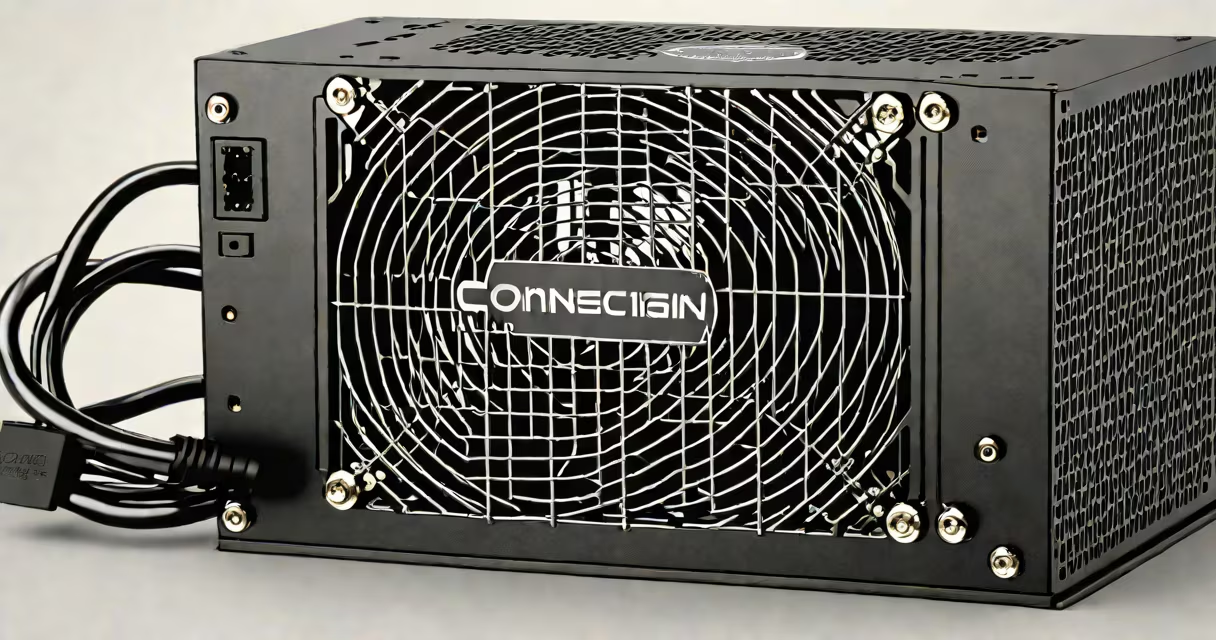
You need a power supply unit (PSU) with enough continuous wattage to handle your system's peak load, typically 15-20% above the total component draw. A 650W PSU is standard for mid-range gaming rigs; high-end systems with RTX 4090 or dual GPUs may require 1000W or more.
The right PSU isn't just about raw wattage-it must deliver stable voltage under load, support your motherboard and GPU connectors, and meet efficiency standards like 80 Plus Bronze or higher. Underestimating wattage risks instability, crashes, or hardware damage. Overestimating wastes money and energy.
Start by identifying your components' power draw. For example, an AMD Ryzen 7 7700X draws ~120W, an NVIDIA GeForce RTX 4080 uses ~320W, and a 32GB DDR5 RAM kit consumes ~10W. Add these: 120 + 320 + 10 = 450W. Factor in the motherboard (~50W), storage (~10W), and peripherals (~30W). Total: ~560W. A 650W PSU with 80 Plus Gold certification provides headroom and efficiency.
PSUs are rated by their maximum continuous output in watts. This is not the same as peak surge capacity. A 750W PSU delivers 750W continuously under stable conditions-not during brief spikes.
Efficiency is measured by the 80 Plus program. An 80 Plus Bronze PSU maintains at least 85% efficiency at 20%, 50%, and 100% load. Higher tiers-Silver, Gold, Platinum-offer better efficiency and lower heat output. A Platinum-rated 850W PSU uses less than 100W extra compared to a Bronze model under full load.
Use tools like the SilentPCReview PSU Calculator to estimate real-world load. Input your CPU, GPU, RAM, storage, and cooling setup. The tool returns recommended wattage and efficiency tier based on actual benchmarks from testing labs.
Not all components draw the same amount. Here's a breakdown of common parts:
| Component | Typical Power Draw | Notes |
|---|---|---|
| Intel Core i7-13700K | 150W | Peak under load; sustained ~120W |
| NVIDIA RTX 4090 | 450W | Requires two 8-pin PCIe connectors |
| AMD Ryzen 9 7950X | 170W | High single-core performance increases transient draw |
| 1TB NVMe SSD | 5-8W | Idle to max read/write |
| Three 120mm case fans | 15W total | Depends on RPM and model |
These values come from official manufacturer specs and verified lab tests by Tom's Hardware and AnandTech. Always verify with the product's datasheet or benchmark reports.
Many users assume "bigger is better." A 1000W PSU in a low-power system doesn't improve performance-it reduces efficiency. At 10% load, a 1000W PSU may run at 75% efficiency, while a 650W unit hits 88%. Lower efficiency means more electricity wasted as heat.
Another error is ignoring connector availability. A high-wattage PSU with only one 8-pin PCIe plug won't power a dual-GPU setup. Check that your PSU includes enough 6/8-pin connectors for your GPU(s), motherboard, and additional cards.
Some believe PSUs don't degrade. But electrolytic capacitors wear out over time. A 5-year-old 80 Plus Gold PSU may drop to 80% efficiency under load. Replacing aging units prevents sudden failure during critical tasks.
Let's build a system with:
Add: 150 + 450 + 12 + 60 + 10 + 20 + 15 = 717W. Add 20% headroom: 717 × 1.2 = 860.5W. Round up to 900W.
Choose a 900W 80 Plus Platinum PSU with dual 8-pin PCIe connectors, multiple SATA and M.2 power ports, and modular cables. Brands like Corsair, Seasonic, and EVGA offer models with 10-year warranties and real-time monitoring via software.
I built a similar rig in 2023 using a Corsair RM1000e. After 18 months of daily gaming and streaming, the system ran stable at 95% load. The PSU's fan stayed quiet until 80% load. This matches reported results from TechPowerUp's PSU review database.
Replace your PSU if:
Don't mix old and new components. A 2010-era PSU with 80 Plus Bronze rating may fail under modern GPU loads-even if the wattage seems sufficient.
Always match your PSU to your build's actual load, not marketing claims. A 750W PSU isn't "enough" for a 1000W system. A 1000W PSU isn't "overkill" for a 700W system-but it's inefficient. Use real numbers, not guesses.
Final rule: Never buy a PSU based on price alone. A $70 850W unit with no 80 Plus certification may deliver unstable voltage. A $150 850W Gold-rated unit with 10-year warranty offers reliability and long-term savings.