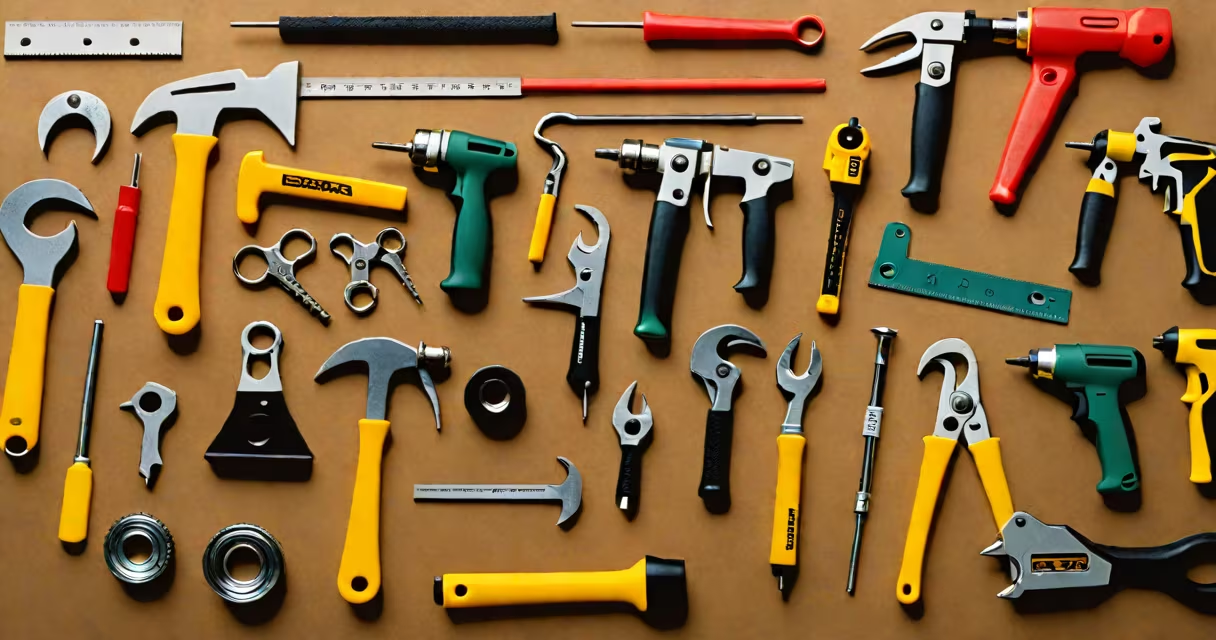
Tools for diy are physical instruments used to perform tasks in home improvement, repairs, and creative projects. They range from basic hand tools like hammers and screwdrivers to motorized power tools such as drills and circular saws. These tools enable individuals to complete construction, renovation, and crafting jobs without professional assistance.
DIY tools fall into two broad categories: hand tools and power tools. Hand tools require manual force and include items like wrenches, pliers, utility knives, and chisels. Power tools use electricity or batteries and deliver mechanical force. Common examples are cordless drills, impact drivers, jigsaws, and sanders. Each serves a specific function in cutting, shaping, joining, or finishing materials.
The choice of tool depends on the material being worked on and the precision required. Wood requires different tools than metal or plastic. A drill bit designed for wood won't cut through steel. Using mismatched tools leads to poor results and safety risks. For example, using a standard drill bit on masonry causes overheating and bit failure.
Understanding the core types helps match tools to tasks. Here's a breakdown of essential categories:
| Type | Examples | Primary Use | Best For |
|---|---|---|---|
| Measuring | Tape measure, level, square | Accuracy in dimensions and alignment | Installing shelves, framing walls |
| Fastening | Hammer, screwdrivers, drill/driver | Joining materials with nails, screws | Assembling furniture, mounting fixtures |
| Cutting | Handsaw, circular saw, jigsaw | Trimming wood, plastic, drywall | Custom cutting, fitting edges |
| Shaping/Finishing | Sander, chisel, file | Smoothing surfaces, refining edges | Prepping wood for paint or stain |
A single project often requires multiple tool types. Building a bookshelf demands measuring tools for layout, fastening tools to attach shelves, cutting tools to size the boards, and finishing tools to smooth rough edges. Skipping any step compromises structural integrity and appearance.
Homeowners use tools for diy to save money on labor, customize spaces, and gain hands-on experience. A study by the National Association of Home Builders (NAHB) found that 68% of U.S. homeowners completed at least one major DIY project in the past five years, most involving basic tools like drills and levels.
Projects range from small fixes-replacing a leaky faucet-to large renovations like installing a kitchen backsplash or building a deck. The rise of online tutorials and video platforms has lowered the barrier to entry. Platforms like YouTube host millions of step-by-step guides showing how to use tools safely and effectively.
For example, replacing a broken window pane involves measuring the frame, removing old glazing compound with a putty knife, inserting the new glass, and sealing it with silicone caulk. Each step uses a specific tool: tape measure for sizing, scraper for removal, and caulking gun for application. Without proper tools, the job fails quickly due to air leaks or water damage.
Many assume that expensive tools guarantee better results. That's false. A $20 claw hammer performs as well as a $100 model for driving nails into wood. Quality matters, but not always price. A poorly maintained tool-even a cheap one-fails faster than a well-cared-for high-end model.
Another mistake is assuming all power tools are interchangeable. A drill press cuts precise holes in metal but cannot shape curves. A rotary tool like a Dremel excels at detailed carving but lacks torque for heavy drilling. Using the wrong tool increases risk and reduces accuracy.
One non-obvious fact: many tools have dual functions. A combination square measures angles and marks lines. A multi-tool includes pliers, scissors, and knife blades. These compact designs reduce storage space and improve versatility, especially in tight work areas.
Here's how tools for diy come together in practice:
This entire process relies on five core tools: tape measure, level, drill, screwdriver bit, and stud finder. Missing any one leads to misalignment, weak support, or damage to the wall.
I built a floating shelf in my apartment last winter. I used a $15 tape measure and a borrowed drill from a neighbor. The shelf held four books and a lamp for six months without shifting. The key wasn't cost-it was correct tool use and attention to alignment.
While both serve similar purposes, professional-grade tools differ in durability, precision, and features. A contractor's circular saw has a laser guide and adjustable depth control. A homeowner's version may lack those. But for most DIY tasks, consumer-grade tools meet performance needs.
Some tools blur the line. A cordless drill with variable speed and torque settings suits both hobbyists and tradespeople. The difference lies in frequency of use and workload. A carpenter may run a drill 10 hours a day; a weekend renovator uses it for 30 minutes weekly.
When choosing tools for diy, focus on purpose, not brand. Look for tools with ergonomic handles, replaceable bits, and safety features like blade guards. The Consumer Product Safety Commission (CPSC) reports that 12% of tool-related injuries stem from improper tool selection, not misuse.
For managing complex DIY workflows, consider software like Jira tools to track progress, assign tasks, and organize timelines. While not physical tools, they support planning and coordination-especially for multi-stage projects like remodeling a bathroom.
Tools for diy are practical instruments that turn ideas into reality. With the right selection and care, anyone can tackle home projects confidently and safely.