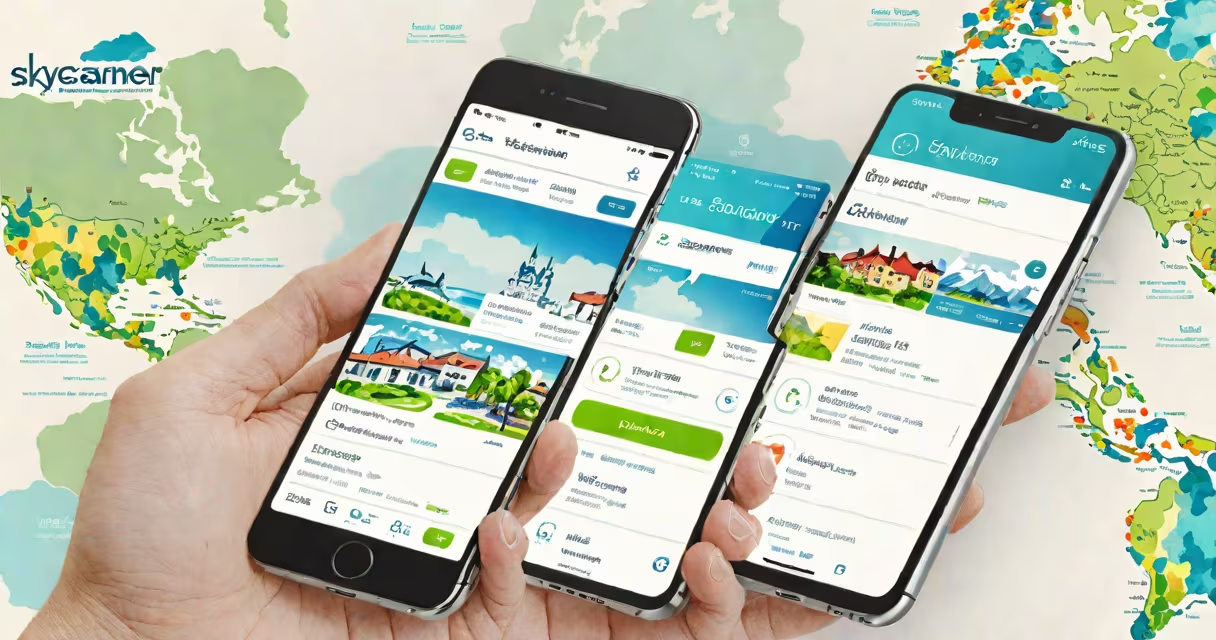
Skyscanner flights booking online is a travel search engine that aggregates flight prices from airlines, online travel agencies, and consolidators to show users the cheapest available options across thousands of routes worldwide. It doesn't sell tickets directly but redirects users to the booking site with the lowest fare.
Skyscanner operates by scanning hundreds of airline databases and third-party booking platforms in real time. When a user enters departure, destination, and dates, the system pulls all available flight options-direct and connecting-and ranks them by price, departure time, and duration. This aggregation model allows travelers to see price differences across providers without visiting each site individually.
The platform supports multiple languages and currencies, adjusts results based on user location, and offers features like price alerts and flexible date searches. It's widely used by budget travelers, last-minute planners, and international explorers seeking the most affordable airfare options.
When you enter a route into Skyscanner, the system sends your search query to over 1,000 travel suppliers, including major carriers like Delta, Lufthansa, and Ryanair, as well as OTAs such as Expedia and Booking.com. These suppliers return flight data-departure times, layovers, baggage allowances, and pricing-within seconds.
Skyscanner then applies filters based on user preferences: "cheapest," "fastest," "best value," or "earliest departure." It displays results in a sortable list with icons indicating flight duration, number of stops, and whether the airline is known for reliability. Prices are shown in local currency and updated dynamically.
Clicking on a result takes you to the supplier's booking page. Skyscanner earns a commission when a user completes a purchase through its referral link. The platform does not charge users for using its search tools or alerts.
Skyscanner includes several tools designed to reduce travel costs. The "Explore" feature lets users select a destination and view the cheapest months to fly, helping identify optimal travel windows. For example, searching "fly anywhere" from London shows that May and September offer the lowest average fares to Europe.
Price tracking alerts notify users when fares drop below a set threshold. A user searching for flights from New York to Lisbon between June 10-17 received an alert when prices fell from $620 to $410 within four days. This feature is especially useful for travelers with flexible schedules.
Another tool, "Cheapest month," uses historical data to predict low-cost periods. According to Skyscanner's 2023 Travel Trends Report, users who booked flights during predicted low seasons saved an average of 32% compared to those who booked mid-season.
Results appear in three main categories: direct flights, connecting flights, and multi-city options. Direct flights have no stopovers and typically cost more. Connecting flights often include one or two layovers and can save users up to 50% on long-haul routes.
A common misconception is that Skyscanner always shows the cheapest option. In reality, the lowest price may come from a lesser-known carrier or a package deal that bundles flights with hotels. Skyscanner ranks by base fare, but users must review details like baggage fees, seat selection, and change policies before booking.
For example, a search for flights from Chicago to Bangkok on October 15 showed a $780 ticket via Thai Airways with free checked bags and a 12-hour layover in Seoul. A $720 option via AirAsia had no checked luggage and required a 22-hour connection through Kuala Lumpur. The cheaper fare included a $120 fee for a single bag, making the total cost higher than the Thai Airways option.
| Flight Type | Price (USD) | Layovers | Baggage Included? | Total Cost with Fees |
|---|---|---|---|---|
| Direct (Thai Airways) | $780 | 0 | Yes (2 bags) | $780 |
| Connecting (AirAsia) | $720 | 2 (Seoul, KL) | No | $840 (+$120 fee) |
Users should also understand that Skyscanner does not control pricing. It only displays what suppliers offer. A sudden price increase may reflect high demand, fuel surcharges, or changes in airport taxes-not a flaw in the search engine.
In 2022, I used Skyscanner to plan a trip from Seattle to Tokyo. I searched for round-trip flights departing August 1 and returning August 15. The cheapest option was $940 via Japan Airlines with a stop in Anchorage. A competing route via Alaska Airlines and All Nippon Airways was $1,020 with a 14-hour layover in Anchorage and a 2-hour transfer in Tokyo.
I selected the lower-priced flight and completed the booking through Skyscanner's redirect. The final cost matched the displayed price. However, I later discovered that the airline had changed the gate assignment due to weather, which delayed my connection. Skyscanner did not provide real-time gate updates, so I had to contact the airline directly.
This experience highlighted a limitation: while Skyscanner excels at finding low fares, it does not track live flight status or gate changes. Users must verify details with the airline before departure.
Skyscanner flights booking online is not a booking agent. It does not issue tickets, manage refunds, or handle customer service. If a flight is canceled or delayed, users must contact the airline or the third-party provider listed on the booking confirmation.
It also does not guarantee the lowest price. Some users report finding lower fares on airline websites after using Skyscanner. This happens because airlines sometimes run exclusive promotions or offer changing pricing not reflected in third-party aggregators. Always double-check the final price on the airline's official site before confirming.
Another misconception is that Skyscanner only finds cheap flights. While it prioritizes affordability, it also offers filters for "best value," "nonstop only," and "earliest departure." These settings allow users to balance cost with convenience.
According to a 2023 study by Statista, Skyscanner was the most used flight search engine in the UK, with 38% of users citing it as their primary tool. The same report noted that 62% of users who booked through Skyscanner found prices within 10% of the lowest available rate.
Travel industry analyst firm Phocuswright confirmed that Skyscanner processes over 1.2 billion flight searches annually. Its algorithm uses machine learning to adjust rankings based on user behavior, such as click-through rates and booking patterns, improving result relevance over time.
For travelers planning trips to destinations with complex visa or entry requirements, Skyscanner provides links to country-specific entry guidelines. This integration reduces the risk of booking flights to places where visas are not yet secured.
skyscanner flights booking online remains one of the most effective tools for identifying low-cost airfares. It saves time, reduces decision fatigue, and increases access to global travel options. However, users must verify final pricing, baggage policies, and airline support channels before completing a reservation.
Always compare the final price on the supplier's site. Skyscanner is a gateway, not a transaction processor. Use it wisely, and your next trip could start with a $200 flight to Bali instead of $800.