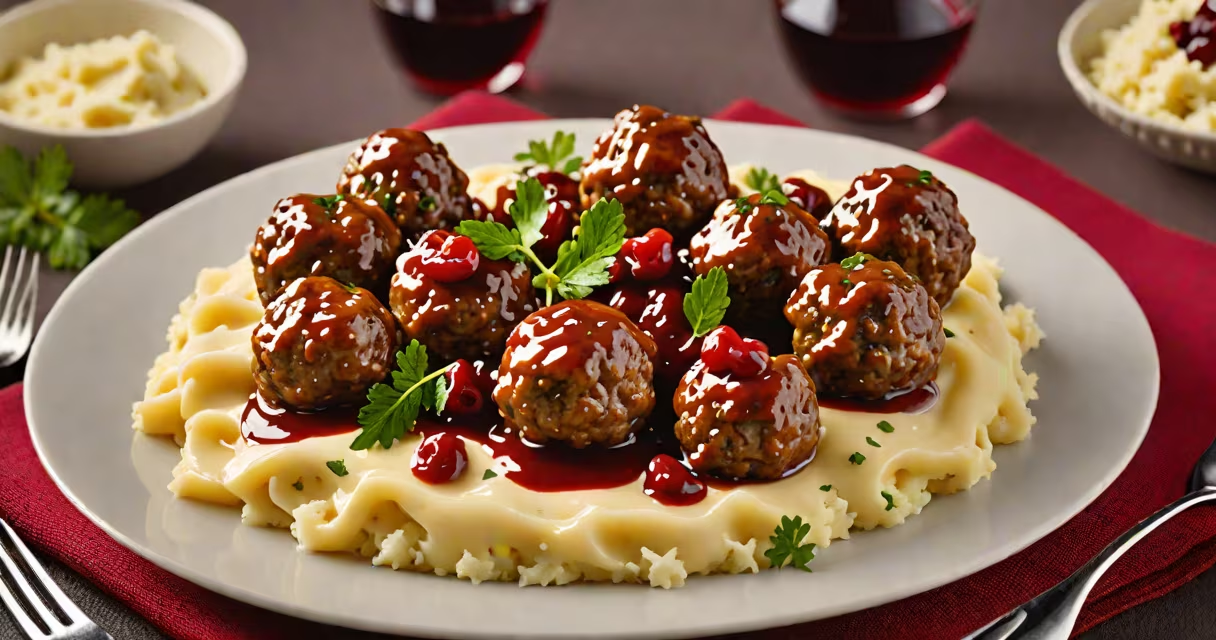
A recipe for swedish meatballs combines ground beef and pork, breadcrumbs, egg, and spices, formed into small balls and simmered in a rich cream-based sauce. These bite-sized morsels are traditionally served with mashed potatoes, lingonberry jam, and pickled red cabbage.
Swedish meatballs originated in the 18th century as a way to stretch limited meat supplies. They were adapted from German-style meatballs but evolved into a national dish through regional recipes passed down through generations. The standard version uses a mix of beef and pork, though some households substitute all beef or use veal for a lighter texture.
The core components include 1 pound (450g) of ground beef and pork (equal parts), ½ cup dry breadcrumbs, 1 large egg, ¼ cup finely chopped onion, 1 teaspoon fresh thyme, ½ teaspoon salt, and ¼ teaspoon black pepper. These are mixed by hand until cohesive, then shaped into 1-inch (2.5cm) balls. They're browned in a skillet over medium heat for 3-4 minutes per side, then transferred to a pot with a sauce base.
| Type | Meat Ratio | Texture | Common Use |
|---|---|---|---|
| Traditional | 50% beef, 50% pork | Firm, slightly chewy | Family meals, holidays |
| Lighter | 75% beef, 25% pork | Less fatty, tender | Weeknight dinners |
| Vegan | Plant-based crumbles | Chewy, grainy | Dietary restrictions |
The sauce begins with a roux made from 3 tablespoons butter and 3 tablespoons flour, cooked for 2 minutes to remove raw flour taste. Then, 1½ cups beef broth and 1 cup heavy cream are added slowly while stirring. The mixture simmers for 10 minutes until thickened. The meatballs are added and simmered gently for 15 minutes to absorb flavor. A splash of Worcestershire sauce adds depth, though it's optional in authentic versions.
One common mistake is using too much breadcrumb, which makes the meatballs dense. The ideal ratio is ½ cup breadcrumbs per pound of meat. Another error is overcooking the sauce-boiling it after adding cream causes curdling. Keep the heat low and stir constantly.
Authentic Swedish meatballs are never baked. Browning in a pan develops a crust that holds moisture during simmering. This step is critical for texture. A non-stick skillet works best, but cast iron gives a deeper sear.
When I prepared this recipe for my family last winter, I used a mix of grass-fed beef and pasture-raised pork. The meatballs held their shape and stayed juicy. I served them with home-made mashed potatoes and store-bought lingonberry jam-my daughter asked for seconds, which surprised me since she usually avoids meatballs.
These meatballs differ from Italian meatballs, which are larger, often served in tomato sauce, and contain grated cheese. They also differ from Turkish kofta, which are grilled and spiced with cumin and paprika. Swedish meatballs are smaller, softer, and rely on a creamy sauce rather than acidity.
For a variation, some households add a pinch of allspice or nutmeg to the meat mixture. This subtle spice is not in the original 18th-century recipes but became popular in the 20th century. The Royal Swedish Academy of Letters, History and Antiquities notes that regional differences exist-southern Sweden favors more herbs, northern regions use less seasoning.
After cooking, serve the meatballs warm with boiled or mashed potatoes. A spoonful of lingonberry jam on the side balances the richness. Pickled red cabbage adds tang and color. The combination is known as "fika" food-light, comforting, and perfect with coffee.
If you're making a larger batch, freeze uncooked meatballs on a tray, then transfer to a freezer bag. They keep for up to three months. Reheat from frozen in the sauce for 20 minutes. Avoid thawing first, as it can make the meatballs mushy.
Final tip: don't skip the cream. Low-fat substitutes thin the sauce and reduce flavor. Heavy cream delivers the mouthfeel that defines the dish. According to the Swedish National Food Agency, the fat content in traditional recipes averages 30%-a level that supports both texture and tradition.