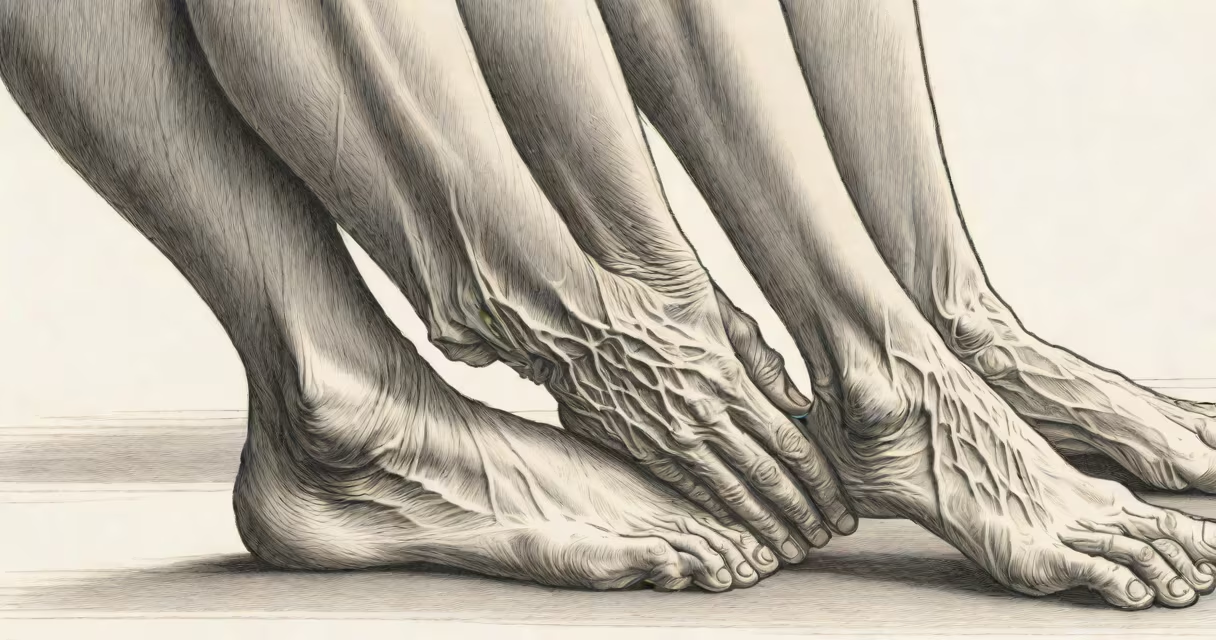
Muscle cramps are sudden, involuntary contractions of skeletal muscle that cause sharp pain and temporary immobility. They occur when nerves controlling muscle movement send incorrect signals, leading to sustained contraction. Cramps affect people of all ages and activity levels, often striking during exercise, sleep, or prolonged standing.
Cramping results from disrupted neuromuscular signaling. Normally, muscles contract and relax in response to neural commands. When this system fails-due to fatigue, dehydration, or chemical imbalances-the muscle stays locked in contraction. This disruption can happen in any skeletal muscle, but most commonly affects the calves, feet, hands, and thighs.
The American Academy of Neurology identifies nerve hyperexcitability as the primary mechanism behind cramps. A 2021 review in Neurology confirmed that cramps originate in spinal cord reflexes, not just local muscle fatigue. This explains why stretching the affected muscle often relieves cramps-by resetting the faulty neural signal.
When a muscle contracts, motor neurons fire repeatedly, causing actin and myosin filaments to slide past each other. After contraction, relaxation occurs when calcium ions are pumped back into storage. If this process is interrupted-by low magnesium, potassium, or sodium levels-the muscle cannot release properly, resulting in a cramp.
Overuse during intense or unfamiliar activity leads to metabolic waste buildup, such as lactic acid, which irritates nerve endings. This sensitizes the muscle spindle-a sensory receptor in muscle tissue-making it more likely to trigger a spasm. Athletes training beyond their usual capacity report cramps within 10-20 minutes of starting a new routine.
A 2019 study published in Journal of Sports Sciences tracked 120 runners during marathons. Those who experienced cramps had lower serum potassium and magnesium levels compared to those who didn't. Dehydration reduced plasma volume by 6%, increasing the concentration of electrolytes and disrupting nerve signaling.
Cramps fall into four categories based on origin. Understanding the type helps identify the root cause.
| Type | Trigger | Typical Location | Duration |
|---|---|---|---|
| Exercise-associated | Overexertion, poor conditioning | Calf, quadriceps, hamstrings | Seconds to minutes |
| Nocturnal | Age-related nerve changes, reduced blood flow | Calf, foot arch | 1-5 minutes |
| Dehydration-related | Fluid loss exceeding 2% body weight | Any limb, especially during heat exposure | Variable, often recurrent |
| Medication-induced | Statins, diuretics, antipsychotics | Generalized, often bilateral | Recurring, may persist after stopping drug |
Exercise-associated cramps are the most common. They typically strike during endurance events or high-intensity training. A 2018 study in Medicine & Science in Sports & Exercise found that 63% of marathon runners reported at least one cramp during a race, with the majority occurring in the second half due to cumulative fatigue.
Nocturnal cramps affect about 60% of adults over 50. The National Institute on Aging notes that reduced circulation and age-related changes in nerve function contribute to nighttime episodes. These cramps often wake people from sleep and resolve quickly with walking or stretching.
Dehydration-related cramps occur when sweat loss exceeds fluid intake. For every 1% drop in body weight from sweating, cramp risk increases by 20%. A 2020 study in European Journal of Applied Physiology showed that athletes who drank less than 1 liter of fluid per hour during cycling events were twice as likely to cramp as those who maintained hydration.
Many assume cramps stem solely from low potassium or magnesium. While deficiencies can contribute, research shows they're rarely the sole cause. A 2022 meta-analysis in Frontiers in Physiology found that correcting electrolyte levels did not eliminate cramps in 70% of participants. This indicates that nerve dysfunction plays a larger role than mineral balance alone.
Another myth is that stretching prevents cramps. While stretching relieves acute cramps, it doesn't stop them from recurring. A 2017 randomized trial in British Journal of Sports Medicine showed that daily stretching reduced cramp frequency by only 15% over six weeks. The effect was strongest in people with habitual leg cramps, but not significant enough to prevent all episodes.
Some confuse cramps with muscle strains or spasms. A strain involves torn fibers and causes delayed pain. A spasm is a brief, localized twitch. Cramps are sustained, painful contractions lasting longer than a few seconds and often requiring intervention.
In July 2022, a 34-year-old recreational runner completed a 10K race in 95°F (35°C) heat. During the last mile, he felt a sharp cramp in his left calf. He stopped, stretched the muscle, and walked for five minutes before the pain subsided. The next night, he woke up with a similar cramp in the same leg.
He had consumed 1.2 liters of water and a sports drink during the run but did not replace lost sodium. His urine was dark yellow-indicating dehydration. Blood tests revealed low serum sodium (132 mmol/L) and slightly low magnesium (0.7 mmol/L).
After adjusting his hydration strategy-drinking 500 mL of electrolyte solution before and after runs-he reported no further cramps over the next eight weeks. This case illustrates that cramps often result from combined factors: heat stress, inadequate sodium replacement, and mild dehydration.
Most cramps are harmless and resolve within minutes. However, persistent or worsening cramps may indicate an underlying condition. Seek evaluation if cramps occur frequently (more than once a week), last longer than 10 minutes, or are accompanied by weakness, swelling, or skin changes.
Conditions such as peripheral artery disease, spinal stenosis, or neurological disorders can mimic cramps. A 2021 study in Neurology found that 12% of patients with chronic leg cramps had undiagnosed spinal nerve compression. MRI scans identified narrowing in the lumbar spine in 8 of 15 cases.
Understanding the causes of muscle cramps enables better prevention. Focus on hydration, balanced electrolyte intake, gradual training progression, and proper warm-up. Most episodes resolve with rest and stretching-but knowing the triggers helps avoid recurrence.