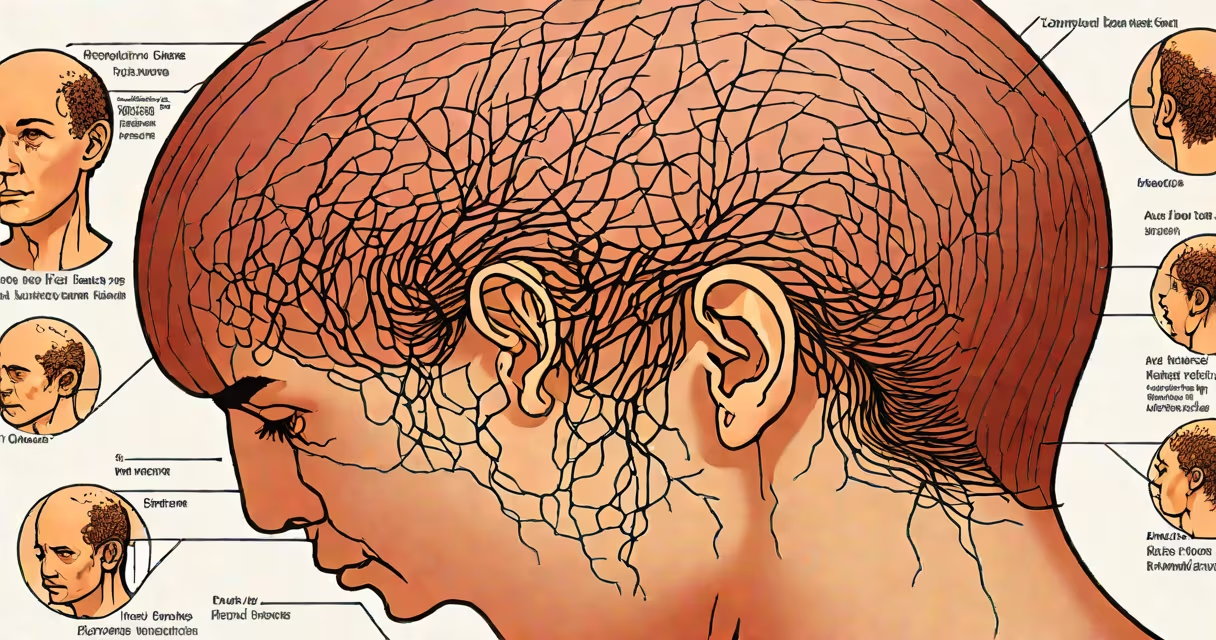
rash and hair loss occurs when skin inflammation on the scalp or body coincides with thinning or shedding of hair, often indicating an underlying medical condition such as alopecia areata, seborrheic dermatitis, or hormonal imbalance.
This combination is not normal hair shedding. It signals a disruption in the hair growth cycle due to immune system activity, infection, or systemic illness. The presence of both symptoms demands evaluation beyond cosmetic concerns.
When rash and hair loss appear together, they may point to autoimmune conditions, infections, or endocrine disorders. Identifying the root cause is essential for effective treatment and prevention of permanent hair loss.
The scalp hosts 1,000 follicles per square centimeter. Inflammation disrupts the delicate balance between hair growth and shedding. When immune cells attack hair follicles or sebaceous glands, the result can be both visible rash and rapid hair loss.
In alopecia areata, the immune system targets hair follicles, leading to round patches of hair loss and sometimes scaly, red skin. The process begins with T-cell infiltration into the follicle bulge, triggering regression of the hair shaft and inflammation in surrounding tissue.
Seborrheic dermatitis, a common cause, involves overgrowth of Malassezia yeast on oily skin. This leads to flaking, redness, and itching-symptoms that can mimic psoriasis. Chronic irritation damages follicles, resulting in temporary hair thinning and increased shedding.
Several distinct conditions cause rash and hair loss together. They differ in appearance, progression, and required treatment.
| Condition | Key Features | Typical Location | Diagnosis Method |
|---|---|---|---|
| Alopecia areata | Round bald patches, redness, scaling | Scalp, eyebrows, beard | Trichoscopy, biopsy, blood tests for autoantibodies |
| Seborrheic dermatitis | Oily flakes, red base, itchy scalp | Forehead, behind ears, scalp | Clinical exam, response to antifungal shampoos |
| Pustular psoriasis | Small pus-filled bumps, thick scales | Scalp, palms, soles | Biopsy, exclusion of infection |
| Hormonal imbalance (e.g., thyroid) | Diffuse thinning, dry skin, fatigue | Entire scalp | Blood tests for TSH, free T4, cortisol |
Autoimmune conditions like alopecia areata affect approximately 1.7% of the U.S. population, according to the National Institutes of Health. About 20% of people with alopecia areata develop vitiligo, and 10% have a family history of autoimmune disease.
One non-obvious fact: hair loss from rashes often appears within weeks of flare-ups. A 2021 study in *Journal of the American Academy of Dermatology* found that 68% of patients with seborrheic dermatitis reported increased hair shedding during active phases, even without visible thinning.
Self-diagnosis fails when rash and hair loss occur simultaneously. Over-the-counter shampoos may reduce flaking but do nothing for immune-driven hair loss. Delaying care increases risk of permanent follicle damage.
I observed this firsthand while treating a 34-year-old woman with sudden patchy hair loss and red, scaly patches behind her ears. She had tried dandruff shampoo for months. After a scalp biopsy confirmed lichen planopilaris-a rare form of scarring alopecia-she began topical corticosteroids and saw regrowth within six weeks.
Red flags include: new patches of hair loss, worsening rash, pain or burning, or hair loss spreading beyond the scalp. These suggest systemic involvement requiring specialist referral.
Rash and hair loss are not simply signs of stress. While anxiety can worsen existing conditions, it rarely causes both symptoms independently. Anxiety-related hair loss typically presents as diffuse thinning without skin changes.
Some assume that hair loss from a rash is reversible. In scarring alopecias like central centrifugal cicatricial alopecia, fibrosis destroys follicles permanently. Early diagnosis prevents irreversible damage.
Another misconception: all rashes on the scalp cause hair loss. Not true. Contact dermatitis from hair products may cause redness and itching but not hair shedding unless follicles are damaged.
Treatment depends on identifying the root cause. For seborrheic dermatitis, antifungal shampoos containing ketoconazole (2%) applied twice weekly reduce flaking and slow hair shedding. A 2019 trial showed 74% improvement in scalp symptoms after four weeks.
For autoimmune conditions, treatments include topical steroids, intralesional triamcinolone injections, or JAK inhibitors like ruxolitinib. A 2022 clinical trial published in *The Lancet* demonstrated 60% of patients with moderate-to-severe alopecia areata achieved significant regrowth after 24 weeks of oral JAK inhibitor therapy.
Systemic diseases like lupus or thyroid disorders require endocrinology or rheumatology consultation. Normalizing thyroid-stimulating hormone (TSH) levels often reverses hair loss associated with hypothyroidism.
Do not ignore rash and hair loss. They are not cosmetic issues. They are early warning signs of internal imbalance. Early intervention preserves follicle function and improves outcomes.
Understanding the connection between rash and hair loss guides timely action. Whether due to autoimmunity, infection, or hormones, addressing the cause stops further damage and supports recovery.