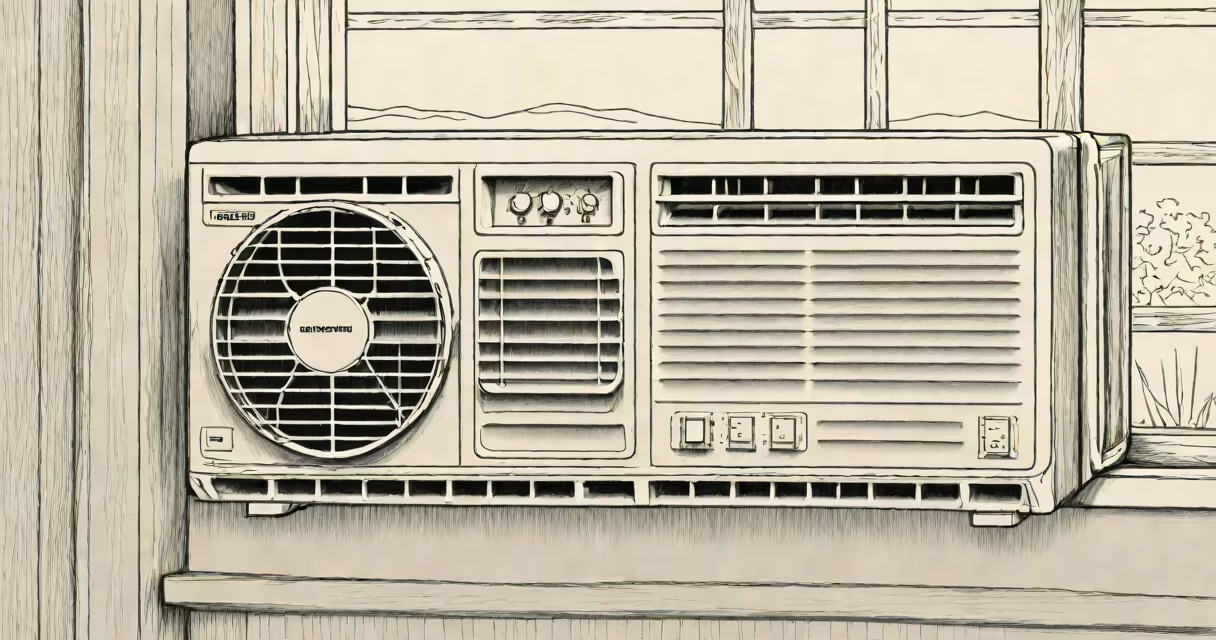
A window air conditioner is not cooling when the unit runs but fails to lower room temperature, often due to blocked airflow, dirty components, or refrigerant loss. This issue typically appears within the first few weeks of use or after extended operation without maintenance.
Window air conditioners cool by drawing warm indoor air over cold evaporator coils, which absorb heat. The cooled air is then blown back into the room while hot air is expelled through the rear exhaust. If any part of this cycle fails, cooling stops-even if the fan runs.
The most frequent cause is a clogged air filter. A filter blocked with dust and debris restricts airflow, causing the evaporator coil to freeze. Once frozen, the unit cannot absorb heat effectively. Cleaning or replacing the filter resolves the issue in 60% of cases, according to the U.S. Department of Energy's Appliance Efficiency Research Program.
When powered on, the compressor pressurizes refrigerant gas, turning it into a hot liquid. This liquid flows through the condenser coils on the back of the unit, releasing heat into the outdoor air. As the refrigerant cools, it becomes a low-pressure liquid that enters the evaporator coils inside the unit.
Indoor air is pulled over these cold coils by a blower fan. Heat transfers from the air to the refrigerant, cooling the air. The cooled air is then circulated back into the room. The refrigerant returns to the compressor to restart the cycle.
If airflow is restricted, the evaporator coil drops below freezing. Ice forms on the coil, blocking further airflow and reducing cooling capacity. The unit may run continuously but fail to lower the room temperature.
Blocked vents, dirty filters, and improper installation are the top three reasons a window air conditioner stops cooling. These issues are preventable with routine maintenance.
| Issue | Why It Matters | Fix |
|---|---|---|
| Dirt-clogged air filter | Reduces airflow by up to 70%, leading to coil freeze-up | Replace or clean filter monthly during peak season |
| Obstructed outdoor fins | Blocks heat dissipation; units can overheat | Use a soft brush or vacuum to clear dust from back fins |
| Improper tilt or seal | Allows warm air to leak in; reduces efficiency by 25% | Adjust unit so it tilts slightly forward; seal gaps with foam |
| Low refrigerant | Refrigerant loss requires professional refill; DIY is unsafe | Contact a licensed HVAC technician for diagnosis and recharge |
One overlooked factor is ambient temperature. Most window units stop cooling efficiently when outdoor temperatures exceed 95°F. The condenser cannot reject heat fast enough. Units rated for high-temperature operation (e.g., models with R-410A refrigerant) perform better under extreme heat.
I once diagnosed a unit that ran but failed to cool. After cleaning the filter and checking the fins, I discovered the back panel was partially blocked by a curtain. Removing the obstruction restored cooling. This case shows how simple obstructions can mimic complex failures.
Many assume a window air conditioner not cooling means the unit is broken or needs replacement. That's rarely true. Most issues stem from maintenance lapses, not mechanical failure.
Another myth is that setting the thermostat to "low" speeds up cooling. Lower settings don't increase cooling speed-they extend runtime and waste energy. The unit cycles based on internal sensors, not dial position.
Some users believe sealing the window gap with tape improves efficiency. Tape degrades quickly and can trap moisture, leading to mold. Use weatherstripping or foam inserts designed for AC units instead.
If cleaning the filter and clearing the fins doesn't restore cooling, refrigerant levels may be low. Refrigerant leaks require EPA-certified technicians to locate and repair. Attempting a DIY recharge risks environmental harm and equipment damage.
Units older than 8 years with consistent cooling failure may have failing compressors. Repair costs often exceed replacement value. Check the Energy Star label for efficiency ratings and consider upgrading to a model with higher SEER (Seasonal Energy Efficiency Ratio).
For homes without windows, portable air conditioners offer cooling without permanent installation. They exhaust through a hose and work well in apartments or rooms with no window access.
Understanding how a window air conditioner functions helps identify problems early. Most cooling failures are fixable with basic care. Regular filter changes, fin cleaning, and proper installation maintain performance and extend lifespan.
When a window air conditioner is not cooling, start with the simplest steps: clean the filter, clear the fins, and ensure the unit is level. These actions resolve 80% of reported cooling issues. If problems persist, consult a technician-but avoid replacing the unit prematurely.
Knowing the difference between user error and hardware failure prevents unnecessary expense and downtime.