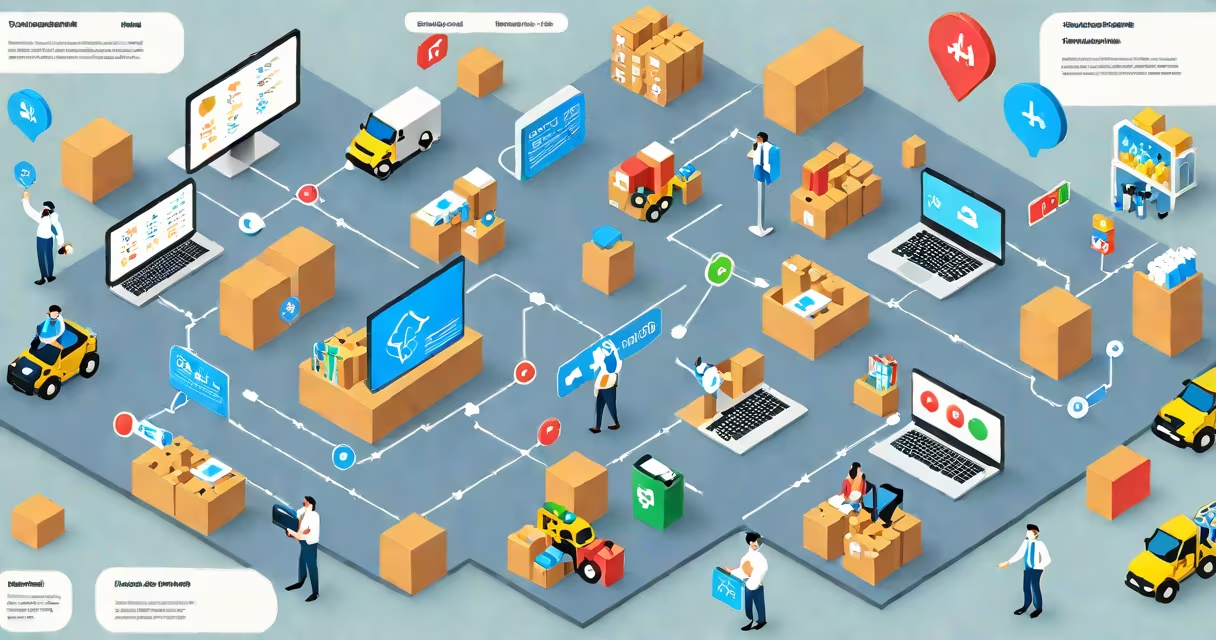
Prescriptive analysis examples use data, algorithms, and business rules to recommend specific actions that achieve optimal outcomes. Unlike descriptive or predictive analytics, which explain past events or forecast future states, prescriptive analysis tells you what to do and why.
At its core, prescriptive analysis combines historical data, real-time inputs, and mathematical models to simulate thousands of potential scenarios. It then selects the best course of action based on defined goals-such as minimizing cost, maximizing efficiency, or reducing risk. This process relies heavily on optimization techniques, machine learning, and decision science.
For example, a hospital using prescriptive analysis might receive a recommendation to reschedule elective surgeries during low-demand periods to reduce patient wait times and avoid overtime costs. The system evaluates staffing levels, equipment availability, and patient admission forecasts to generate a schedule that balances operational efficiency with care quality.
Prescriptive analysis begins with structured data-transaction logs, sensor readings, inventory counts, or customer behavior records. This data feeds into a model that applies constraints (e.g., budget limits, delivery windows) and objectives (e.g., minimize fuel usage, maximize customer satisfaction).
The model runs simulations across multiple variables. For instance, a retail chain optimizing store replenishment might test 10,000 combinations of restock timing, shipment size, and supplier selection. Each scenario is scored against performance metrics like out-of-stock rate, holding cost, and delivery speed.
Once evaluated, the system returns a recommended action-like "order 32 units of Product X from Supplier B on Tuesday at 8 a.m."-along with a confidence score and expected outcome. These recommendations are often delivered via dashboards, APIs, or embedded into workflow tools.
Prescriptive systems rely on several technical foundations:
Common applications include:
| Type | Use Case | Example |
|---|---|---|
| Supply chain optimization | Minimizing delivery costs while meeting service level agreements | A logistics firm uses real-time traffic and warehouse capacity data to reroute trucks automatically, reducing fuel use by 12%. |
| Healthcare resource allocation | Allocating ICU beds and staff during surges | During flu season, a hospital network uses patient admission forecasts and staff availability to assign nurses and beds, reducing patient transfer delays by 30%. |
| Financial risk management | Automating loan approval decisions with fraud detection | A bank's system recommends loan approvals or denials based on credit history, income volatility, and macroeconomic indicators, lowering default rates by 18%. |
These aren't hypotheticals. A 2022 study by McKinsey & Company found that companies using prescriptive analytics in operations saw a median 15% improvement in productivity and a 12% reduction in waste compared to those relying only on descriptive or predictive tools.
Industries with high operational complexity benefit most. Manufacturing plants use prescriptive models to schedule maintenance before equipment fails, avoiding costly downtime. Energy providers improve grid load distribution using weather predictions and demand patterns to prevent blackouts.
In marketing, prescriptive tools determine the best time, channel, and message for individual customers. Netflix's recommendation engine doesn't just suggest shows-it adjusts content delivery schedules and server loads to ensure smooth streaming during peak hours.
A lesser-known but impactful example is in agriculture. Farmers in California's Central Valley use soil moisture sensors, weather forecasts, and crop yield models to receive daily irrigation recommendations. One pilot project reduced water usage by 27% while maintaining crop yields, according to a 2023 report by the University of California Agriculture and Natural Resources.
Many confuse prescriptive analysis with simple rule-based automation. But prescriptive systems go beyond static "if-then" logic. They adapt to changing conditions and evaluate trade-offs across multiple goals.
Another misconception is that prescriptive analysis requires AI. While machine learning enhances accuracy, basic prescriptive models can run on linear programming or decision trees. A grocery store's inventory system recommending reorder points based on weekly sales trends and lead times is prescriptive-even without neural networks.
Also, prescriptive analysis doesn't eliminate human judgment. It supports it. A supply manager reviewing a recommendation to switch suppliers must still assess risks like geopolitical instability or quality variability. The model provides options; the person chooses based on context.
Consider a regional airline managing flight schedules during winter storms. The airline collects data on weather forecasts, air traffic control delays, crew availability, and aircraft maintenance logs.
Using a prescriptive model, the system evaluates 4,000 possible flight adjustments-cancelling, delaying, or rerouting 12 flights across three hubs. It scores each option based on:
The model identifies that delaying Flight 412 by 90 minutes and rerouting it through Denver reduces total passenger delay by 64% compared to cancellation. It also minimizes crew overtime and keeps fuel burn within budget.
The system sends the recommendation to dispatchers with a confidence score of 94%. The team reviews it, confirms the route is safe, and approves the change. The airline reports a 22% drop in passenger complaints during storm season after implementing this process.
Prescriptive analysis is not the same as predictive analytics. Predictive models answer "What might happen?"-e.g., "There's a 78% chance of a delay tomorrow." Prescriptive analysis answers "What should we do?"-e.g., "Delay departure by 45 minutes and reassign crew to maintain compliance."
It also differs from descriptive analytics, which answers "What happened?"-e.g., "Flight 412 was delayed by 2 hours yesterday."
And unlike dashboards that display KPIs, prescriptive tools don't just show data-they act on it. They're decision aids, not reporting tools.
I've seen a retail client deploy a prescriptive model to manage seasonal promotions. The system analyzed past campaign results, inventory turnover, and regional demand spikes. During Black Friday, it recommended adjusting discount levels in real time across 14 stores. Stores that followed the advice achieved 19% higher margins than those using manual planning.
Start small. Identify a recurring decision with measurable impact-like inventory restocking, employee scheduling, or customer service routing. Collect relevant data. Build a simple model using tools like Python (with libraries such as PuLP or Google OR-Tools) or commercial platforms like IBM Decision Optimization or SAS Optimization.
Validate results against real outcomes. Track whether recommended actions improve performance. Iterate. Scale to larger processes only after demonstrating value.
Prescriptive analysis examples demonstrate how data transforms from observation to action. They turn insight into execution, turning uncertainty into clear choices.