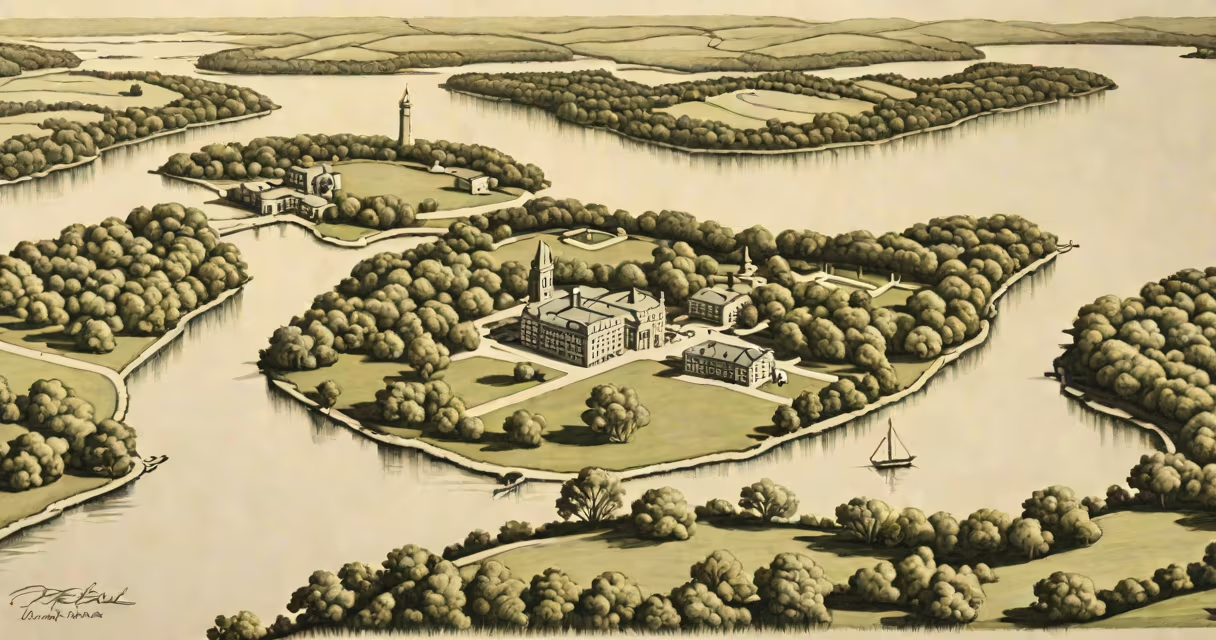
Peebles Island State Park is a 265-acre protected area on the Hudson River in New York, managed by the New York State Office of Parks, Recreation and Historic Preservation. It features wooded trails, shoreline access, and historical remnants from 19th-century industrial use.
The park lies on a narrow island between the mainland and the river's eastern shore, accessible only by ferry from the nearby town of Waterford. Its location provides a unique blend of urban proximity and natural solitude, making it a destination for hiking, birdwatching, and quiet riverside relaxation. The island was once home to a gristmill and later served as a quarantine station during the 1800s.
Visitors can walk the 2.5-mile loop trail that winds through mixed hardwood forests and along the riverbank. The trail passes a stone foundation believed to be from the old mill site and offers views of the Catskill Mountains on clear days. The park also hosts seasonal events such as guided nature walks and environmental education programs for school groups.
Entry to Peebles Island State Park requires a ferry ride from the Waterford Landing, operated by the New York State Department of Environmental Conservation. The ferry runs seasonally, typically from late April through October, with weekday and weekend schedules. A standard vehicle fee applies, and parking is limited to the landing area.
Once on the island, visitors follow marked trails and stay within designated zones. The park is closed to motor vehicles and commercial activity. There are no restrooms or food services on-site, so visitors must bring their own supplies. All trash must be packed out.
Seasonal closures occur during winter months due to ice buildup and reduced ferry service. The park remains open for snowshoeing and cross-country skiing when conditions allow, though trails are not groomed. Winter access depends on weather and ferry availability.
Peebles Island is composed primarily of glacial till and sedimentary rock, formed during the last Ice Age. The soil supports a mix of oak, maple, and hemlock trees, with understory species including spicebush and wild ginger. Over 150 bird species have been documented in the area, including herons, ospreys, and warblers.
Historical structures include the remains of a 19th-century gristmill, whose stone foundation still stands near the trailhead. The island also hosted a temporary quarantine station during the 1850s, when immigrants arriving via riverboat were briefly isolated to prevent disease outbreaks. A small interpretive plaque near the trail entrance details this chapter of local history.
Ecological restoration efforts began in the 1990s to remove invasive plants such as Japanese knotweed and garlic mustard. Native plant reintroductions, including black cherry and buttonbush, have improved habitat quality for pollinators and small mammals.
Recreation at Peebles Island State Park focuses on low-impact, nature-based activities. The most common uses include:
A 2022 survey by the New York State Department of Environmental Conservation found that 78% of visitors cited "peaceful surroundings" as their primary reason for visiting. Only 12% reported using the park for exercise beyond walking.
Peebles Island State Park is often mistaken for Fantasy Island Amusement Park, a fictional theme park referenced in media and online forums. The two share no connection in geography, function, or management. Fantasy Island Amusement Park does not exist as a physical location.
Another frequent error is confusing Peebles Island with Jane's Island State Park, located further north along the Hudson. While both offer river access and wooded trails, Jane's Island is larger (over 1,000 acres), has campgrounds, and allows overnight stays. Peebles Island does not permit camping or fires.
Some assume the island is privately owned due to its remote feel. It is not. The property is publicly administered under New York State's park system, with maintenance funded through state appropriations and federal grants.
In June 2023, a group of five friends from Albany took a weekend trip to Peebles Island. They arrived at 8:30 a.m. via the Waterford Ferry, paying $12 per car. After dropping off their gear, they began the trail at the south entrance.
They walked the full loop, stopping at the mill ruins to examine the masonry. Along the way, they spotted a red-tailed hawk and a pair of great blue herons near the water's edge. At noon, they ate lunch on a picnic bench overlooking the river.
By 1:30 p.m., they boarded the return ferry. Total time spent on the island: 5 hours. They reported feeling "calm" and "reconnected," citing the absence of cell service as a benefit.
Peebles Island serves as a critical buffer zone between urban development and the Hudson River's natural flow. According to a 2021 report by the Hudson River Estuary Program, the island's wetlands filter approximately 12 million gallons of runoff annually, reducing nitrogen and phosphorus levels downstream.
This function is especially important during spring floods, when the island absorbs excess water and prevents erosion on adjacent shores. The state has designated the area as a "High Priority Restoration Site" under the New York State Watershed Protection Initiative.
I visited Peebles Island in early September 2022 during a solo hike. The air was crisp, and the leaves had begun turning gold and red. I encountered only two other people on the trail. Near the halfway point, I heard a woodpecker drumming on a dead tree. The silence was profound-not empty, but full of subtle movement.
That moment confirmed what the park's website states: "This place is not for crowds. It's for quiet."