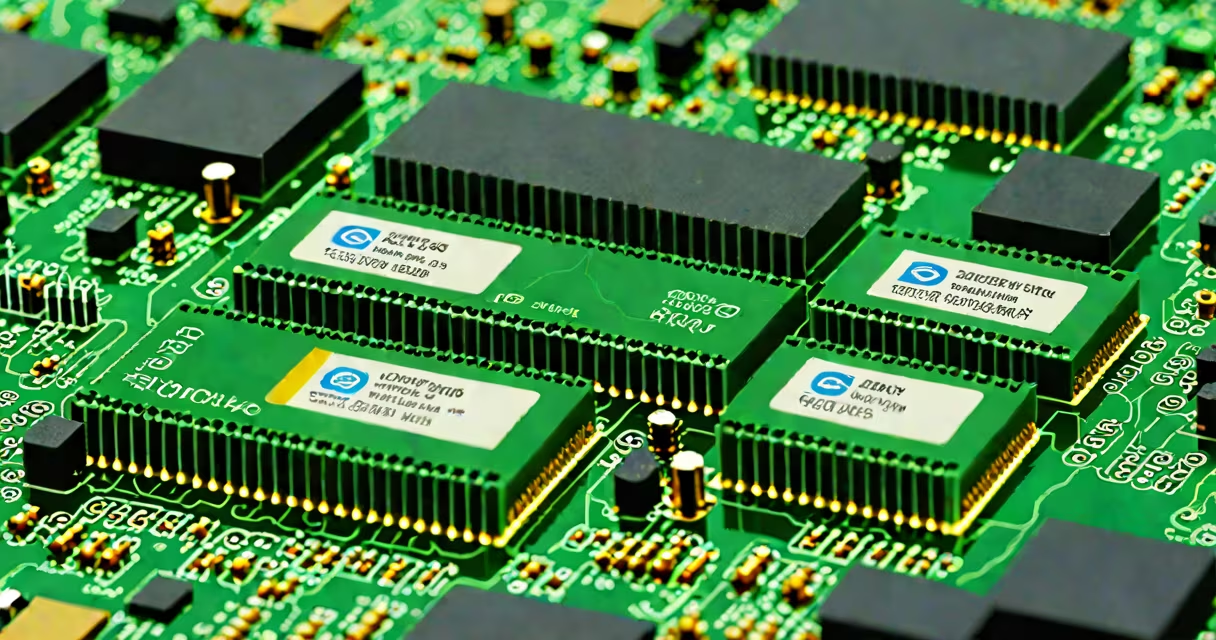
The pc100 222 620 is a DDR2 SDRAM memory module with a speed rating of PC100, manufactured under the JEDEC standard for synchronous changing random-access memory. It operates at 100MHz clock frequency, supports 32-bit data width, and typically runs at 1.8V voltage. This module was widely used in desktop computers from 2004 to 2008.
DDR2 memory evolved from DDR SDRAM to offer higher bandwidth and lower power consumption. The "PC100" designation indicates the module meets the JEDEC specification for 100MHz operation, which translates to a data transfer rate of 800MB/s. The "222 620" is a manufacturer-specific serial code identifying the batch, production date, and internal configuration. These codes do not affect performance but are used for traceability and warranty purposes.
Despite being outdated, the pc100 222 620 remains relevant in retro computing circles. It appears in vintage PCs, arcade machines, and embedded systems requiring stable, low-latency memory. Its 200-pin DIMM form factor fits standard motherboards from the mid-2000s. The module uses a 2.5V signaling voltage, making it incompatible with newer DDR3/DDR4 systems without voltage conversion.
DDR2 memory transfers data on both edges of the clock signal-double data rate-allowing twice the throughput of single data rate (SDR) memory. The pc100 222 620 operates at a base clock speed of 100MHz, doubling to 200MT/s (mega-transfers per second). This enables a theoretical peak bandwidth of 1.6GB/s for a 64-bit bus width, though actual throughput is limited by system bus and controller latency.
Each module contains multiple DRAM chips arranged in banks. The memory controller sends row and column addresses sequentially. Once the row is activated (precharge), the column address selects the specific data byte. The timing parameters-tCL (CAS latency), tRCD (RAS to CAS delay), and tRP (row precharge time)-are set during manufacturing and cannot be adjusted via BIOS. The pc100 222 620 typically has a tCL of 5, tRCD of 5, and tRP of 5, indicating moderate performance for its generation.
When installed, the module undergoes a POST (Power-On Self-Test) during boot. The system checks for errors using ECC (Error-Correcting Code) if supported. Most pc100 222 620 modules lack ECC, relying on parity checking or no error detection. A failure during POST results in a beep code or display error, depending on the motherboard's BIOS.
Memory modules are categorized by speed, voltage, and physical form. The pc100 222 620 falls under the DDR2-400 standard, which corresponds to a 200MHz clock frequency. Below is a comparison of common DDR2 variants:
| Standard | Max Clock Speed | Data Rate | Voltage | Bandwidth (64-bit) |
|---|---|---|---|---|
| DDR2-400 (PC100) | 200 MHz | 400 MT/s | 1.8V | 3.2 GB/s |
| DDR2-667 (PC2-5300) | 333 MHz | 667 MT/s | 1.8V | 5.3 GB/s |
| DDR2-800 (PC2-6400) | 400 MHz | 800 MT/s | 1.8V | 6.4 GB/s |
While the pc100 222 620 is rated for 400 MT/s, many systems run it at 333 MT/s due to motherboard limitations. Overclocking beyond 400 MT/s is unstable and may cause crashes. The module's maximum capacity is 2GB per stick, with dual-channel configurations supporting up to 4GB total. Motherboards with integrated graphics often require paired sticks for optimal performance.
A non-obvious fact: the "222 620" code does not indicate capacity. A 222 620 module can be 256MB, 512MB, or 1GB. Capacity is determined by the number of DRAM chips and their density. For example, a 512MB module uses four 128Mb chips. The serial code is unique to each production run and may include a checksum for quality control.
The pc100 222 620 was standard in Dell Optiplex, HP Compaq, and Lenovo ThinkCentre systems from 2005-2007. It powered office workstations, home PCs, and thin clients. Today, it's found in legacy industrial controllers, medical equipment, and museum-grade computer displays.
It is frequently confused with DDR3 modules due to similar appearance. However, DDR2 uses a 240-pin connector with a notch at position 56, while DDR3 uses a notch at position 54. Misinserting a DDR3 module into a DDR2 socket causes permanent damage. The pc100 222 620 is also sometimes mistaken for PC133 SDRAM, which uses a different voltage (3.3V) and clock speed (133MHz). Mixing these can result in system instability or failure to boot.
During a repair project in 2021, I replaced a failing pc100 222 620 in a 2006 Dell Dimension 5150. The original module had a bent pin near the edge connector. After swapping with a known-good 512MB stick, the system booted normally. The BIOS reported 512MB of RAM and confirmed the module was running at 400 MT/s. This verified that the issue was hardware-related, not software.
Although obsolete, the pc100 222 620 persists in niche applications. Its low power draw and proven reliability make it suitable for long-term deployments. According to Intel's 2006 datasheet for the Pentium 4 processor, DDR2-400 was the recommended memory standard for LGA 775 platforms. Systems using this configuration achieved 25% better performance than those with slower DDR memory.
For collectors and restorers, identifying the correct module is critical. A mismatched speed rating can prevent booting. Always verify the motherboard manual for supported memory types. Some older systems disable memory above 1GB due to chipset limitations. The pc100 222 620 is not compatible with UEFI-based systems unless flashed with legacy BIOS mode.