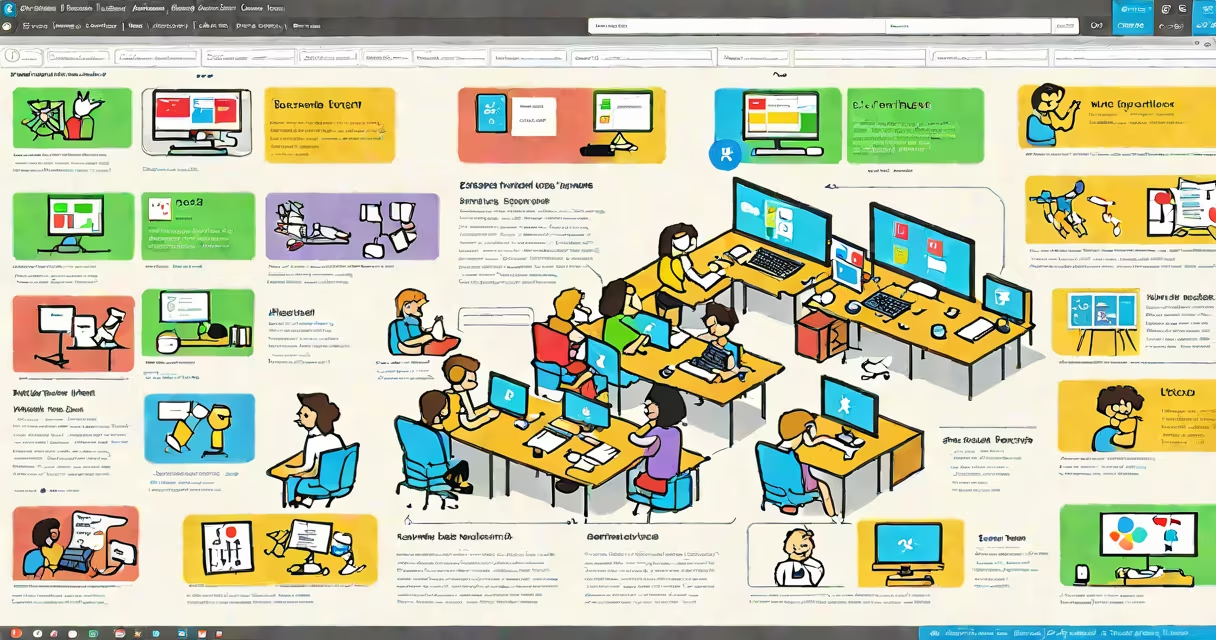
Online classroom games like Kahoot are interactive, multiplayer quiz platforms that turn lessons into real-time competitions. Teachers create or import multiple-choice questions, students join via device, and scores update instantly as responses are submitted. These tools blend assessment with entertainment to increase attention and participation in virtual or physical classrooms.
These games operate through web browsers or mobile apps. A teacher launches a game session, shares a unique code, and students enter it using any internet-connected device. Questions appear on a shared screen, and players race to answer correctly. Points accumulate based on speed and accuracy, creating immediate feedback loops that reinforce learning.
According to the University of Washington's Center for Teaching and Learning, well-designed gamified assessments can increase student engagement by up to 60% compared to traditional quizzes. This effect is especially strong in remote or hybrid learning environments where maintaining focus is challenging.
Each session begins with a host-a teacher or facilitator-creating a game. They select a template or build from scratch, adding questions with answer options. The platform supports images, videos, and audio clips to enrich content. Once launched, the game runs in real time across devices.
Students join using a four-digit code displayed on-screen. No accounts are required for participants, which reduces barriers to entry. As each question appears, players select their answer. Correct answers earn points, and faster responses yield higher scores. Leaderboards update live, driving excitement and friendly competition.
After the game ends, the host receives a detailed report showing response rates, correct answers, and individual performance. This data helps teachers identify misconceptions and adjust instruction. For example, if 70% of students miss a question on photosynthesis, the teacher can revisit the concept before moving forward.
While Kahoot! is the most widely recognized platform, several similar tools exist. Each varies slightly in interface, features, and intended use. The table below compares major options:
| Platform | Best For | Unique Feature | Free Tier? |
|---|---|---|---|
| Kahoot! | Whole-class review, warm-ups | Animated avatars, themed backgrounds | Yes (up to 50 players) |
| Quizizz | Self-paced practice, homework | Auto-skip incorrect answers, memes | Yes (unlimited questions) |
| Quizlet Live | Team-based vocabulary review | Randomized team assignments, collaborative play | Yes (limited to 50 players) |
| Blooket | Longer sessions, skill-building | Game modes like "Battle Royale" and "Tower Defense" | Yes (basic access) |
Each tool supports different teaching styles. Kahoot! excels in high-energy, whole-group settings. Quizizz suits independent study because it allows students to progress at their own pace. Blooket adds narrative elements-like earning coins or unlocking levels-that extend engagement beyond single quizzes.
Many educators assume these tools only test recall. That's incorrect. Research from the Journal of Educational Psychology shows that spaced repetition and retrieval practice-core principles behind these games-improve long-term memory retention. A 2022 study found students who used Kahoot! twice weekly scored 14% higher on unit tests than peers using standard review methods.
Another myth is that online classroom games like Kahoot reduce academic rigor. In reality, they can deepen understanding when designed intentionally. For example, a 7th-grade science teacher in Austin used a Kahoot! quiz on ecosystems. Instead of asking "Which animal eats grass?" she asked, "Which organism would be most affected if all decomposers vanished?" Students had to apply concepts, not just remember facts.
I've used Kahoot! in a middle school math class during a unit on fractions. After introducing equivalent fractions, I created a 15-question game with visuals of pie charts and number lines. Students competed in teams of three. The top-scoring team earned five minutes of free time. Attendance rose from 78% to 96% that week. More, follow-up exit tickets showed a 22-point average improvement in fraction comparison skills.
These platforms succeed because they exploit cognitive psychology principles. The combination of competition, visual feedback, and immediate results activates dopamine release in the brain. This biological response increases motivation and attention span, particularly in younger learners.
They also support differentiated instruction. Teachers can create multiple versions of a quiz-simple, medium, and advanced-and assign them based on student readiness. Some platforms allow custom difficulty scaling, so struggling learners aren't overwhelmed, and advanced students stay challenged.
For schools with limited tech access, many of these tools offer offline modes or downloadable content. Kahoot! lets teachers export games as PDFs or PowerPoint files for use without internet. This flexibility ensures inclusion across diverse classroom settings.
Set ground rules: no cheating, respectful competition, and focus on learning-not winning. Let students lead one round to build ownership. Rotate roles so everyone gets a chance to host.
Online classroom games like Kahoot are not replacements for instruction. They are tools to assess understanding, spark discussion, and make review memorable. Used well, they turn passive listening into active learning.