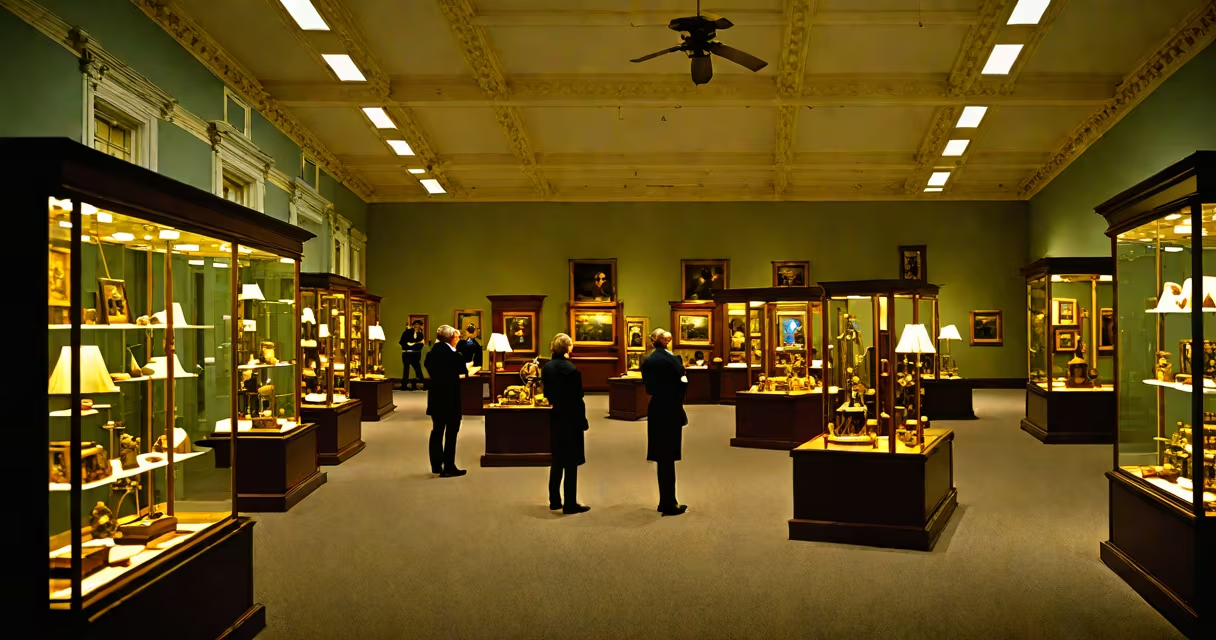
The Maryland Center for History and Culture is a nonprofit institution dedicated to preserving and sharing the history of Maryland from colonial times to the present. It operates as a museum, archive, and research hub, housing over 1 million items including manuscripts, photographs, maps, and artifacts related to Maryland's people, politics, and culture.
Founded in 1848 as the Maryland Historical Society, the organization evolved into its current form in 2015 after merging with the Maryland State Archives and the Maryland Humanities Council. Its mission centers on making Maryland's past accessible through public programs, educational outreach, and digitized collections. The institution is located in downtown Baltimore, within the historic Mount Vernon neighborhood, near the Inner Harbor and the National Museum of American History.
It is not a government agency, though it collaborates with state and local governments on heritage initiatives. The center is accredited by the American Alliance of Museums and follows standards set by the Library of Congress and the Smithsonian Institution for archival preservation. It receives no direct state funding and relies on private donations, grants, and membership fees.
The center manages three core functions: collecting, researching, and exhibiting. Physical collections are stored in climate-controlled vaults and accessed by researchers by appointment. Digitized materials are available online via its searchable database, which includes over 150,000 records. Users can search by keyword, date, location, or person.
Research services include access to original letters from George Washington, military service records from the Civil War, and personal diaries from 19th-century Maryland farmers. For example, a 1783 letter from Thomas Jefferson discussing trade routes between Annapolis and Philadelphia is available in high-resolution scans. Researchers must register and agree to usage policies before accessing sensitive or restricted materials.
Public programming includes rotating exhibitions, lectures, school field trips, and community workshops. A 2023 exhibition titled "Freedom's Founders: Maryland's Black Pioneers" featured oral histories, voting records, and artifacts from the 1865 Maryland Constitutional Convention. Over 12,000 visitors attended during its six-month run.
The center's operations rest on four pillars: archives, museum galleries, education, and digital infrastructure. The archives hold 18th- to 21st-century documents, including the papers of Governor Thomas Johnson and the correspondence of Harriet Tubman's network in Eastern Shore communities.
Museum galleries display thematic installations such as "Life on the Chesapeake," which uses interactive models to show changes in oyster harvesting from 1700 to today. The gallery includes a 1920s fishing boat replica and audio clips of watermen describing seasonal shifts in fish populations.
Education programs serve K-12 students, college interns, and lifelong learners. The center partners with Baltimore City Schools to deliver curriculum-aligned modules on topics like the Underground Railroad and the role of enslaved labor in tobacco farming. High school students who complete the program earn a certificate recognized by the Maryland Department of Education.
| Type | Examples | Access Method |
|---|---|---|
| Manuscripts | Letters from Frederick Douglass, land deeds from Prince George's County | Online catalog, in-person request |
| Photographs | Images of 1950s Baltimore street life, Civil War-era camp photos | Digital archive, print-on-demand |
| Artifacts | 18th-century ship fittings, Civil War uniform buttons | Exhibition display, virtual tour |
The center serves historians, genealogists, educators, and civic groups. Genealogists use its digitized census records and church registries to trace family roots in Maryland. A 2022 study by the University of Maryland found that 68% of users searching for ancestral links in the state began their research at the center's website.
Local governments reference its collections when drafting historical markers or planning urban development projects. In 2021, the city of Annapolis consulted the center's maritime archives before redesigning the waterfront district to reflect 18th-century port layouts.
It is not a tourist attraction in the traditional sense. While it welcomes visitors, its primary function is scholarly and archival. Unlike commercial museums, it does not charge admission for most research activities. Admission to exhibitions is $10 for adults, $5 for seniors and students, with free entry for members and children under 12.
Some assume the Maryland Center for History and Culture is a branch of the Smithsonian or the Library of Congress. It is not. It is an independent entity with its own board, budget, and governance structure. It maintains formal partnerships with both institutions but operates autonomously.
Another misconception is that all materials are freely available online. Only 15% of the physical collection has been digitized as of 2024. The remaining 85% requires a research visit or interlibrary loan. The center prioritizes digitization based on demand, historical significance, and condition of the item.
A non-obvious fact: the center holds the largest known collection of 19th-century African American funeral sermons in the United States. These were recorded by traveling ministers in rural Maryland and preserved by local churches. They offer rare insight into religious expression and community leadership among free Black populations before emancipation.
In 2022, I spent two weeks at the center researching the role of women in early Maryland agriculture. I accessed a 1767 ledger from a plantation in Cecil County detailing crop yields and labor assignments. The document listed Mary Ann Smith, a free Black woman, as responsible for managing the vegetable garden and overseeing five enslaved workers. Her name appears in 37 entries across four years. This detail was absent from published histories of the region.
Using the center's research tools, I cross-referenced her name with court records and church baptismal registers. The findings contributed to a paper presented at the 2023 Southern Historical Association conference. The center's staff provided guidance on handling fragile materials and helped me obtain permissions for publication.