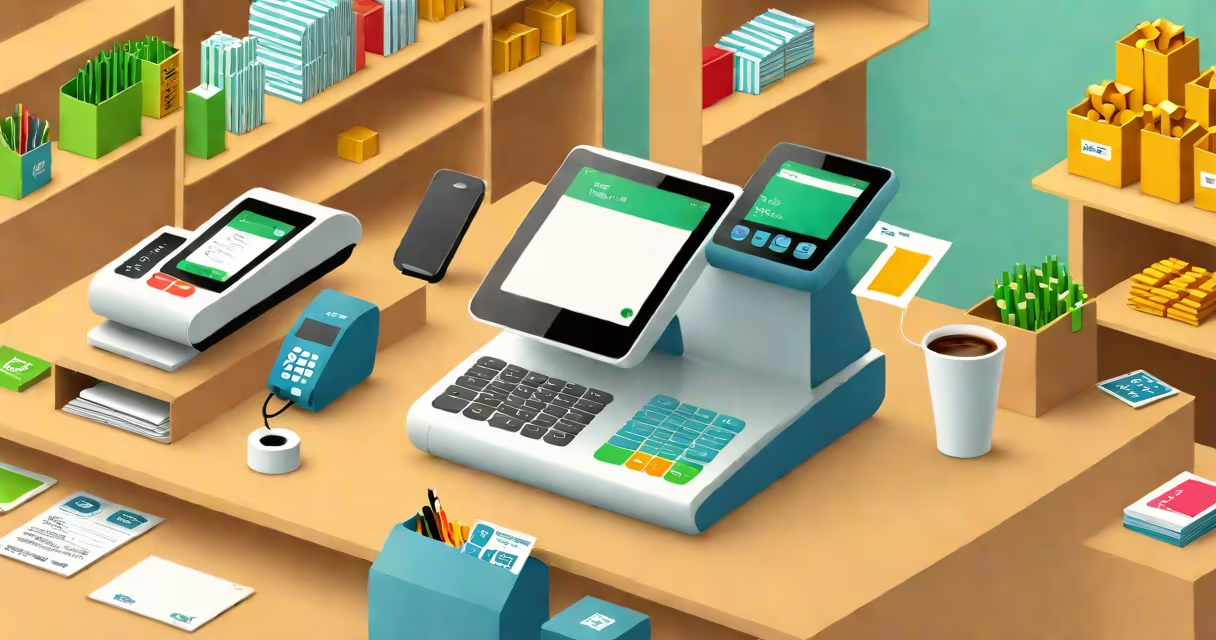
Shopify POS charges refer to the fees retailers pay to process in-person sales using Shopify's point-of-sale system, including transaction fees, hardware costs, and subscription plan expenses. These charges vary based on the payment processor used, the level of Shopify plan, and whether hardware is purchased or rented.
Shopify POS enables brick-and-mortar stores to accept card payments, manage inventory, and sync sales with online stores. The system integrates with Shopify's e-commerce platform, allowing businesses to track all sales-online and in-store-from one dashboard. However, each in-person transaction incurs a fee, which impacts profit margins, especially for high-volume retailers.
Transaction fees depend on the payment processor. Shopify Payments, the integrated processor, charges 2.9% + $0.30 per transaction for standard card payments. Third-party processors like Square or Stripe may charge different rates, often higher than Shopify Payments. Retailers must compare these options carefully to avoid unexpected costs.
When a customer pays with a credit or debit card at a Shopify POS terminal, the transaction goes through a payment gateway. The gateway verifies the card details, authorizes the purchase, and transfers funds to the merchant's bank account. A fee is deducted during this process, typically split between the processor and the acquiring bank.
For Shopify Payments, the fee structure is transparent: 2.9% + $0.30 per transaction for swiped, dipped, or tapped cards. This rate applies to all Shopify plans, including Basic, Shopify, and Advanced. If a retailer uses a third-party processor, the rate may differ-some charge 2.6% + $0.10, others 3.5% + $0.15. The difference can add up quickly across hundreds of daily transactions.
Example: A coffee shop processes 150 in-person transactions per day at an average of $12 per sale. Using Shopify Payments, the daily fee is 150 × ($12 × 0.029 + $0.30) = $69.30. Over a month, that's $2,079 in fees. Switching to a lower-rate processor could save $400-$600 monthly, depending on volume and rate.
Shopify POS charges fall into three categories: transaction fees, hardware costs, and subscription fees. Each contributes to the cost of running a physical storefront.
| Charge Type | Examples | Cost Range | Notes |
|---|---|---|---|
| Transaction fees | Shopify Payments, Square, Stripe | 2.6% - 3.5% + $0.10 - $0.30 | Lower rates available with volume discounts or long-term contracts. |
| Hardware | Shopify Terminal, iPad + Stand, Barcode Scanner | $199 - $399 | Terminal includes built-in card reader and printer. No monthly rental fee. |
| Subscription plan | Basic ($29/month), Shopify ($79/month), Advanced ($299/month) | $29 - $299/month | Higher plans include advanced reporting, gift cards, and multi-location support. |
Hardware is a one-time cost. The Shopify Terminal retails for $399 and includes a 10-inch touchscreen, magnetic stripe and chip reader, contactless payment support, and receipt printer. It connects via Wi-Fi or cellular (with optional SIM card). Retailers who rent terminals pay $25-$35 per month, but ownership offers better long-term value.
A common mistake is assuming that the Shopify plan price covers all POS functions. The Basic plan supports up to 10 locations and basic reporting. For advanced features like employee roles, custom discount codes, or offline mode, upgrading to Shopify or Advanced is necessary. These plans also affect transaction fees-Advanced users get discounted rates on Shopify Payments.
These charges are most relevant for small to medium-sized retailers selling in physical stores. High-volume shops-like boutiques, cafes, or apparel stores-experience significant fee drag. A 3% transaction fee on $100 sales means $3 per sale. At 500 sales per week, that's $150 in fees weekly-$7,800 annually.
One retailer I observed in Portland ran a seasonal gift shop with $180,000 in annual in-store sales. They used Shopify Payments at 2.9% + $0.30. Their total transaction fees came to $5,400 annually. After switching to a third-party processor with a 2.6% + $0.10 rate, they saved $360 per year. While modest, the savings improved margin stability during low-demand months.
Another factor is international sales. Shopify Payments supports 130+ countries, but cross-border transactions incur additional currency conversion fees-typically 1% of the transaction amount. A U.S.-based store accepting euros from a German customer pays 1% extra on top of the base rate. This adds up fast for global sellers.
Many assume Shopify POS charges are flat or predictable. They're not. Fees vary by processor, card type (credit vs. debit), and region. Debit card transactions often carry lower rates than credit cards, but some processors apply surcharges to premium cards.
Another misconception is that using Shopify Payments guarantees the lowest rate. Not true. Shopify offers discounted rates for larger merchants who commit to volume-based agreements. A business processing $50,000 monthly in sales can negotiate a 2.4% rate, saving $1,500 per month compared to the standard 2.9%.
Also, some believe that the Shopify plan price includes hardware. It does not. The $29 Basic plan covers online store tools and basic POS access-but not the terminal. Retailers must buy or lease hardware separately. Skipping this step leads to poor checkout experiences and lost sales.
Finally, many confuse Shopify POS charges with Shopify's e-commerce transaction fees. They're distinct. Online sales through Shopify Payments use the same rate (2.9% + $0.30), but in-store sales may use different gateways. Always verify which processor handles each channel.
A local café processes 200 in-store transactions per day at an average of $6.50 per sale. They use the Shopify Advanced plan ($299/month) and Shopify Payments (2.9% + $0.30).
With $1,300 in daily sales, revenue is $39,000 monthly. Transaction fees represent 17.3% of gross sales. Reducing the rate to 2.6% + $0.10 saves $315 monthly-about $3,780 annually. That's enough to cover a new espresso machine.
Understanding Shopify POS charges helps retailers budget accurately and choose the right mix of hardware, processor, and plan. Misjudging these costs can erode profits faster than inventory shrinkage or staffing issues.