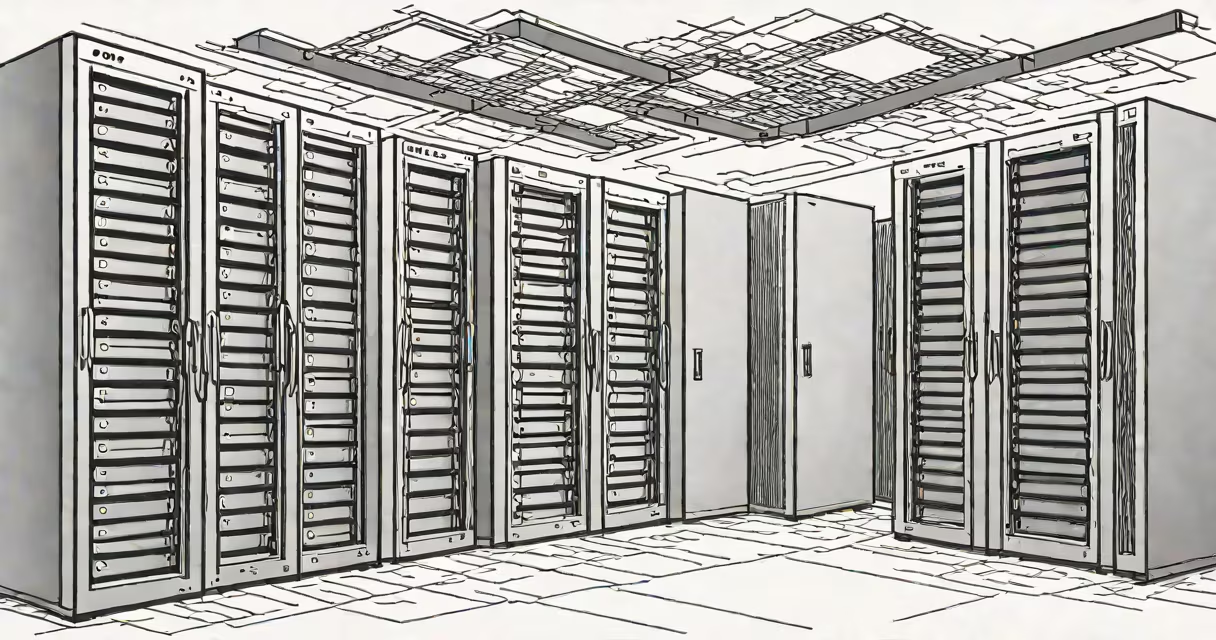
Major cloud computing companies are global providers of on-demand computing resources-including servers, storage, databases, networking, and software-delivered over the internet. These firms operate massive data centers worldwide and offer services used by enterprises, startups, and governments. The top players include Amazon Web Services (AWS), Microsoft Azure, and Google Cloud Platform (GCP).
These companies generate revenue by leasing infrastructure capacity rather than selling physical hardware. Customers pay based on usage-minutes, gigabytes, or requests-enabling cost efficiency and rapid scaling. This model underpins modern web applications, AI workloads, and large-scale data processing.
According to Synergy Research Group, AWS held 32% of the global cloud infrastructure market in Q1 2024, followed by Microsoft Azure at 21%, and Google Cloud at 10%. Together, they control over 60% of the commercial cloud market. Their dominance stems from extensive service portfolios, global network reach, and integration with existing enterprise tools.
Each provider runs a distributed network of data centers located in multiple geographic regions. These facilities host virtual machines, storage arrays, and specialized hardware for machine learning and encryption. When a user deploys an application, the cloud platform automatically allocates compute and storage resources across available nodes.
For example, a developer launching a video streaming app uses AWS's EC2 instances for processing, S3 for storing videos, and CloudFront for content delivery. The system scales automatically during peak hours-adding more servers when traffic spikes-and reduces capacity afterward to save costs.
Behind the scenes, each company uses proprietary orchestration systems. AWS relies on its internal service called "Nitro," which isolates virtual machines and improves performance. Microsoft Azure integrates deeply with Windows Server and Active Directory, making it a preferred choice for organizations already using Microsoft products. Google Cloud leverages its Borg system-originally developed for internal search operations-to manage containerized workloads efficiently.
Major cloud providers offer a layered set of services categorized by function. The most widely used fall into three groups: Infrastructure-as-a-Service (IaaS), Platform-as-a-Service (PaaS), and Software-as-a-Service (SaaS).
| Service Type | Function | Examples from Major Providers |
|---|---|---|
| IaaS | Virtual servers, storage, and networking | AWS EC2, Azure Virtual Machines, GCP Compute Engine |
| PaaS | Development environments and managed databases | AWS Elastic Beanstalk, Azure App Service, GCP Cloud Run |
| SaaS | Ready-to-use applications delivered over the web | AWS WorkDocs, Microsoft 365, Google Workspace |
While all three providers offer similar categories, their implementation differs. AWS leads in raw compute options-with over 175 services as of 2024-making it ideal for complex, high-performance workloads. Azure excels in hybrid cloud solutions, allowing businesses to run workloads both on-premises and in the cloud through Azure Arc. Google Cloud stands out in AI and analytics, offering Vertex AI and BigQuery with built-in machine learning capabilities.
One non-obvious distinction: pricing models vary. AWS uses a pay-per-second billing model for EC2 instances, while Azure charges per minute. Google Cloud offers sustained-use discounts that reduce rates after 15 hours of continuous usage. These nuances affect long-term operational costs and require careful planning.
Many assume that moving to the cloud means automatic security and reliability. That's incorrect. While providers maintain high uptime-AWS guarantees 99.95% availability for most services-customers are responsible for securing their own data, configuring firewalls, and managing access controls.
For example, in 2021, a misconfigured S3 bucket exposed 100 million records from a U.S. healthcare provider. The breach occurred because the customer failed to set proper permissions, despite AWS providing tools like Bucket Policies and IAM roles to prevent such errors.
Another misconception is that cloud migration eliminates IT jobs. In reality, demand for cloud engineers has grown. According to the U.S. Bureau of Labor Statistics, employment in cloud computing roles increased by 25% between 2020 and 2023. Companies now hire specialists to design secure architectures, automate deployments, and monitor performance.
A real-world example: Netflix uses AWS to stream content to over 220 million users globally. The platform runs on thousands of microservices deployed across 14 AWS regions. During peak viewing times-like the release of a new season-it dynamically scales up to handle millions of concurrent streams. Without AWS's global infrastructure, Netflix would need to build and maintain its own data centers, costing billions annually.
Enterprises adopt major cloud computing companies for speed, scalability, and innovation. A retail chain launching a new e-commerce site can deploy a full stack-web server, database, payment gateway-in under 30 minutes using Azure's portal. The same setup would take weeks with traditional hardware procurement.
Startups rely on these platforms to minimize upfront capital expenditure. A fintech startup building a mobile banking app used Google Cloud's Firebase for authentication and Firestore for real-time transaction logging. They launched MVP in six weeks and scaled to 50,000 users within a year-all without owning a single server.
Government agencies also depend on these providers. The U.S. Department of Defense awarded a $10 billion contract to AWS in 2018 for secure cloud infrastructure. The project, known as Joint Warfighting Cloud Capability (JWCC), supports military command systems, intelligence analysis, and logistics coordination.
When choosing among providers, organizations consider compliance needs. AWS meets HIPAA, PCI DSS, and GDPR standards. Azure supports FedRAMP for U.S. federal agencies. Google Cloud offers data residency options, allowing customers to store data within specific countries.
Choosing between AWS, Azure, and Google Cloud depends on workload type, team expertise, and existing tech stack. AWS dominates in public cloud adoption-used by 94% of Fortune 500 companies. Azure appeals to enterprises with legacy Windows systems. Google Cloud attracts data scientists and AI developers due to its advanced analytics tools.
For example, a media company producing AI-generated video content chose Google Cloud because of its integration with TensorFlow and AutoML. They reduced model training time from 72 hours to 8 hours using TPUs (Tensor Processing Units) hosted on GCP.
As someone who helped migrate a regional bank's core systems to AWS, I saw firsthand how complex the process is. We spent four months auditing data flows, redesigning APIs, and testing failover scenarios. The final move took only 12 hours during a weekend maintenance window. But the preparation was critical-without it, downtime would have been catastrophic.
Finally, consider how cloud computing in HR transforms talent management. Tools like Workday and BambooHR run on AWS and Azure, enabling real-time workforce analytics, automated onboarding, and remote employee tracking. These systems process sensitive personal data securely, complying with international privacy laws.
Major cloud computing companies are foundational to modern digital infrastructure. Their services power everything from social media platforms to weather forecasting models. As demand grows, so does the complexity of managing multi-cloud environments. Success requires technical skill, strategic planning, and ongoing monitoring.