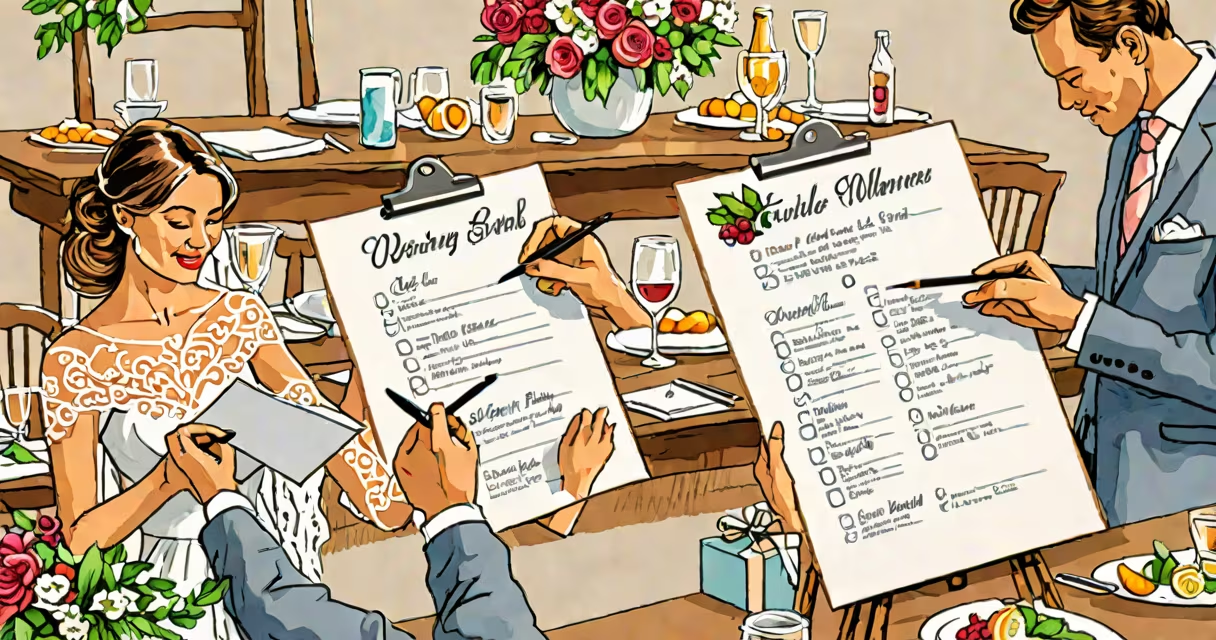
A list of items needed for a wedding is a practical inventory of physical, legal, and logistical components required to execute a ceremony and reception. It covers everything from marriage licenses and attire to catering details and guest accommodations. This list prevents last-minute oversights and ensures alignment among planners, vendors, and the couple.
Wedding preparation begins months before the event date. A well-structured list of items needed for a wedding separates critical tasks from optional touches. Core elements include legal documentation, clothing, venue logistics, food and beverage plans, and guest management tools. Without a clear checklist, couples risk missing essential steps such as securing a marriage license or confirming vendor contracts.
The most effective lists are categorized by timeline and responsibility. For example, the bridal party's attire must be ordered 6-9 months in advance. Venue deposits are due 3-6 months prior. Guest invitations go out 8-12 weeks before the event. A single missed deadline can disrupt the entire schedule. Using a shared digital document with color-coded categories improves accountability.
Every wedding requires five foundational areas: legal requirements, personal attire, venue and services, guest management, and day-of execution. These form the core of any reliable list of items needed for a wedding.
Legal documents are non-negotiable. A marriage license must be obtained in person at a county clerk's office. Requirements vary by state-some require blood tests, others only photo ID and proof of residency. In California, both parties must appear together, and the license is valid for 90 days. Failure to use it within that window means reapplying. The U.S. Department of State confirms that no federal marriage license exists-each state governs its own process.
Attire includes the wedding dress, suit, shoes, accessories, and backup items. A bride may need a spare undergarment for emergencies. Groomsmen often wear matching ties or boutonnieres. All garments should be altered at least four weeks before the wedding. According to the Bridal Association, 73% of brides report needing at least one alteration after initial fittings.
| Type | Key Items | Timeline |
|---|---|---|
| Legal | Marriage license, certified copy, notary | 30-60 days before |
| Attire | Dress, suit, shoes, alterations, emergency kit | 6-9 months before |
| Vendor Services | Caterer, photographer, florist, DJ/band | 6-12 months before |
| Guest Management | Invitations, RSVP cards, seating chart, favors | 8-12 weeks before |
| Day-of Execution | Ceremony script, music playlist, emergency kit, gift bags | 1 week before |
Many couples assume that a wedding list of items needed for a wedding is limited to gifts and decorations. This is incorrect. While centerpieces and welcome signs are part of the aesthetic, they are secondary to operational necessities like insurance, permits, and transportation.
One overlooked item is a wedding emergency kit. This contains sewing thread, safety pins, stain remover wipes, pain relievers, and extra batteries for devices. During my own wedding, a groomsman's shoe came untied during the procession. We used a spare heel insert from the emergency kit to fix it in under two minutes. Without it, the moment would have been awkward and visible to guests.
Another common error is assuming that all vendors provide their own equipment. A caterer may supply plates, but not napkins. A photographer may bring a camera, but not memory cards. Always confirm what each vendor brings and what you must supply. The National Association of Catering Professionals states that 41% of weddings experience a service gap due to unconfirmed equipment responsibilities.
For a June wedding with 120 guests, the couple created a list of items needed for a wedding divided into six phases: planning, ordering, coordination, final prep, day-of, and post-event.
In the planning phase (12 months out), they secured a venue, hired a coordinator, and booked a caterer. They requested a full menu tasting and confirmed alcohol service was permitted. The caterer required a signed contract and a $1,500 deposit.
At 6 months out, they ordered attire. The bride selected a lace gown with a 6-foot train, which required three fitting sessions. The groom bought a navy suit and coordinated tie colors with the bridesmaids' dresses. All items were shipped to a local tailor for alterations.
Eight weeks before, they sent save-the-dates via email and mailed paper invitations with RSVP cards. They created a Google Form for responses and set up a wedding website with directions, hotel blocks, and a registry link. They also arranged shuttle buses from the nearest airport to the venue.
One week before, they held a final walkthrough with the coordinator. They verified that the stage had proper lighting, the sound system was tested, and the cake stand was positioned correctly. They placed a labeled box with the emergency kit near the bridal set.
On the day of, the couple reviewed the timeline with the coordinator. The ceremony began at 4:30 PM sharp. Afterward, guests moved to the reception area. The cake was cut at 6:15 PM. By 9:00 PM, all guests had left. The couple later received a thank-you note from the venue manager praising their organization.
Lists fail when they lack specificity. "Buy flowers" is vague. "Order 12 white gardenias and 24 red roses for centerpieces" is actionable. The difference between a generic list and a functional one lies in precision.
Another failure point is treating the list as static. A changing list updates as decisions change. If a vendor cancels, the list must reflect the replacement. Use a shared document with version history so changes are traceable.
Finally, avoid relying solely on memory. Even experienced planners forget details. A friend once forgot to order the ring bearer's pillow. The wedding went forward, but the moment felt incomplete. A checklist prevents such moments.
When organizing your own event, treat the list of items needed for a wedding as a living document. Update it weekly. Assign ownership for each section. Share it with key people-your partner, planner, parents, and vendors. This reduces confusion and builds trust.