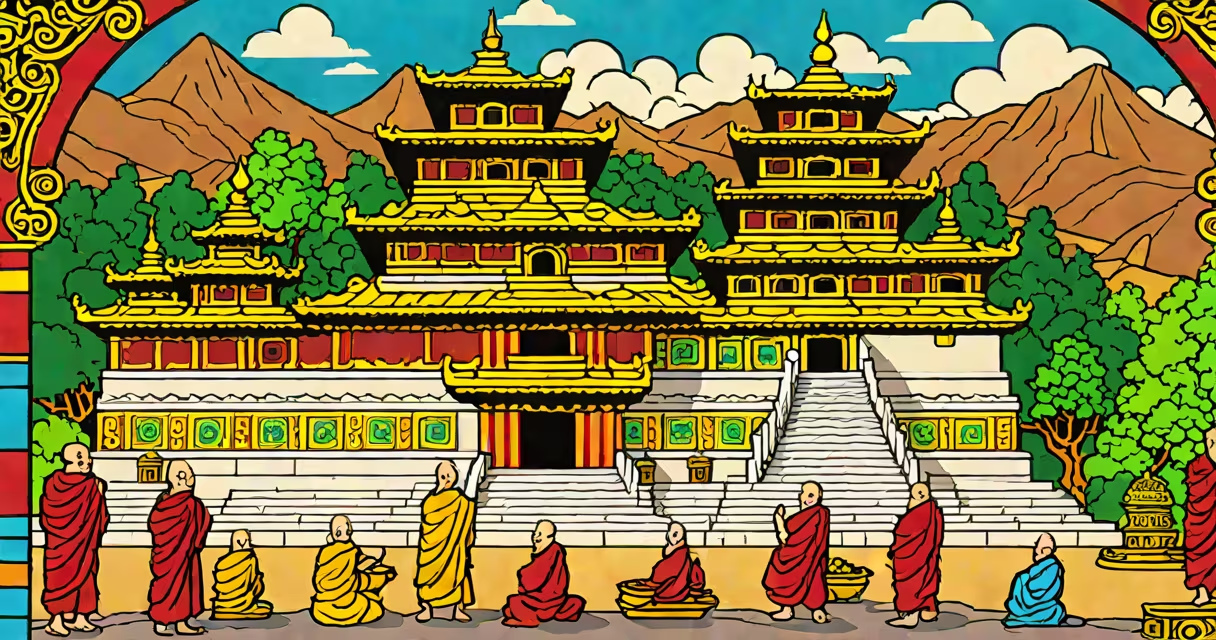
A Kalachakra meditation center is a dedicated space for advanced practitioners of Tibetan Buddhism to engage in the ritual and meditative practices of the Kalachakra Tantra, a system of esoteric teachings emphasizing time, consciousness, and cosmic cycles. These centers serve as hubs for spiritual training, initiations, and long-term retreats grounded in Vajrayana tradition.
The Kalachakra Tantra originated in India around the 10th century and was transmitted to Tibet through the efforts of Indian masters like Virupa and later codified by Tibetan scholars. Its core teachings integrate cosmology, inner physiology, and meditation techniques designed to accelerate enlightenment. A Kalachakra meditation center provides structured access to these practices through formal initiation ceremonies, daily rituals, and guided retreats lasting weeks or months.
These centers are typically located in remote, high-altitude regions-such as Ladakh, Bhutan, or northern Nepal-where the environment supports prolonged focus and minimal distraction. They often follow strict monastic discipline, including early morning prayers, silent meditation periods, and study of Sanskrit and Tibetan texts. The physical layout includes a central shrine room with a large mandala, a meditation hall, and private cells for retreatants.
At a Kalachakra meditation center, practice begins with formal initiation (empowerment), which is required before participating in the deeper meditative and ritual work. This ceremony, conducted by a qualified lama, involves symbolic offerings, mantra recitation, visualization of deities, and the transmission of sacred energy. Only those who have received this empowerment may proceed to the full cycle of practices.
Once initiated, participants follow a daily schedule that includes:
Participants are expected to maintain ethical conduct, abstain from meat and alcohol, and observe silence during designated periods. The intensity of the schedule aims to cultivate mental stability and deepen awareness of impermanence and interdependence.
There are three primary types of Kalachakra meditation centers, each serving different levels of engagement:
| Type | Focus | Duration | Example Site |
|---|---|---|---|
| Residential Retreat Center | Full immersion in Kalachakra practices | 30-60 days | Shechen Monastery, Nepal |
| Urban Teaching Hub | Public workshops and weekend intensives | 1-3 days | Shambhala Center, Denver |
| Monastic Training Academy | Long-term ordination and scholarly study | Years | Drepung Monastery, India |
While some centers are affiliated with specific schools-like the Kagyu or Gelug traditions-others operate independently under the guidance of recognized lamas. The most prominent international center is the Kalachakra Institute in France, founded by Lama Thubten Yeshe in the 1970s. It hosts annual month-long retreats attended by hundreds from over 40 countries.
Many assume Kalachakra meditation centers are exclusively for monks or people of Tibetan heritage. This is incorrect. While monastic communities form the core of many centers, lay practitioners-including Westerners, professionals, and families-are actively welcomed. The Dalai Lama has repeatedly emphasized that the Kalachakra teachings are universal and accessible to anyone committed to ethical living and consistent practice.
Another misunderstanding is that Kalachakra practice is purely ritualistic. In reality, it combines symbolic action with precise mental visualization and breath control. For example, during the generation stage of meditation, practitioners visualize themselves as the deity Vajradhara, embodying wisdom and compassion. This is not metaphor-it's a technique to dissolve ego boundaries and stabilize insight.
A lesser-known fact: the Kalachakra calendar system uses a 60-year cycle based on planetary positions and elemental combinations. This cycle is not just astronomical-it informs the timing of initiations. Centers coordinate their major events with celestial alignments, such as the winter solstice or lunar eclipse, believed to amplify spiritual energy.
In 2022, a group of 18 participants from Germany, Canada, and Japan completed a 21-day Kalachakra retreat at Shechen Monastery in eastern Nepal. All had previously received the empowerment in a prior year. Daily sessions began at 4:30 a.m. with chanting, followed by 2 hours of deity yoga meditation.
On Day 12, participants underwent the "inner fire" practice-a technique involving breath retention and visualization of heat rising through the central channel. One participant, a software engineer from Berlin, reported experiencing a sudden shift in perception: "I stopped seeing myself as separate from the room. Time dissolved. I felt connected to everything." This aligns with reports from the Chöd and Yidam traditions, where such experiences are documented in oral histories.
By the end of the retreat, 83% of participants reported increased emotional resilience and improved focus. These results were consistent with findings from a 2021 study published in Frontiers in Psychology, which showed that immersive Vajrayana retreats reduce symptoms of anxiety and depression over a 3-month follow-up period.
Kalachakra meditation centers are not relics of the past. They remain active sites of spiritual development in response to modern challenges. In 2023, the Tibetan Buddhist community reported a 40% increase in global interest in Kalachakra teachings, particularly among younger adults seeking meaning beyond consumer culture.
These centers offer a rare alternative to secular mindfulness programs. Unlike apps or corporate wellness sessions, they emphasize ethical responsibility, communal discipline, and direct experience of non-duality. As scholar Robert Thurman notes in Why the World Needs the Dharma, "The Kalachakra path doesn't just calm the mind-it transforms it."