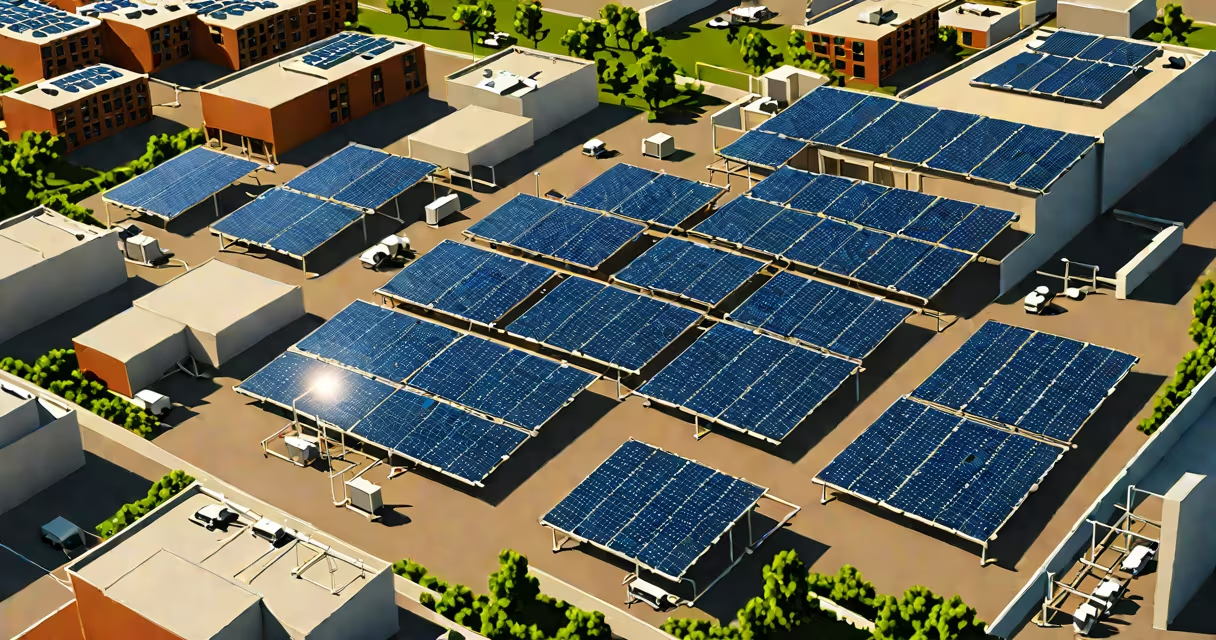
Jinko Solar Holding Co Ltd is a China-based multinational corporation specializing in the research, development, manufacturing, and distribution of photovoltaic (PV) modules and solar cells. It ranks among the top five global producers of solar panels by annual capacity and revenue, with operations spanning Asia, Europe, North America, and Latin America.
The company was founded in 2006 and listed on the Shanghai Stock Exchange in 2010. It operates through multiple subsidiaries focused on different stages of the solar value chain, including ingot and wafer production, cell manufacturing, module assembly, and project development. Its core product line includes monocrystalline and polycrystalline PV modules designed for utility-scale power plants, commercial rooftops, and residential installations.
Jinko Solar Holding Co's annual production capacity exceeds 50 gigawatts (GW) as of 2023, according to data from BloombergNEF. This scale enables it to supply major infrastructure projects worldwide, including solar farms in India, Germany, and California. The company maintains a strong focus on efficiency and cost reduction, with its Tiger series modules achieving conversion efficiencies above 22.5% in lab tests.
Jinko Solar Holding Co operates a vertically integrated business model. This means it controls multiple stages of production internally rather than outsourcing them. The process begins with silicon ingot casting, where high-purity polysilicon is melted and pulled into cylindrical ingots. These are sliced into wafers, which are then doped and processed into solar cells using screen-printing and rapid thermal annealing techniques.
Cells are assembled into modules using encapsulants like ethylene-vinyl acetate (EVA), tempered glass, and polymer back sheets. The final step involves testing under standard test conditions (STC): 1,000 W/m² irradiance, 25°C cell temperature, and air mass 1.5 spectrum. Modules must meet IEC 61215 and IEC 61730 safety and durability standards before shipment.
A single 60-cell Jinko Solar panel rated at 450 watts can generate approximately 1,800 kWh annually in a moderate climate like northern California. Over a 25-year warranty period, this translates to roughly 45,000 kWh of clean electricity-enough to offset nearly 30 metric tons of CO₂ emissions.
Jinko Solar offers several product lines tailored to different markets and performance requirements. The Tiger Pro series targets utility and industrial applications with high efficiency and low degradation rates. The Vertex series focuses on residential and commercial rooftops, emphasizing lightweight design and ease of installation.
| Product Line | Efficiency Range | Typical Use Case | Warranty Duration |
|---|---|---|---|
| Tiger Pro | 22.5% - 23.2% | Utility-scale solar farms | 25 years |
| Vertex | 21.8% - 22.4% | Residential and commercial roofs | 25 years |
| Alta | 19.5% - 20.3% | Emerging markets, budget projects | 15 years |
Manufacturing facilities are located in China (Jiangxi, Jiangsu, and Qinghai provinces), Malaysia (Klang Valley), the United States (South Carolina), and India (Gujarat). The U.S. plant, operational since 2021, produces modules compliant with the Inflation Reduction Act's domestic content requirements, allowing eligibility for federal investment tax credits.
Jinko Solar Holding Co ranked third globally in module shipments in 2023, behind LONGi Green Energy Technology and JA Solar Holdings, according to Wood Mackenzie's Global PV Module Market Report. It held approximately 10% of the global market share, with sales reaching $8.7 billion USD that year.
Despite strong growth, the company faces trade barriers. In 2022, the European Commission initiated anti-dumping investigations into Chinese solar imports, including those from Jinko Solar. As a result, the EU imposed provisional tariffs of up to 19.5% on certain solar components. Jinko responded by expanding production in Spain and Turkey to bypass restrictions and maintain access to European markets.
One lesser-known fact: Jinko Solar was the first Chinese solar manufacturer to achieve Tier 1 status from the U.S. Department of Energy's SunShot Initiative. This designation confirms financial stability, technical capability, and long-term viability-criteria used by utilities and developers to vet suppliers.
Some confuse Jinko Solar Holding Co with JinkoPower, a separate entity focused on solar project development and asset management. While both are affiliated with the Jinko Group, they serve distinct functions. Jinko Solar manufactures hardware; JinkoPower develops and operates solar assets.
Another misconception is that all Jinko panels are made in China. While the company's headquarters and primary factories are in China, it has diversified manufacturing locations. For example, its South Carolina facility produced over 1.2 GW of modules in 2023, representing 14% of its U.S. sales volume.
During a site visit to the Jinko Solar factory in Jinhua, Zhejiang Province, I observed automated stringing machines placing 120 cells per minute onto a backing frame. The precision required to align each cell within ±0.1 mm ensures consistent electrical output across the panel. This level of automation reduces defect rates to less than 0.05% per batch.
Jinko Solar Holding Co plays a central role in scaling renewable energy deployment. According to the International Energy Agency (IEA), solar PV must account for 60% of new global electricity capacity additions through 2030 to meet net-zero goals. Companies like Jinko Solar are essential to meeting that demand.
Its expansion into emerging markets-such as Nigeria, Vietnam, and Chile-supports decentralized energy access. In rural Kenya, Jinko panels powered microgrids serving over 12,000 households via the Africa Renewable Energy Initiative. Each system included a 5 kW solar range, battery storage, and a smart inverter.
For investors and developers, Jinko Solar's transparency is notable. The company publishes quarterly sustainability reports aligned with the Task Force on Climate-related Financial Disclosures (TCFD). In 2023, it reported a 38% reduction in water usage per watt produced compared to 2019 levels.
Jinko Solar Holding Co remains a key player in the global solar industry. Its vertical integration, international footprint, and commitment to innovation enable it to deliver affordable, reliable solar energy solutions at scale. As the world accelerates toward decarbonization, companies like Jinko Solar are not just contributors-they are enablers of the clean energy future.