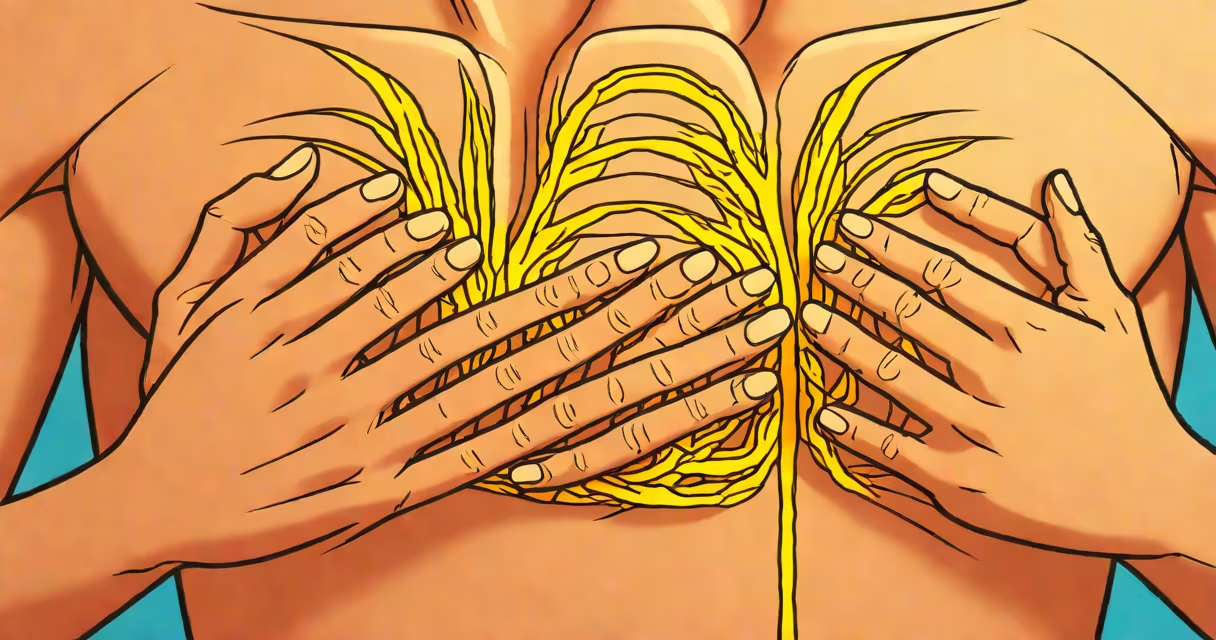
Pain behind sternum when breathing is a sensation felt in the central chest region, often worsening during inhalation or exhalation. It may result from musculoskeletal strain, lung conditions, or cardiac issues, and requires careful evaluation to distinguish between benign and serious causes.
This symptom arises when nerves, muscles, or internal structures near the sternum react to movement during respiration. The sternum, or breastbone, lies at the center of the chest and connects to the ribs via cartilage. Movement during breathing can irritate inflamed tissues or compress sensitive areas, triggering localized pain. While many cases stem from minor causes, persistent or sharp pain demands medical assessment to rule out life-threatening conditions.
Breathing involves coordinated contraction of the diaphragm and intercostal muscles between the ribs. As the ribcage expands and contracts, pressure shifts across the chest wall. Any inflammation or injury in the anterior chest-especially around the sternum-can make this motion painful. Nerves running through the intercostal spaces and along the sternum send signals to the brain when irritated, registering as sharp or burning sensations.
For example, costochondritis-a condition involving inflammation of the cartilage connecting the ribs to the sternum-commonly causes pain that worsens with deep breaths, coughing, or lying on the side. A 2021 study published in *The Journal of Clinical Rheumatology* found that costochondritis accounts for nearly 30% of non-cardiac chest pain cases in outpatient settings, often misdiagnosed due to overlapping symptoms.
Other mechanisms include pleuritic pain from lung inflammation. When the pleura-the thin membrane lining the lungs-becomes inflamed, movement during breathing creates friction, resulting in sharp, stabbing pain. This typically affects one side and may radiate to the shoulder or back. Unlike musculoskeletal pain, pleuritic pain rarely improves with position changes.
Not all pain behind sternum when breathing stems from the same source. The following table outlines major categories, their typical triggers, and distinguishing features.
| Condition | Typical Trigger | Pain Pattern | Red Flags |
|---|---|---|---|
| Costochondritis | Repetitive lifting, sudden twist, viral illness | Sharp, localized to sternum; worsens with deep breath or pressing on the area | Swelling at joint, tenderness to touch |
| Pleuritis (pleurisy) | Lung infection, pneumonia, pulmonary embolism | Sharp, one-sided; increases with inhalation | Fever, rapid breathing, cough with sputum |
| GERD/acid reflux | Large meals, lying down, bending forward | Burning, behind sternum; may radiate upward | Heartburn, regurgitation, relief with antacids |
| Cardiac ischemia | Physical exertion, stress, cold weather | Dull, heavy pressure; may radiate to arm or jaw | Shortness of breath, sweating, nausea |
One non-obvious distinction: pain from GERD often feels like a burning sensation behind the sternum that worsens when lying flat or after eating. It may mimic heart-related pain but typically improves with antacids or elevation of the upper body. According to the American Gastroenterological Association, up to 40% of patients with non-cardiac chest pain have GERD as the underlying cause.
Another overlooked factor is anxiety-related hyperventilation. During panic attacks, rapid breathing can lead to chest tightness and perceived pain behind the sternum. This pain often resolves with slow, controlled breathing and is not linked to physical movement or position.
Not all pain behind sternum when breathing requires urgent care-but certain signs indicate immediate attention is needed. The American Heart Association lists warning signs of cardiac events: crushing pressure, pain radiating to the left arm or jaw, cold sweat, dizziness, and shortness of breath. These symptoms demand emergency evaluation.
I once observed a 52-year-old man who reported intermittent pain behind his sternum when breathing. He dismissed it as "just muscle soreness" after gardening. Over two days, the pain intensified, became constant, and spread to his left arm. An EKG revealed ST-elevation myocardial infarction (STEMI). He received timely treatment and avoided severe complications. This case illustrates how subtle onset doesn't rule out serious disease.
Even when symptoms seem mild, persistent pain lasting more than a week, especially with fever, weight loss, or night sweats, warrants investigation. Imaging such as a chest X-ray or CT scan may be needed to assess lung or mediastinal structures. Blood tests can detect markers of inflammation or infection.
Pain behind sternum when breathing is frequently confused with pain in the upper abdomen or referred pain from the spine. For example, a herniated disc in the thoracic spine can cause pain that radiates across the chest wall, mimicking cardiac or respiratory issues. However, spinal pain often persists regardless of breathing and may improve with posture changes.
It's also commonly mistaken for anxiety-related chest tightness. While both can involve shallow breathing and discomfort, anxiety-related pain lacks objective physiological markers. A 2020 study in *JAMA Internal Medicine* found that 15% of patients presenting with chest pain in emergency departments had no organic cause identified, with psychological factors playing a significant role.
Pain behind sternum when breathing is not synonymous with heart attack. Many people with heart disease report pressure or heaviness rather than sharp pain. Conversely, acute cardiac events can occur without typical chest pain, especially in women and older adults.
Understanding pain behind sternum when breathing begins with recognizing that it's not a single diagnosis but a symptom with multiple origins. Accurate identification depends on pattern recognition, clinical context, and appropriate testing-not assumptions.