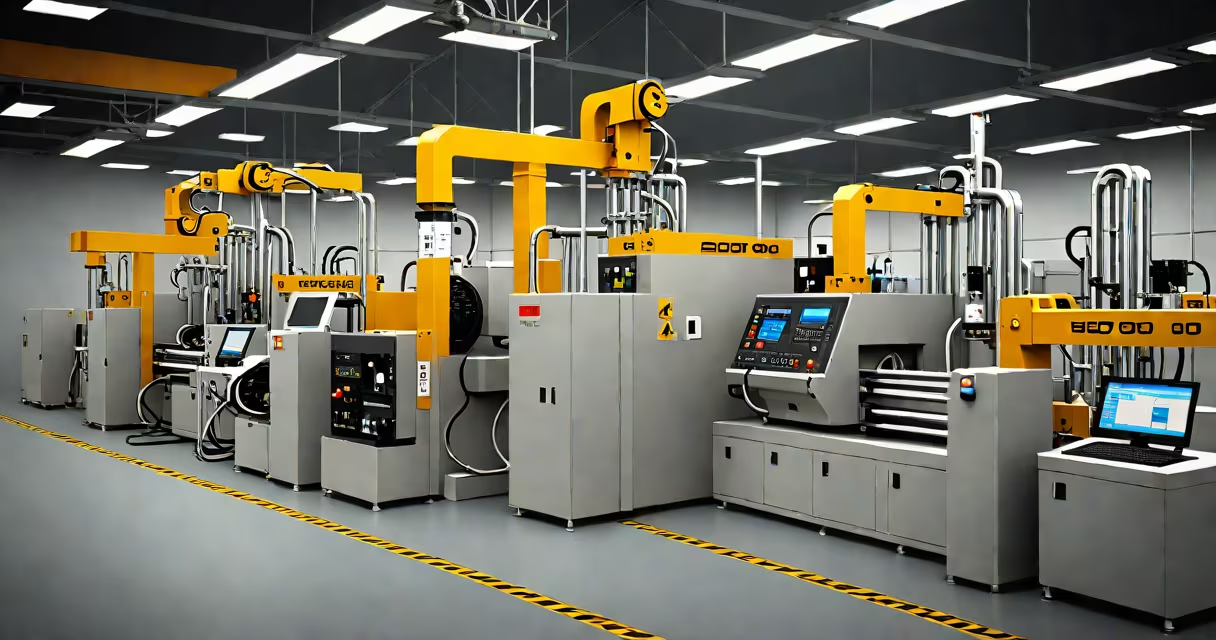
iso 9000 manufacturing refers to the application of the ISO 9000 family of standards-primarily ISO 9001-to industrial production processes. These standards define requirements for a quality management system (QMS) that ensures consistent product quality, customer satisfaction, and continual improvement. The structure applies across sectors including automotive, aerospace, medical devices, and consumer goods.
The core of iso 9000 manufacturing lies in documented procedures, accountability, and measurable outcomes. Organizations implement it to reduce variability, prevent defects, and meet regulatory expectations. It is not a technical specification for products but a systemic approach to managing how work gets done.
For example, a U.S.-based manufacturer of precision metal components achieved a 40% reduction in customer returns within 18 months after adopting iso 9001. They standardized inspection protocols, trained staff on error reporting, and introduced corrective action workflows-all aligned with clause 10 of ISO 9001:2015.
iso 9000 manufacturing operates through a cycle of planning, execution, monitoring, and improvement. The model is based on seven principles: customer focus, leadership, engagement of people, process approach, improvement, evidence-based decision making, and relationship management.
Each organization tailors the standard to its operations. A factory producing plastic injection molds may track mold cavity wear using calibrated gauges, log deviations in cycle time, and require operator sign-off before batch release. These actions satisfy ISO 9001's requirement for documented information under clause 7.5.
Internal audits verify compliance. A team reviews records from the past quarter-such as non-conformance reports, training logs, and supplier evaluations-to ensure all processes follow approved procedures. Findings trigger corrective actions, which must be validated before closure.
While "iso 9000" often refers to the entire family, only ISO 9001 is certifiable. The other standards provide foundational guidance:
| Standard | Role in Manufacturing | Example Use Case |
|---|---|---|
| ISO 9000 | Terminology and concepts | Defines "quality management" and "process" for consistent understanding across teams. |
| ISO 9001 | Requirements for QMS certification | Used to pass external audits and gain customer recognition. |
| ISO 9004 | Performance improvement beyond compliance | Guides long-term success through stakeholder engagement and innovation. |
A common misconception is that iso 9000 manufacturing requires extensive documentation. While records are mandatory, the standard emphasizes effectiveness over volume. One European machine shop reduced paperwork by 60% after shifting from checklist-driven logging to digital workflow triggers tied to actual events.
Another misunderstanding is that certification guarantees perfect output. ISO 9001 does not eliminate errors-it structures how organizations detect, analyze, and correct them. A failure rate of 0.5% in a high-volume electronics assembly line still qualifies for certification if root cause analysis and corrective actions are properly documented.
Manufacturers adopt iso 9000 manufacturing to win contracts, especially with multinational corporations. Ford Motor Company requires suppliers to hold ISO 9001 certification. Similarly, Siemens mandates it for all Tier 1 component providers in its supply chain.
Regulatory bodies reference the standard. The U.S. FDA considers ISO 9001-compliant systems as evidence of adequate controls for medical device manufacturers under 21 CFR Part 820.
One non-obvious fact: iso 9000 manufacturing supports lean and Six Sigma initiatives. A study by the American Society for Quality found that companies combining ISO 9001 with Lean methods saw a 33% faster time-to-market compared to those using either alone.
For example, a small robotics firm in Ohio used iso 9000 manufacturing to standardize assembly steps across two shifts. They mapped each task to a work instruction, assigned responsibility via QR-coded job cards, and monitored defect rates daily. After six months, their on-time delivery rate improved from 78% to 96%.
iso 9000 manufacturing is frequently mistaken for technical specifications or safety standards. It is neither. It does not dictate material composition, tolerances, or electrical safety. Those are covered by standards like ASTM, IEC, or ASME.
It is also distinct from industry-specific standards such as AS9100 for aerospace or IATF 16949 for automotive. While iso 9000 provides a baseline, these add sector-specific requirements. For instance, AS9100 includes mandatory risk assessments for design changes and stricter document control.
Understanding the difference matters. A manufacturer producing aircraft parts cannot rely solely on iso 9000 manufacturing. They must comply with both iso 9001 and AS9100. Using the wrong standard leads to rejected shipments and lost contracts.
iso 9000 audit procedures differ from internal checks. External audits are conducted by accredited third parties and result in certification. Internal audits assess readiness and identify gaps before the external review.
I once observed a mid-sized factory in Michigan fail an initial iso 9000 audit due to unapproved changes in a welding procedure. The document had been updated by a supervisor but not reviewed by engineering. This violated clause 7.5.3, which requires controlled document updates. The fix took two weeks and involved retraining five operators.
Organizations begin by appointing a quality manager and forming a cross-functional team. They map core processes-like procurement, production, and shipping-and assign owners. Next, they draft policies and procedures aligned with ISO 9001:2015's structure.
Training is critical. Employees must understand their role in maintaining quality. A survey by the International Organization for Standardization found that 72% of successful implementations included mandatory training for all staff, not just managers.
After implementation, the organization conducts an internal audit. If findings are resolved, they engage a certification body. The audit takes 3-5 days and costs between $3,000 and $10,000 depending on size and complexity.
Once certified, renewal audits occur annually, with a full recertification every three years. Maintenance requires ongoing effort-records must be kept, audits repeated, and improvements tracked.