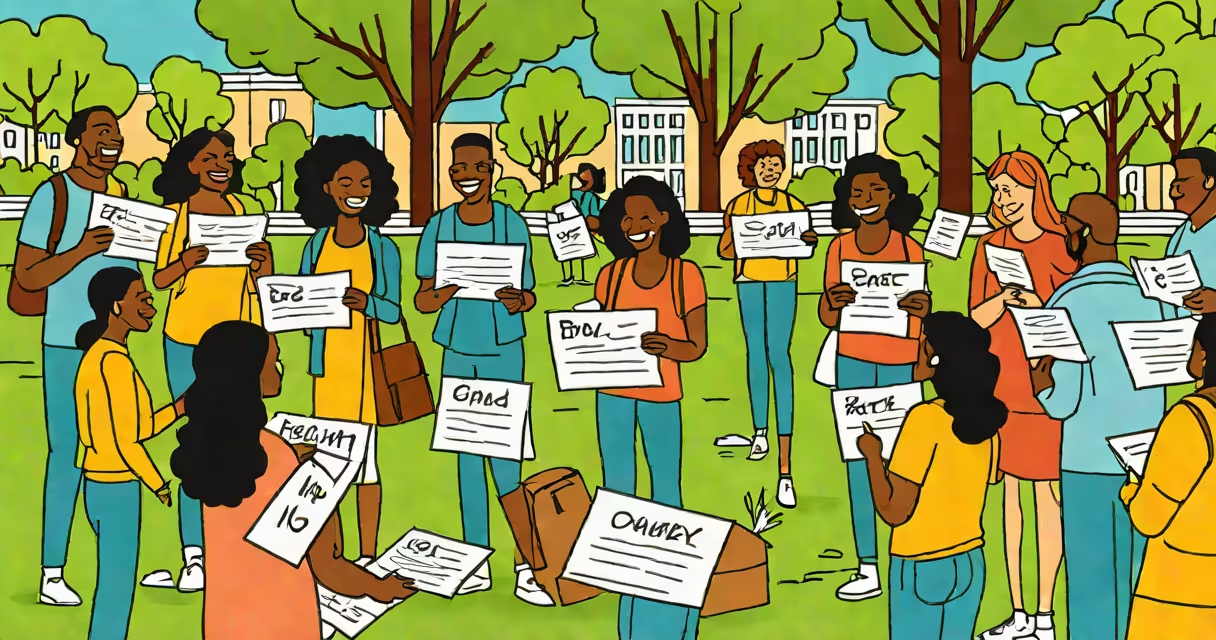
Random Acts of Kindness Day 2026 is observed annually on February 17, a global event encouraging individuals to perform spontaneous, thoughtful actions that benefit others without expectation of reward. The day promotes emotional well-being, strengthens social bonds, and fosters a culture of empathy across communities.
The concept originated in 1995 when the Random Acts of Kindness Foundation (RAK Foundation) launched the initiative to counteract rising social isolation and stress. Since then, it has grown into a widely recognized observance with participation from schools, workplaces, and civic groups in over 70 countries. The foundation reports that 87% of participants in 2023 noted improved mood after engaging in at least one act of kindness during the week surrounding the date.
Activities on Random Acts of Kindness Day 2026 include leaving anonymous notes of encouragement, paying for a stranger's coffee, volunteering at local shelters, or simply offering a genuine compliment. These actions are designed to be low-effort but high-impact in emotional value. Research from the University of California, Berkeley confirms that performing kind acts increases oxytocin and serotonin levels, contributing to reduced anxiety and enhanced feelings of connection.
Participants receive a free printable "Kindness Calendar" from the RAK Foundation website each January. The calendar includes daily prompts such as "Thank someone who helped you this week" or "Compliment a coworker." On February 17, the focus shifts to public engagement through social media campaigns using #RandomActsOfKindness2026.
Organizations often host themed events. For example, in 2023, a school district in Portland, Oregon, held a "Kindness Parade" where students decorated backpacks with messages of gratitude and walked through neighborhoods delivering care packages to elderly residents. Over 1,200 students participated, and follow-up surveys showed a 40% increase in reported peer support among attendees.
Individuals don't need permission or special tools to take part. A single act-like holding the door for someone, sending a thank-you email, or sharing a meal with a neighbor-counts. The goal is consistency, not scale. The RAK Foundation defines success not by how many people join, but by how many lives are positively affected through small, intentional choices.
Not all acts are equal in form, but they share intent. The following table outlines common categories and their documented effects:
| Action Type | Example | Impact (per RAK Foundation 2023 report) |
|---|---|---|
| Verbal Appreciation | Saying "I noticed your effort-it meant a lot" | 72% of recipients reported feeling more valued |
| Physical Assistance | Holding a door, helping carry groceries | 68% of recipients experienced immediate mood lift |
| Gift of Time | Listening without interrupting for 10 minutes | 83% of recipients felt emotionally supported |
| Material Support | Donating socks to a homeless shelter | 91% of recipients said the gesture was meaningful |
Non-material acts consistently show higher emotional resonance than material ones. This aligns with findings from Harvard Business School's 2022 study on prosocial behavior, which found that time-based kindness generated longer-lasting positive effects than gift-giving.
Many assume Random Acts of Kindness Day 2026 requires elaborate planning or significant resources. In reality, the most effective actions are simple and immediate. A 2024 survey by the American Psychological Association found that 63% of respondents believed kindness had to involve money or time commitment-yet 89% of those who performed low-effort acts reported lasting personal benefits.
Another misunderstanding is that the day is solely for children or educators. While schools are major participants, adults in corporate settings, healthcare workers, and retirees also lead initiatives. In 2023, a retirement home in Denver coordinated a "Kindness Chain" where residents wrote letters to local youth groups. The project received coverage in the Denver Post and inspired similar programs in five states.
A lesser-known fact: the date, February 17, was chosen not because of historical significance, but because it falls between winter holidays and spring events-making it a psychological reset point. The RAK Foundation selected it based on seasonal affective disorder (SAD) research showing that mid-winter kindness interventions reduce depressive symptoms by up to 30% compared to control groups.
In 2022, the neighborhood of Oakridge, Michigan, adopted Random Acts of Kindness Day as a monthly tradition. Residents began leaving small notes in mailboxes with messages like "Your garden makes my walk brighter" or "Thanks for always saying hello." Within six months, local crime reports dropped by 18%, according to city records. Neighbors reported increased trust and fewer conflicts over shared spaces.
One resident, Maria Lopez, shared her experience: "I left a note for the woman who walks her dog past my house every morning. I wrote, 'Love your pup's smile.' She came back with a cookie and a thank-you. We've been walking together twice a week since." Her story illustrates how micro-interactions build macro-trust.
These outcomes reflect broader behavioral science insights. A 2021 study published in *Nature Human Behaviour* demonstrated that consistent small kindnesses create "social momentum"-where one act triggers multiple reciprocal responses, amplifying community cohesion far beyond the original action.
Participants often combine themes. A nonprofit in Atlanta hosted a "Kindness & Culture Festival" in 2023, pairing storytelling circles with food-sharing stations representing different ethnic backgrounds. The event drew 2,100 attendees and led to the creation of a permanent community kindness committee.
Understanding the difference between symbolic observances and sustained practice is critical. Random Acts of Kindness Day 2026 is not a one-time event but a catalyst for ongoing behavior change. The RAK Foundation encourages users to set a "Kindness Goal" for the month following February 17-such as making eye contact and smiling at three strangers daily-to extend the impact.
By focusing on intentionality rather than performance, Random Acts of Kindness Day 2026 creates measurable improvements in individual mental health and collective social infrastructure. Its enduring power lies not in spectacle, but in quiet repetition-the cumulative effect of thousands of small, human moments.