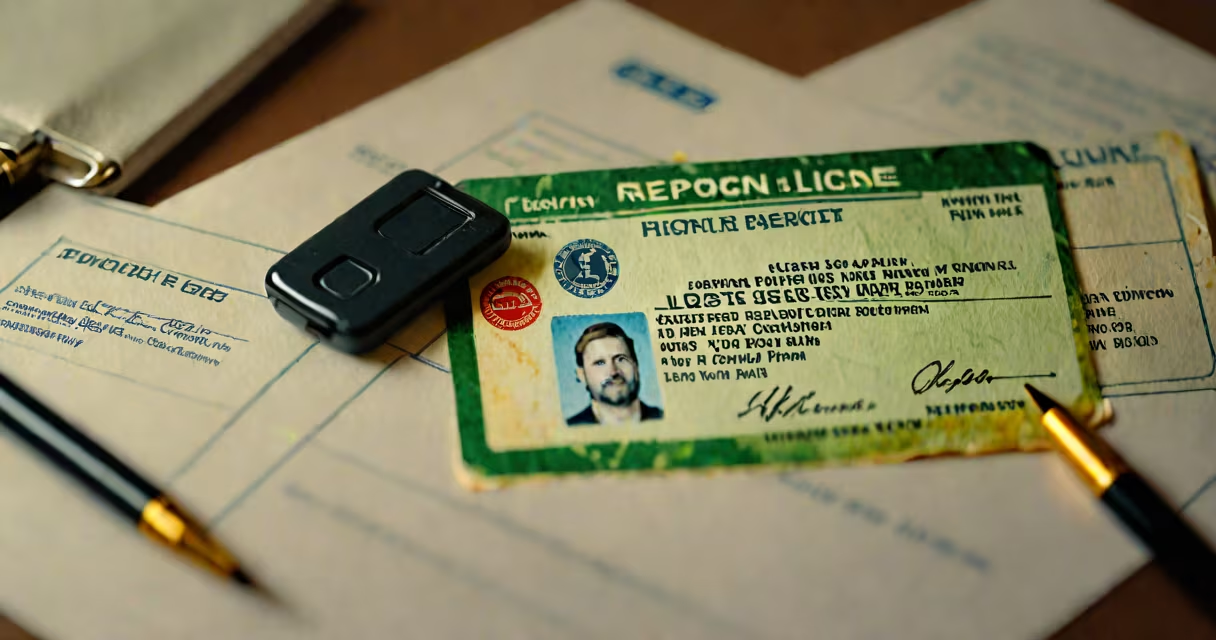
Reporting a lost license involves contacting your state's Department of Motor Vehicles (DMV) or equivalent agency to cancel the original document and initiate a replacement process. This prevents misuse and protects against identity theft.
When you lose your driver's license, the immediate priority is to notify the issuing authority. Most states require you to file a report within 24 to 72 hours to reduce fraud risk. The DMV will flag the original license as invalid and issue a new one with updated security features.
Failure to report a lost license increases exposure to identity theft. According to the Federal Trade Commission (FTC), over 1.4 million identity theft reports involved stolen IDs in 2023, including driver's licenses. Prompt reporting reduces this risk.
After reporting a lost license, the DMV verifies your identity through government-issued photo ID, proof of residency, and sometimes a signature comparison. You'll pay a replacement fee, which varies by state-from $10 in Idaho to $60 in New York.
The new license is typically mailed within 7 to 14 business days. Some states offer expedited service for an extra fee. For example, California provides rush processing for $25, delivering the new card in 3 to 5 days.
A common mistake is assuming that simply notifying the DMV is enough. You must also update your address with the DMV if it has changed, and inform your insurance provider to avoid coverage gaps during the replacement window.
You'll need at least two forms of identification to replace a lost license. Acceptable documents include:
Some states require a notarized affidavit of loss. Texas mandates this for licenses lost due to theft or natural disaster. The affidavit confirms you did not lose the license intentionally and supports the DMV's decision to issue a new one.
Non-residents may face additional hurdles. In Florida, non-residents must apply in person and provide a valid out-of-state license or permit. They cannot use online services unless they have a Florida-issued ID.
| State | Report Deadline | Fee (Standard) | Expedited Option |
|---|---|---|---|
| California | 72 hours | $33 | Yes ($25) |
| New York | Immediate | $60 | Yes ($15) |
| Ohio | 24 hours | $25 | No |
| Texas | 30 days | $33 | Yes ($10) |
One non-obvious requirement: some states require you to surrender the old license if found. In Illinois, if you recover the original document after replacement, you must return it to the DMV to prevent dual licensing.
People often confuse "reporting" a lost license with "replacing" it. Reporting is the act of informing the DMV. Replacing is the full application process that includes fees, documentation, and waiting time. You cannot skip the report step-even if you're replacing the license online.
Another error is assuming that a lost license automatically becomes invalid. It doesn't. A thief can still use it to rent a car, open a bank account, or commit fraud until the DMV cancels it. The DMV only disables the license after you report it.
Some drivers think they can use a temporary paper copy as legal ID. This is false. Temporary licenses are valid only for driving, not for age verification, banking, or travel. If you need a temporary ID, contact your state's ID office separately.
John lost his wallet while visiting Philadelphia. His driver's license was inside. He called the Pennsylvania Department of Transportation (PennDOT) the next morning. He provided his Social Security number, date of birth, and a copy of his utility bill.
PennDOT confirmed the license was canceled within 2 hours. John applied online and paid $30. The new license arrived in 10 business days. He received a confirmation email with a tracking number. He later discovered someone had tried to use his license at a rental agency-but the attempt failed because the DMV had flagged it.
This example shows why speed matters. PennDOT's system blocks access to the original license immediately after reporting, but only if the report is filed correctly and promptly.
If your license was stolen, report the incident to local law enforcement. File a police report and request a copy. Some states, like Washington, require this document when applying for a replacement. The police report serves as evidence of theft and helps prevent fraud.
For cases involving identity theft, contact the Identity Theft Resource Center (ITRC). They offer free guidance on freezing credit, placing fraud alerts, and disputing unauthorized accounts. The ITRC reports that 72% of identity theft victims who reported to law enforcement saw faster resolution than those who didn't.
There's no universal timeline for reporting a lost license. Some states allow 30 days; others demand immediate action. Always check your state's DMV website for exact requirements. Missing a deadline can delay replacement or result in fines.
One personal observation: during a visit to the Nevada DMV, I watched a woman apply for a replacement license after losing her wallet in Las Vegas. She brought her birth certificate, a recent utility bill, and a printed copy of her DMV appointment. The agent processed her in under 20 minutes. The key was having all documents ready-no delays, no confusion.
Reporting a lost license is not optional. It's a necessary step to protect your identity and maintain legal driving privileges. Follow your state's guidelines precisely, gather required documents early, and act quickly to avoid complications.
Understanding how to report a lost license ensures you can restore your identity credentials swiftly and securely. Oregon, the core steps remain consistent: verify identity, submit the report, pay the fee, and wait for the new card.