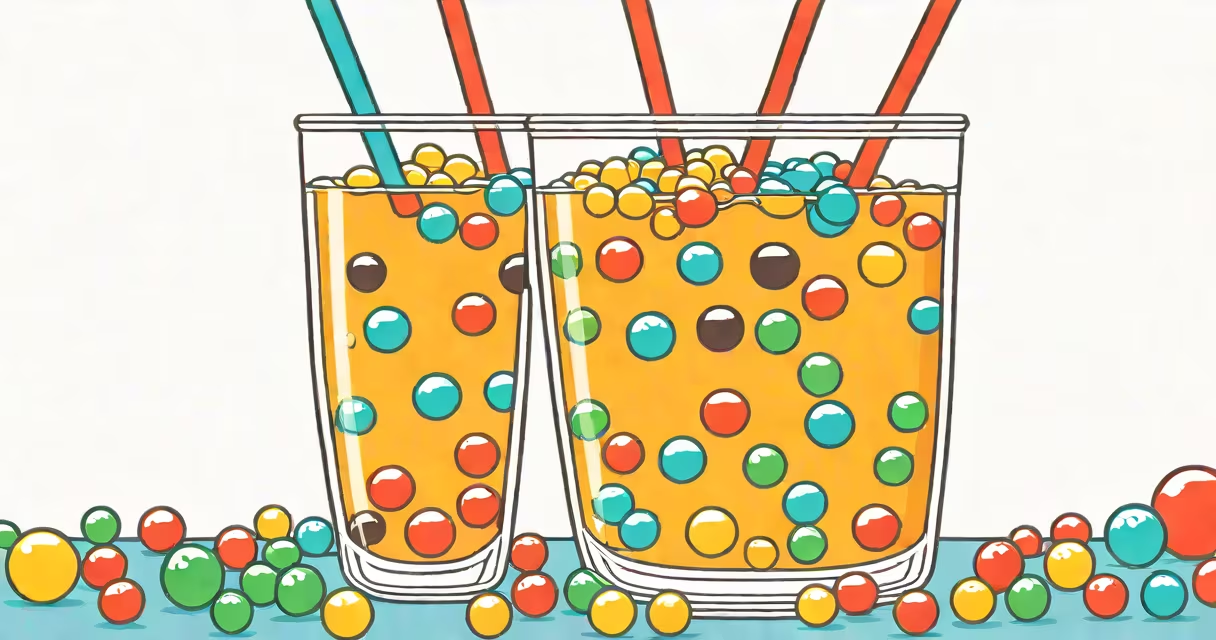
how to make boba tea involves cooking tapioca pearls until chewy, brewing a sweetened tea base, mixing in milk or plant-based alternatives, and combining everything in a glass. The result is a cold, sweet, milky drink with chewy spheres that pop when bitten.
Tapioca pearls, derived from cassava root starch, form the core of boba. They are boiled for 15-20 minutes, then soaked in a sugar syrup for 10-15 minutes to achieve their signature texture and sweetness. The tea base typically uses black or green tea steeped with sugar or simple syrup. Milk-dairy or plant-based-is added to create creaminess. All components are layered in a tall glass, often with ice.
A single batch of boba tea requires about 1 hour from start to finish. The most common mistake is undercooking the pearls, which results in a hard center. Overcooking leads to mushiness. The ideal texture is firm yet yielding, with a slight resistance when bitten.
Boba tea relies on a balance of textures and temperatures. The chewy pearls contrast with the cold, smooth liquid. The flavor profile combines sweet, creamy, and slightly earthy notes depending on the tea used. Black tea provides a bold, malty base; green tea offers a grassy, light alternative.
The process begins with soaking dried tapioca pearls overnight to reduce cooking time. After boiling, they are drained and tossed in a syrup made from equal parts water and sugar. This step adds both sweetness and gloss. Without it, the pearls remain bland and dry.
For the tea base, 1 teaspoon of loose-leaf black tea or 2 tea bags per 8 ounces of water is standard. Steep for 3-5 minutes at 200°F (93°C). Add 1-2 tablespoons of sugar or simple syrup while hot to dissolve fully. Chill the tea quickly by pouring it into a container over ice.
Boba tea consists of four primary elements: tapioca pearls, sweetened tea, milk or dairy substitute, and ice. Each contributes to the sensory experience.
| Component | Typical Amount | Key Function |
|---|---|---|
| Tapioca pearls (dried) | 1/4 cup (60g) | Chewy texture, mouthfeel |
| Black tea | 1 tsp or 2 bags per 8 oz | Flavor base, mild caffeine |
| Sugar or simple syrup | 1-2 tbsp per 8 oz tea | Sweetness, syrup coating for pearls |
| Milk (dairy or plant-based) | 1/2 cup per serving | Creaminess, mouthfeel |
Some recipes include fruit syrups or matcha powder for variation. A single serving of boba tea contains roughly 300-400 calories, mostly from sugar and fat in the milk.
Non-obvious fact: The pearls are not digestible in the traditional sense. They pass through the digestive tract intact unless chewed thoroughly. The chewiness is due to the gelatinous structure formed during cooking and cooling.
Boba tea originated in Taiwan in the 1980s. It spread globally through Asian diaspora communities and became popular in Western countries via convenience stores and specialty shops. Today, it's consumed as a treat, social beverage, or casual snack.
It's commonly served in cafes, food trucks, and home kitchens. People choose boba tea for its novelty, visual appeal, and customizable flavors. Some enjoy it as a ritual-mixing layers slowly, sipping through a wide straw to catch the pearls.
Common confusion: Boba tea is not the same as bubble tea. "Bubble tea" is a broader term that includes any tea-based drink with bubbles or foam. Boba tea specifically refers to drinks containing tapioca pearls. Other forms may have jelly, fruit bits, or pudding instead.
Overcooking pearls is the most frequent error. Boiling them past 20 minutes causes disintegration. Always test one pearl by biting it after 15 minutes. If the center is still firm, cook 2-3 more minutes. Remove from heat immediately after reaching desired texture.
Another mistake is skipping the syrup soak. Pearls cooked only in water lack sweetness and shine. The syrup not only adds flavor but stabilizes the texture by preventing drying out during storage.
Using cold water to boil pearls leads to uneven cooking. Start with boiling water. Also, do not cover the pot while boiling-steam buildup can cause splattering and inconsistent texture.
Worked example: To make 2 servings:
Firsthand observation: I once made boba tea for a group of friends and forgot to cool the tea before adding it to the glass. The ice melted too fast, diluting the drink. Now I chill the tea in a metal bowl over ice for 10 minutes before assembling.
Do not use pre-made boba from the store without checking the ingredients. Some brands add artificial colors or preservatives. Look for products labeled "natural," "no artificial dyes," and "cassava-based."
Also avoid using flavored syrups meant for coffee. These are too thick and can clog straws. Stick to simple syrup or honey for consistency.
When storing leftover boba, keep the pearls in syrup and refrigerate. They last 3-4 days. The tea base should be stored separately and consumed within 24 hours to prevent bacterial growth.
For those sensitive to caffeine, try decaf black tea or herbal infusions like rooibos. These provide body without stimulation. For lower sugar, replace simple syrup with monk fruit or stevia-but adjust for taste, as these are sweeter than sugar.
Understanding how to make boba tea correctly ensures a satisfying, consistent result. The key lies in timing, temperature control, and ingredient quality. With practice, even beginners can replicate café-quality boba tea at home.