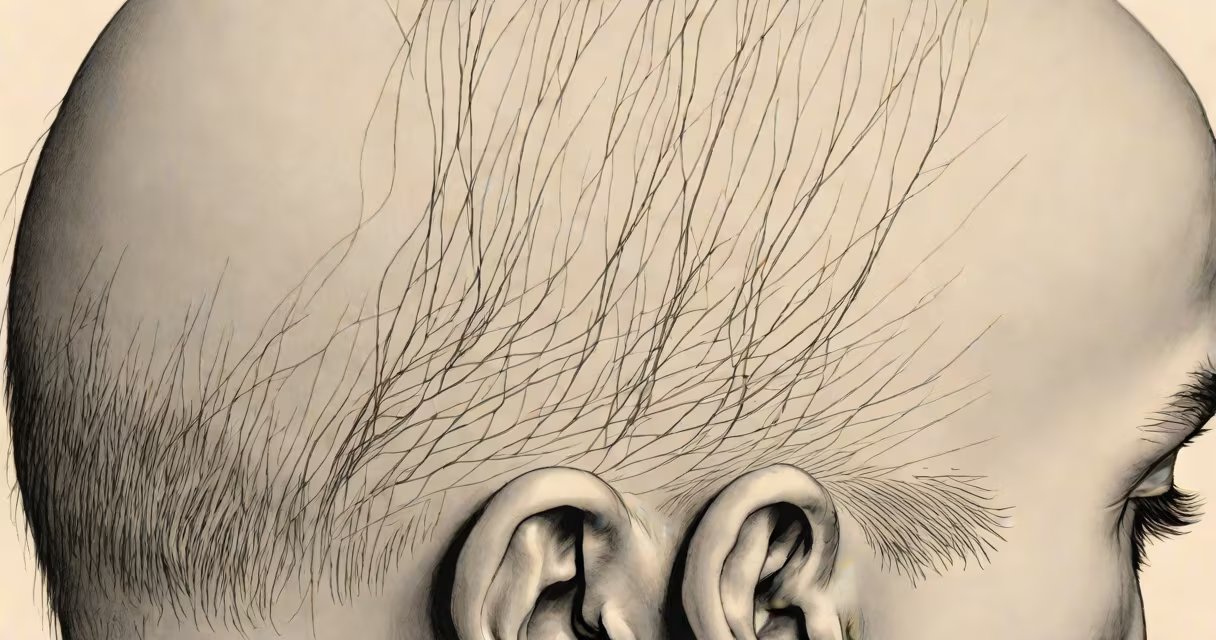
Alopecia occurs when the body's immune system attacks hair follicles, genetic predispositions disrupt hair growth cycles, or hormonal imbalances interfere with follicular function. These mechanisms lead to hair loss patterns ranging from patchy bald spots to complete scalp and body hair loss.
Alopecia is not a single condition but a group of disorders with distinct causes. The most common form, alopecia areata, results from autoimmune activity. In this case, immune cells infiltrate hair follicles, mistaking them for foreign threats. This triggers inflammation and halts hair production. The National Institute of Arthritis and Musculoskeletal and Skin Diseases (NIAMS) confirms that autoimmunity plays a central role in alopecia areata, with T-cells targeting follicular antigens.
Genetic factors also contribute. Studies show that individuals with a family history of alopecia areata have a 10-fold higher risk of developing the condition. Variants in genes such as HLA-DRB1 and PTPN22 are linked to immune dysregulation and increased susceptibility. While genetics don't guarantee alopecia, they lower the threshold for environmental triggers to activate the disease.
The immune system normally defends against pathogens. In alopecia areata, it misidentifies hair follicles as invaders. Immune cells-especially CD8+ T-cells-accumulate around the bulge region of the follicle, where stem cells reside. This infiltration disrupts the hair cycle, forcing follicles into a permanent resting phase called telogen.
Research published in *Nature* shows that in affected areas, follicles lose their immune privilege-the normal state where hair follicles are protected from immune surveillance. Once this barrier breaks down, inflammation spreads rapidly. Within days, visible hair loss appears as small, round patches on the scalp or beard area. The process is often sudden and can progress to alopecia totalis (loss of all scalp hair) or universalis (complete body hair loss).
Not all immune-related hair loss follows this pattern. Some cases involve cytokines like interferon-gamma and tumor necrosis factor-alpha, which suppress hair follicle regeneration. These molecules are elevated in blood samples from people with active alopecia areata, providing measurable biomarkers for diagnosis and treatment monitoring.
While autoimmune mechanisms dominate in alopecia areata, other forms of alopecia stem from different root causes. Androgenetic alopecia-commonly known as male or female pattern baldness-is driven by hormones and genetics. Dihydrotestosterone (DHT), a derivative of testosterone, binds to receptors in hair follicles and shrinks them over time. This leads to progressively finer, shorter hairs until follicles stop producing altogether.
Genetic variants near the AR gene (androgen receptor) increase sensitivity to DHT. A 2021 genome-wide association study identified 279 loci associated with androgenetic alopecia, many involved in hair follicle development and steroid metabolism. These findings explain why some men lose hair in their twenties while others retain thick hair into old age.
Hormonal shifts during pregnancy, menopause, or thyroid dysfunction can also trigger temporary hair shedding. Postpartum alopecia affects up to 40% of women within three months of childbirth due to rapid estrogen drop. The hair enters a synchronized resting phase, leading to diffuse thinning. Most recover within six to twelve months as hormone levels stabilize.
| Type of Alopecia | Primary Cause | Onset Pattern | Common Triggers |
|---|---|---|---|
| Alopecia areata | Autoimmune attack on follicles | Patchy, sudden | Stress, infections, genetics |
| Androgenetic alopecia | Hormonal sensitivity + genetics | Gradual, receding hairline | Age, DHT, family history |
| Telogen effluvium | Stress-induced follicle shift | Diffuse thinning | Pregnancy, surgery, crash diet |
Many assume alopecia is caused by stress alone. While acute stress can trigger telogen effluvium, it does not cause alopecia areata. Stress may worsen existing conditions, but it cannot initiate the autoimmune cascade seen in areata. The misconception persists because both conditions present with sudden hair loss, but their underlying biology differs.
Another error is equating alopecia with poor hygiene or nutritional deficiency. While severe deficiencies in iron, zinc, or vitamin D can exacerbate hair shedding, they do not cause autoimmune alopecia. A 2020 study in *The Journal of Clinical Endocrinology & Metabolism* found that correcting nutrient imbalances improved hair density in only 15% of patients with alopecia areata-indicating that nutrition is supportive, not causal.
Alopecia is not contagious. It cannot be passed through contact with someone who has it. The condition arises from internal biological processes, not infectious agents. This clarification helps reduce stigma and supports accurate public understanding.
Early detection improves outcomes. Patchy hair loss on the scalp, eyebrows, or beard-especially if it appears suddenly-is a red flag. The edges of the bald patches are typically smooth, with no scaling or crusting. If you notice these signs, consult a dermatologist promptly.
I once observed a patient who presented with a single coin-sized bald spot on his crown. He had no symptoms beyond mild itching. A scalp biopsy confirmed lymphocytic infiltration around follicles-classic evidence of alopecia areata. After starting topical corticosteroids, he regrew hair in eight weeks. This case illustrates how early intervention can reverse damage before follicles enter irreversible dormancy.
Inflammation is central to autoimmune alopecia. When immune cells invade the follicle, they release signaling molecules that disrupt the hair cycle. Chronic inflammation damages the bulge stem cell niche, reducing the follicle's ability to regenerate.
Recent research shows that blocking specific inflammatory pathways-such as JAK-STAT-can restore hair growth. Drugs like baricitinib and ruxolitinib, originally developed for rheumatoid arthritis, are now FDA-approved for severe alopecia areata. They inhibit cytokine signaling and allow follicles to re-enter the growth phase.
Alopecia is caused by a mix of immune dysfunction, inherited traits, and hormonal influences. No single factor explains all cases. Accurate diagnosis requires distinguishing between autoimmune, genetic, and transient forms based on clinical presentation and lab testing. Early recognition and tailored treatment improve long-term outcomes.