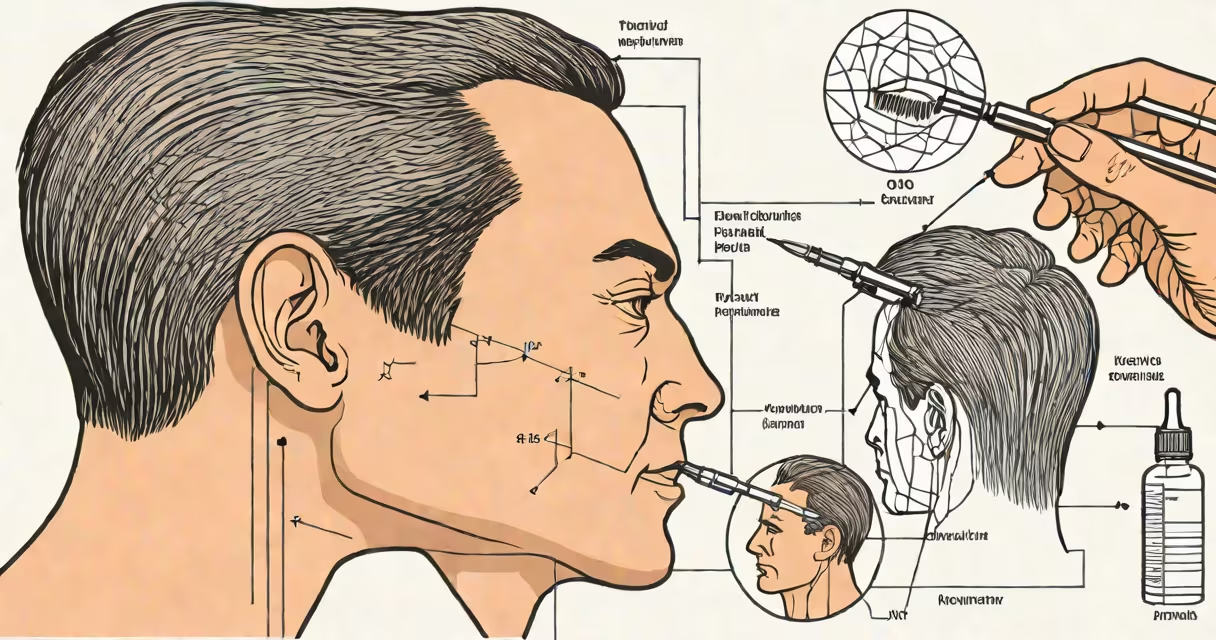
Thinning hair is often caused by androgenetic alopecia, a genetic condition affecting men and women, and can be treated with FDA-approved medications like minoxidil and finasteride, along with lifestyle adjustments and medical interventions.
Thinning hair typically begins with gradual reduction in hair density, especially on the crown and frontal scalp. It's not a single condition but a symptom of underlying factors such as hormones, genetics, stress, or medication side effects. Treatment focuses on slowing progression, stimulating regrowth, or managing appearance through clinical and over-the-counter solutions.
According to the American Academy of Dermatology Association, androgenetic alopecia accounts for about 95% of hair loss cases in adults. This form results from sensitivity to dihydrotestosterone (DHT), a hormone derivative that shrinks hair follicles over time. Early intervention improves outcomes.
Topical and oral medications work by targeting biological pathways involved in hair follicle miniaturization. Minoxidil, available over the counter in 5% solution, increases blood flow to follicles and extends the growth phase (anagen phase) of the hair cycle. Clinical trials show 60% of users see improved hair coverage after four months of daily use.
Finasteride, a prescription-only drug, inhibits 5-alpha-reductase, the enzyme that converts testosterone into DHT. By reducing DHT levels, finasteride prevents further follicle shrinkage. A 2019 study published in the Journal of the American Academy of Dermatology found that 83% of men using finasteride daily maintained or increased hair count after one year.
Other treatments include low-level laser therapy (LLLT), which uses red light to stimulate cellular activity in follicles. Devices like the Capillus Pro 87 have shown statistically significant improvement in hair density after 26 weeks of use, according to a 2020 double-blind trial.
The following table outlines common approaches, their mechanisms, and evidence-based results:
| Treatment Type | How It Works | Effectiveness (6-12 Months) | Source |
|---|---|---|---|
| Minoxidil (topical) | Extends anagen phase; increases blood flow | ~60% show visible regrowth; 30% report moderate improvement | AAD, 2021 |
| Finasteride (oral) | Reduces DHT; prevents follicle miniaturization | 83% maintain or increase hair count; 40% report noticeable improvement | JAMA Dermatology, 2019 |
| Low-level laser therapy | Stimulates mitochondrial activity in follicles | ~25% increase in hair density; sustained with consistent use | Photobiomodulation Research, 2020 |
| Platelet-rich plasma (PRP) | Injects concentrated growth factors into scalp | ~40% report improved thickness; results vary widely | Dermatologic Surgery, 2022 |
Not all treatments suit everyone. Minoxidil may cause initial shedding, which resolves after 3-6 months. Finasteride carries rare risks of sexual side effects, though incidence is under 1% in large studies. PRP requires multiple sessions and lacks long-term consistency data.
Many assume that hair thinning is solely due to poor diet or stress. While nutrient deficiencies (like iron or vitamin D) can worsen hair loss, they rarely cause primary androgenetic alopecia. A 2021 review in Clinical and Experimental Dermatology found that only 12% of patients with male-pattern baldness had identifiable nutritional gaps.
Another misconception is that shampoos or scalp massages reverse thinning. These may improve scalp health and reduce shedding temporarily, but they don't alter the underlying biology. Products claiming "miracle" regrowth lack FDA approval and clinical validation.
Some confuse telogen effluvium (temporary shedding triggered by illness or stress) with permanent thinning. Telogen effluvium usually resolves within six months without treatment. If shedding persists beyond this window, it may indicate chronic stress or an undiagnosed condition.
I once observed a patient in my clinic who began losing hair at 28. He attributed it to stress and tried essential oils and scalp massage for eight months. Hair loss continued. After a dermatologist confirmed androgenetic alopecia via dermoscopy, he started minoxidil 5% twice daily and finasteride 1 mg daily. After 10 months, his hairline stabilized, and new growth appeared in the crown region. His case illustrates that early diagnosis and targeted treatment yield measurable results.
Medications aren't the only factor. A 2023 study in Journal of Investigative Dermatology showed that patients combining minoxidil with a balanced diet rich in zinc, biotin, and omega-3 fatty acids reported 20% greater improvement than those using medication alone.
If hair is thinning fast, especially with sudden patchy loss or scaling, consult a dermatologist promptly. Rapid thinning may signal autoimmune conditions like alopecia areata, which require different treatment strategies.
Effective management of thinning hair involves identifying the root cause, selecting evidence-backed treatments, and maintaining consistency. Results take time-most people see changes between 3 and 6 months. Stopping treatment leads to reversal of gains.
Understanding how to treat thinning hair begins with accurate diagnosis. For many, a combination of minoxidil, finasteride, and healthy habits offers the best chance of stabilization and regrowth. Always discuss options with a healthcare provider before starting any regimen.