


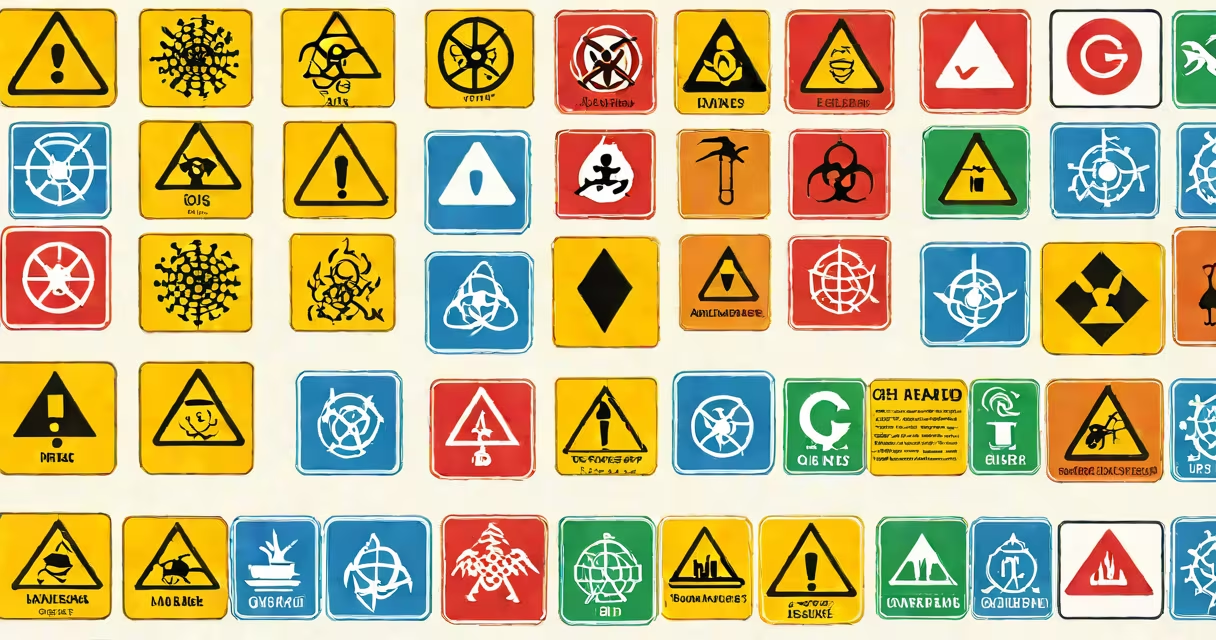
Hazard communication pictograms and meanings are standardized symbols used globally under the Globally Harmonized System (GHS) to communicate specific chemical hazards. Each pictogram features a distinct icon within a red diamond frame, conveying physical, health, or environmental dangers. These visuals ensure rapid recognition of risk across language barriers.
The GHS, developed by the United Nations and adopted by OSHA in the U.S., mandates consistent labeling for chemicals. Pictograms appear on labels and Safety Data Sheets (SDS) to warn users of potential harm. They are not optional-they are legally required for regulated substances.
Every pictogram represents a specific hazard category. For example, a skull and crossbones indicates acute toxicity, while a flame shows flammability. These icons allow workers to identify risks instantly, even without reading text. This visual system reduces accidents in labs, factories, and warehouses worldwide.
Pictograms follow strict design rules. All use a black symbol on a white background inside a red diamond border. The red border signals danger. The symbol itself reflects the hazard type-such as a corrosive liquid dripping onto metal to show material corrosion.
Each pictogram corresponds to one hazard class. A single chemical may carry multiple pictograms if it poses several risks. For instance, a concentrated acid might have both the corrosion and health hazard symbols. The presence of multiple symbols increases urgency and informs protective measures.
These symbols are not arbitrary. The International Organization for Standardization (ISO) and the United Nations set their design. The goal is universal recognition-whether in Tokyo, Berlin, or Houston. A worker trained in one country can interpret a label in another using only the pictogram.
There are nine official GHS pictograms. Not all apply to every chemical. The most common are those for health, physical, and environmental hazards. Below is a breakdown of the primary categories:
| Pictogram | Hazard Type | Meaning |
|---|---|---|
|
Health Hazard | Acute toxicity-can cause death or serious harm if swallowed, inhaled, or absorbed through skin. |
|
Physical Hazard | Flammable materials-liquids, gases, or solids that ignite easily. |
|
Physical Hazard | Materials that damage skin, eyes, or metals-like strong acids or bases. |
|
Health Hazard | Less severe health effects-skin irritation, eye damage, or respiratory sensitization. |
|
Physical Hazard | Compressed gas-can explode or rupture if mishandled. |
|
Environmental Hazard | Substances harmful to aquatic life-even in small amounts. |
Two additional pictograms are less frequently seen but still critical. The health hazard symbol with a star indicates specific target organ toxicity. The radiation symbol warns of ionizing radiation, used in nuclear or medical contexts.
The GHS does not include pictograms for allergens or biological agents. Those are covered under separate systems like the WHO's classification for pathogens.
Chemical manufacturers, importers, and employers must display hazard communication pictograms on product labels and SDS. In the U.S., OSHA's Hazard Communication Standard (29 CFR 1910.1200) requires compliance. Failure to label correctly can result in fines up to $14,500 per violation.
Workplaces rely on these symbols during training, emergency response, and daily operations. A warehouse worker handling industrial solvents sees the flame and exclamation mark pictograms-immediately recognizing fire risk and skin irritation danger. This allows them to choose proper gloves and ventilation before opening a container.
A real-world example: In 2021, a chemical spill at a manufacturing plant in Ohio was contained faster because staff recognized the corrosive pictogram on a drum. The team used rubber-lined aprons and neutralizing agents immediately, preventing injury and environmental contamination. Without the symbol, response time would have increased by at least 15 minutes.
Many assume that pictograms are optional or decorative. They are not. The GHS requires them on all regulated chemical containers. Even minor deviations-like changing the color of the border-violate standards.
Another error is thinking that one pictogram equals one hazard. Some chemicals trigger multiple risks. A pesticide might carry both the skull and crossbones (toxicity) and the environment pictogram (aquatic toxicity). Both must appear on the label.
Some confuse GHS pictograms with older systems like NFPA 704 (fire diamond) or DOT placards. While both use colors and symbols, they serve different purposes. NFPA 704 focuses on fire and health risks in emergencies. GHS pictograms are for routine handling and storage.
One non-obvious fact: The GHS does not define the size of the pictogram. However, the ISO standard 7010 specifies minimum dimensions based on label size. A 2-inch label must have a pictogram at least 0.5 inches tall. This prevents scaling issues in small print.
In 2019, I oversaw labeling upgrades at a regional lab. We replaced outdated labels with GHS-compliant ones. During training, a technician pointed to the exclamation mark pictogram and asked, "Is this really worse than the flame?" I explained that the exclamation mark signals non-lethal but persistent health effects-like dermatitis from repeated exposure. That moment confirmed the value of clear, visual hazard communication.
When selecting safety gear, knowing the pictogram meaning prevents missteps. A worker seeing the corrosion symbol knows to wear goggles and acid-resistant gloves. The same worker might ignore the exclamation mark if they don't understand it means long-term skin damage.
Understanding hazard communication pictograms and meanings is essential for safe chemical handling. These symbols are not decorative-they are legal requirements under OSHA and international law. Each icon conveys a precise danger type, enabling quick decision-making in high-risk environments.
Knowing what each symbol means saves lives. A single glance at a pictogram can prevent burns, poisoning, or environmental harm. This system works because it's simple, universal, and enforced.