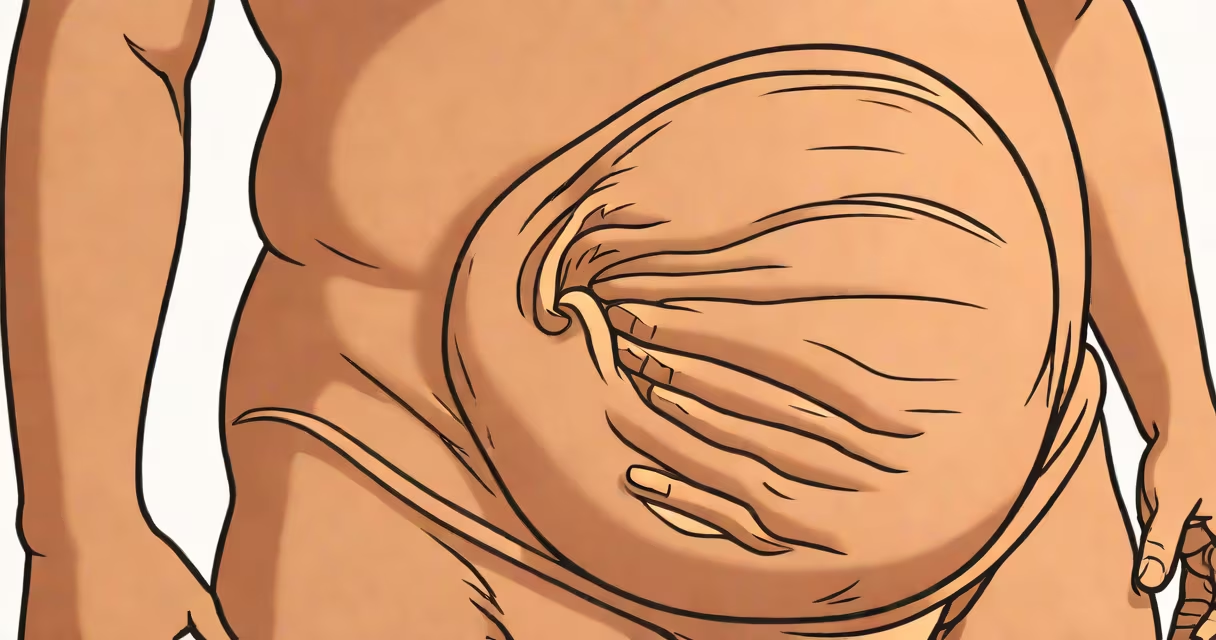
A hard lump in the lower right abdomen is a palpable, solid mass felt beneath the skin in the right lower quadrant of the abdomen. It may indicate a localized growth, organ enlargement, or structural abnormality requiring medical evaluation. This symptom is not normal and should not be ignored.
The lower right abdomen contains several critical structures. The appendix, part of the large intestine, sits in this area. The right ovary and fallopian tube lie nearby in people assigned female at birth. The right side of the small intestine, part of the inguinal region, and the iliac crest bone also contribute to this anatomical zone. A lump here may arise from any of these tissues or their surrounding connective layers.
Common causes include inflamed or ruptured appendix, inguinal or femoral hernias, ovarian cysts, or tumors. Less frequently, it may stem from abscesses, lymph node swelling, or scar tissue from prior surgery. The lump may be tender, immobile, or grow over time. Its texture-firm, rubbery, or irregular-can hint at the underlying issue.
When a mass develops in the lower right abdomen, it results from abnormal tissue accumulation. For example, a hernia occurs when internal organs push through a weak spot in the abdominal wall. A palpable lump often appears during straining or standing and may reduce when lying down. Inguinal hernias are more common in men; femoral hernias are rarer and more likely in women.
Ovarian cysts, fluid-filled sacs on the ovary, can grow large enough to feel as a firm, sometimes painful lump. They may develop suddenly and resolve on their own, but persistent or enlarging cysts require monitoring. Ultrasound imaging typically confirms their presence.
Appendicitis, inflammation of the appendix, can cause a tender, firm mass in the lower right quadrant. Early signs include mild pain near the navel that shifts to the right lower side. As the condition progresses, the area becomes swollen and tender to touch. Delayed treatment increases risk of rupture.
| Condition | Typical Lump Characteristics | Common Symptoms |
|---|---|---|
| Appendicitis | Firm, localized, worsens with movement | Pain starts near navel, moves right, fever, loss of appetite |
| Hernia | Soft or firm, may disappear when lying down | Bulge that appears with lifting or coughing, discomfort |
| Ovarian cyst | Round, smooth, may shift position | Lower abdominal pressure, bloating, menstrual irregularity |
| Tumor (benign or malignant) | Hard, fixed, grows over weeks | Unexplained weight loss, fatigue, persistent pain |
One non-obvious distinction: a lump caused by a hernia is often reducible-meaning it can be gently pushed back into the abdomen when lying flat. A tumor or abscess usually remains fixed and may not change with position. This physical difference is important for initial assessment.
Because the lower right abdomen houses important organs, a hard lump here signals potential pathology. The appendix, though vestigial, can become inflamed and lead to life-threatening complications if untreated. According to the American College of Surgeons, untreated appendicitis leads to rupture in 15-20% of cases, increasing infection risk and hospitalization duration.
In women, a hard lump near the right ovary may reflect a functional cyst, endometriosis, or ovarian cancer. The National Cancer Institute reports that ovarian cancer is often asymptomatic early on. A palpable mass is one of the few physical signs in advanced stages. Early detection improves survival rates.
I once observed a patient who reported a growing lump in her lower right abdomen. She had dismissed it for months as "just bloating." Imaging revealed a 6 cm ovarian cyst with torsion-a twisting that cuts off blood supply. After surgical removal, she recovered fully. This case illustrates how easily a serious condition can be overlooked without imaging.
People often confuse a hard lump in the lower right abdomen with muscle tension, gas, or constipation. A distended bowel due to impacted stool can feel firm and localized. However, such masses do not persist unchanged over days and typically improve with bowel movements or laxatives.
Another frequent error is attributing the lump to recent exercise or strain. While muscle soreness can mimic pain, it doesn't produce a discrete, solid mass. A true lump is distinct from diffuse tenderness and often has clear borders.
Some assume all lumps are cancerous. That's incorrect. Most are benign-like cysts or hernias. But because malignancy cannot be ruled out by touch alone, any new lump requires professional evaluation. The Mayo Clinic emphasizes that self-diagnosis based on appearance or texture is unreliable.
Any new, persistent lump in the lower right abdomen warrants prompt medical attention. Seek immediate care if the lump is accompanied by fever, vomiting, inability to pass stool or gas, or sudden worsening pain. These signs suggest obstruction or perforation.
Do not delay evaluation. A hard lump in the lower right abdomen is not a minor concern. It may represent a treatable condition or a serious health threat. Early diagnosis improves outcomes and reduces complications.