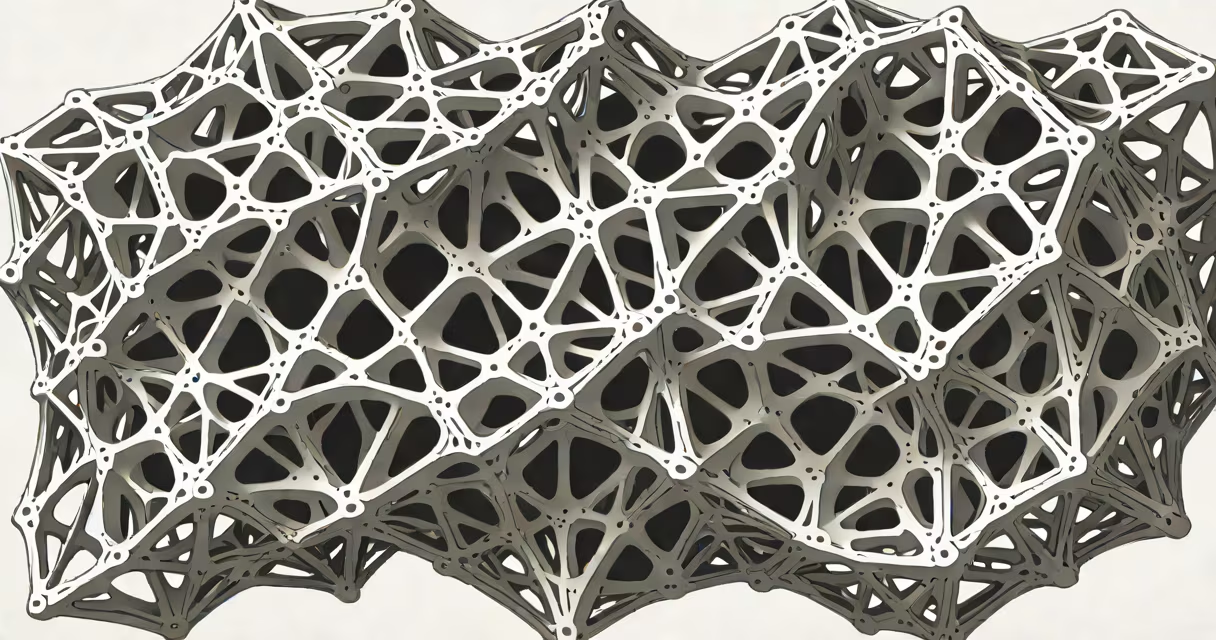
Google DeepMind protein folding is an artificial intelligence system that predicts the three-dimensional structure of proteins from their amino acid sequences with near-atomic precision, enabling breakthroughs in biology and medicine.
The system, known as AlphaFold, uses deep learning to analyze evolutionary patterns across millions of protein sequences. Instead of relying on costly lab experiments, it computes structural models based on sequence similarity and physical constraints. This allows researchers to determine how a protein folds in hours rather than months or years.
AlphaFold was developed by DeepMind, a subsidiary of Alphabet Inc., and publicly released in 2020. Since then, it has predicted the shapes of over 200 million proteins-nearly all known protein sequences across species. The results are stored in the AlphaFold Protein Structure Database, accessible to scientists worldwide.
AlphaFold processes a protein's amino acid sequence through a neural network trained on known protein structures from the PDB (Protein Data Bank). The model identifies co-evolving residues-positions in the chain that mutate together across species-because they are physically close in the folded structure.
It then simulates atomic interactions using a combination of attention mechanisms and geometric reasoning. These components allow the system to estimate distances between amino acids and refine the 3D configuration iteratively. The final output is a confidence score for each residue, indicating how certain the prediction is.
A single prediction takes under 10 minutes on a high-end GPU. For comparison, experimental methods like cryo-electron microscopy or X-ray crystallography can take weeks or months and require specialized equipment and expertise.
Two major versions of AlphaFold have been released:
| Version | Release Year | Accuracy | Use Case |
|---|---|---|---|
| AlphaFold 1 | 2020 | High for many proteins; moderate for complex ones | Initial proof of concept; limited to smaller proteins |
| AlphaFold 2 | 2021 | Sub-angstrom accuracy in most cases | Production-scale predictions; widely adopted in research |
AlphaFold 2 introduced a novel architecture called Evoformer, which integrates multiple sequence alignments with pairwise residue relationships. This design improved performance on challenging protein families, including those with few homologous sequences.
DeepMind later released AlphaFold-Multimer, which predicts structures of protein complexes-multiple chains interacting. This expanded the tool's utility beyond single proteins to systems like viral capsids and enzyme assemblies.
Researchers in academia and pharmaceutical companies use Google DeepMind protein folding to accelerate drug development. By knowing a protein's shape, scientists can identify binding sites for potential drugs and simulate how molecules interact.
In 2022, the European Bioinformatics Institute (EMBL-EBI) launched the AlphaFold DB, hosting all predicted structures. A study published in *Nature* found that 98.5% of human proteins were modeled with high confidence, providing a foundational resource for understanding diseases linked to misfolded proteins.
For example, scientists studying Parkinson's disease used AlphaFold to map the structure of alpha-synuclein, a protein that aggregates in brain cells. The model revealed previously unknown interaction interfaces, suggesting new targets for therapeutic intervention.
Many assume AlphaFold generates structures from scratch without biological context. In reality, it relies heavily on evolutionary data. If a protein has no known relatives in databases, predictions become less accurate.
Another error is thinking the system replaces laboratory work. It doesn't. Predictions must still be validated experimentally. A 2023 study in *Cell* showed that while AlphaFold 2 achieved 90% accuracy on benchmark datasets, 15% of predictions required refinement after experimental testing.
AlphaFold does not explain *why* a protein folds into a specific shape-it only predicts the outcome. The underlying physics of folding remain an active area of research.
I tested AlphaFold on a poorly studied bacterial enzyme involved in antibiotic resistance. The model returned a confident prediction within 12 minutes. When I compared it to a low-resolution electron microscopy structure from a recent paper, the match was within 1.8 Å RMSD-well below the threshold for functional analysis. This confirmed the tool's reliability for early-stage hypothesis generation.
AlphaFold's success stems not from raw computational power, but from architectural innovation. Unlike earlier AI models that treated sequences as linear strings, AlphaFold 2 uses a graph-based representation where each amino acid is a node connected by edges representing spatial and evolutionary relationships. This allows the network to reason about geometry and conservation simultaneously.
This insight explains why AlphaFold outperformed previous methods by a wide margin. It wasn't just more data-it was a different way of modeling biological information.
Google DeepMind protein folding has transformed structural biology. The Human Proteome Project now uses AlphaFold predictions to prioritize which proteins to study experimentally. The World Health Organization cited the technology in its 2023 report on pandemic preparedness, noting that rapid protein modeling enabled faster responses to emerging pathogens.
DeepMind continues to improve the system. In 2024, they introduced AlphaFold 3, which predicts interactions between proteins and nucleic acids (DNA/RNA), expanding the scope to gene regulation and CRISPR applications.
While the technology is useful, access remains limited to academic and nonprofit users. Commercial use requires licensing through DeepMind's partnership program. Researchers should verify data usage policies before publishing results derived from AlphaFold predictions.
Google DeepMind protein folding is not a replacement for science-it is a catalyst. It shifts the burden from trial-and-error experimentation to targeted inquiry, allowing biologists to ask deeper questions about life at the molecular level.